
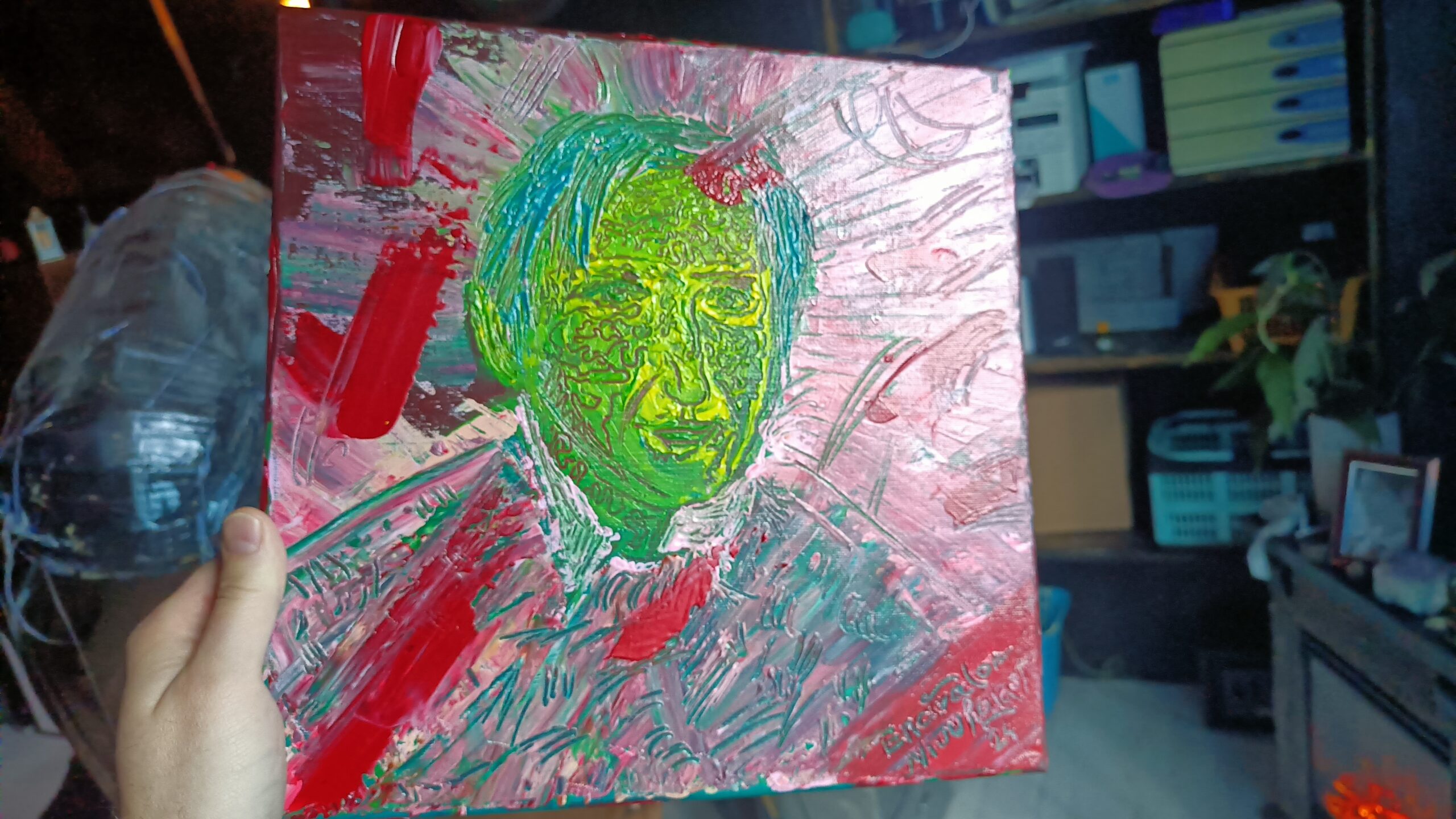
The painting "Láďa" is an intimate portrait created by Antonín Deliš, processing the memory of his late uncle Láďa. The work was created during the Covid pandemic, which further deepens its symbolism – not only as a memory of a beloved person, but also as an imprint of a time when much was lost and values were reassessed.
Technique and expression
The painting was created using a unique combination of techniques. The author's fingers, which directly applied paint to the canvas, give the work a personal contact and rawness, as if there were no mediation between the painter and the artwork. This method not only reflects an intense emotional connection to the subject, but also brings tangibility that lends emotional depth to the piece.
The portrait itself is painted using a metal rod – this element adds sharp details that contrast with the softer fingerprints. This duality in technique can symbolize the contrast between the harsh reality of the pandemic and the fragility of memories. The metal rod acts here as a tool of precision and at the same time as a way to portray the steadfastness and strength that characterized Láďa.
Theme and symbolism
The painting captures Láďa not only as a person, but as a bearer of memories that endure. The pandemic period, when many people experienced losses, gives this work a universal dimension. Láďa can be perceived here not only as a specific individual, but also as a symbol of all those who remain alive in our memories.
Using hands as a tool for painting is not only a technical solution, but also a metaphor—touching, which was restricted during the pandemic, takes on a new meaning here. Finger painting makes it seem as though the author wanted to literally grasp and hold onto Láďa, despite the relentless transience of time.
Composition and colors
The composition is sparing, focused on the face and expression, thereby allowing the viewer to immerse themselves in the emotional depth of the work. The colors may reflect not only Láďa's personality, but also the melancholy of loss. If warm tones dominate, they can symbolize gratitude for shared moments; cooler colors then evoke sadness and loneliness after a loss.
Significance of the work
Láďa is not only a portrait of a single person, but also a record of the process of grieving and rediscovering meaning in art. Deliš captures more than just physical likeness here—through the work, he shares an intimate story and universal emotions with the viewer.
The painting becomes a memento—it reminds us not only of Láďa as a personality, but also of how personal losses shape us and how art can be a means to process our innermost feelings. Thus, "Láďa" remains deeply personal while at the same time speaking to anyone who can find a reflection of their own memories within it.
This painting already has its owner.
Painting with signature: Endralon Niuuhalast
TECHNICKÉ ÚDAJE · ORIGINÁLNÍ DÍLO
Láďa
- Rozměry
- 30 × 30 cm
- Kus
- Originál, jediný exemplář
Obraz není v aktuálním přehledu Galerie obrazů označený „NA PRODEJ“. Z tohoto článku proto není možné jej objednat.















