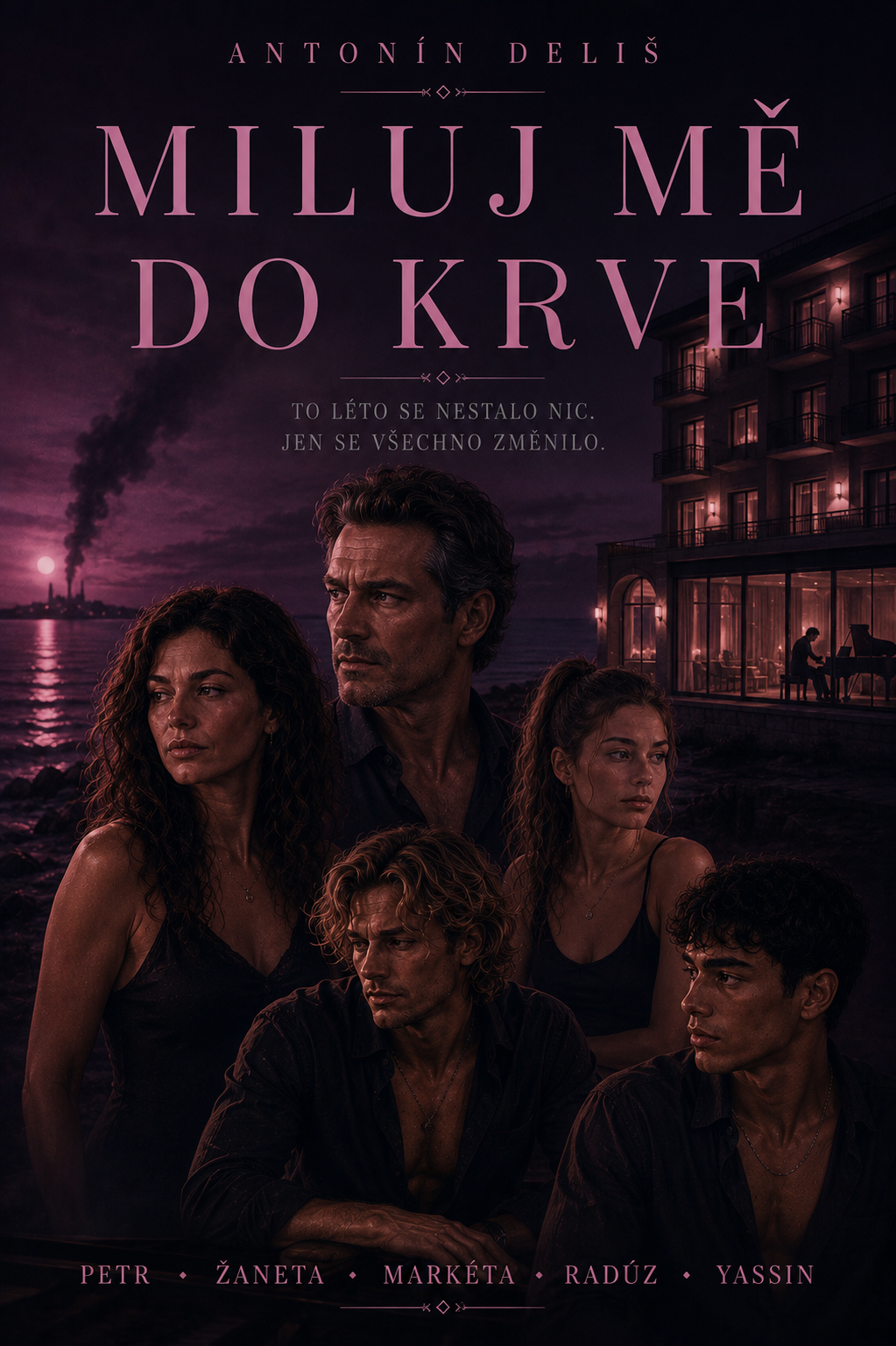
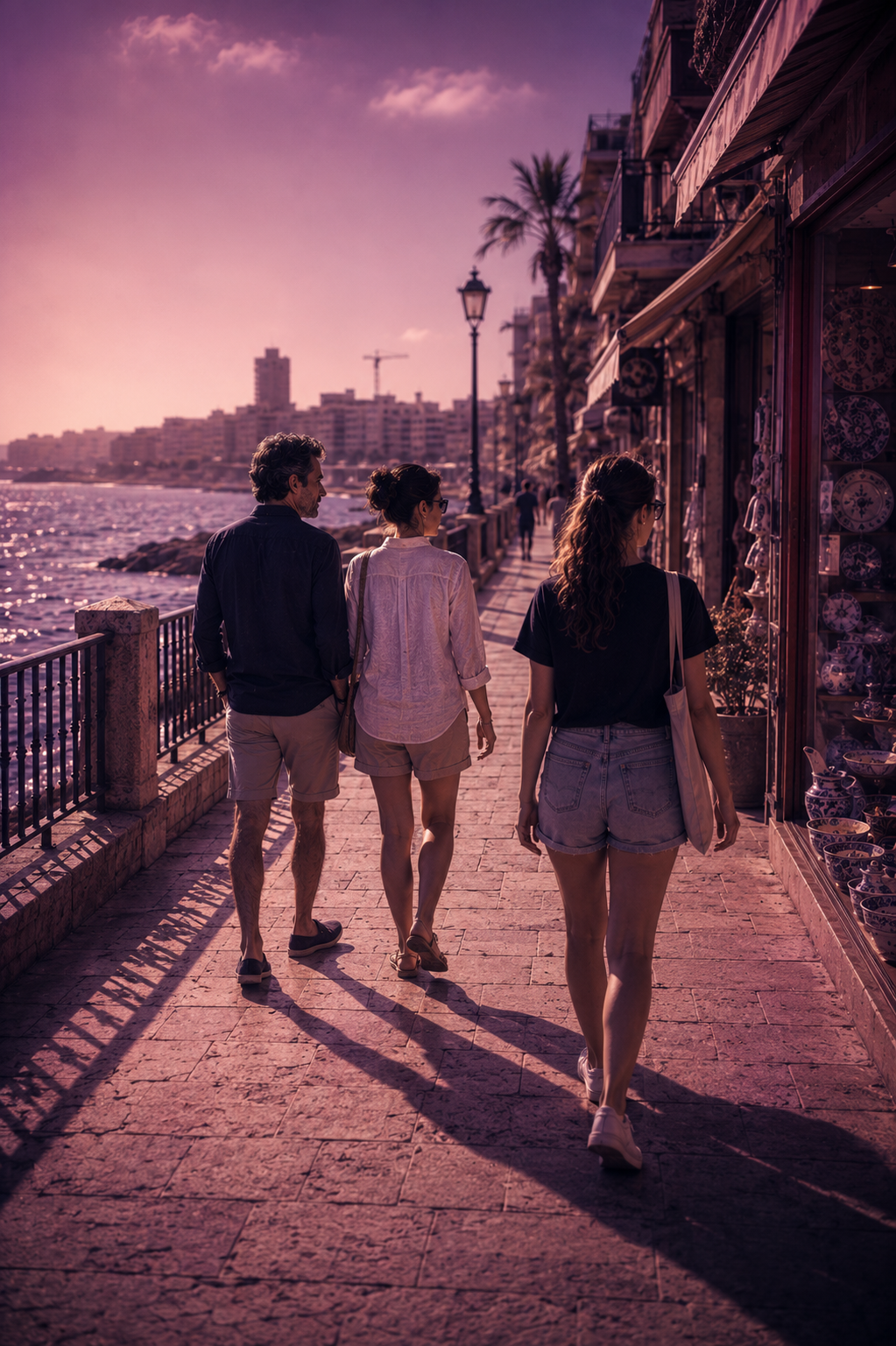
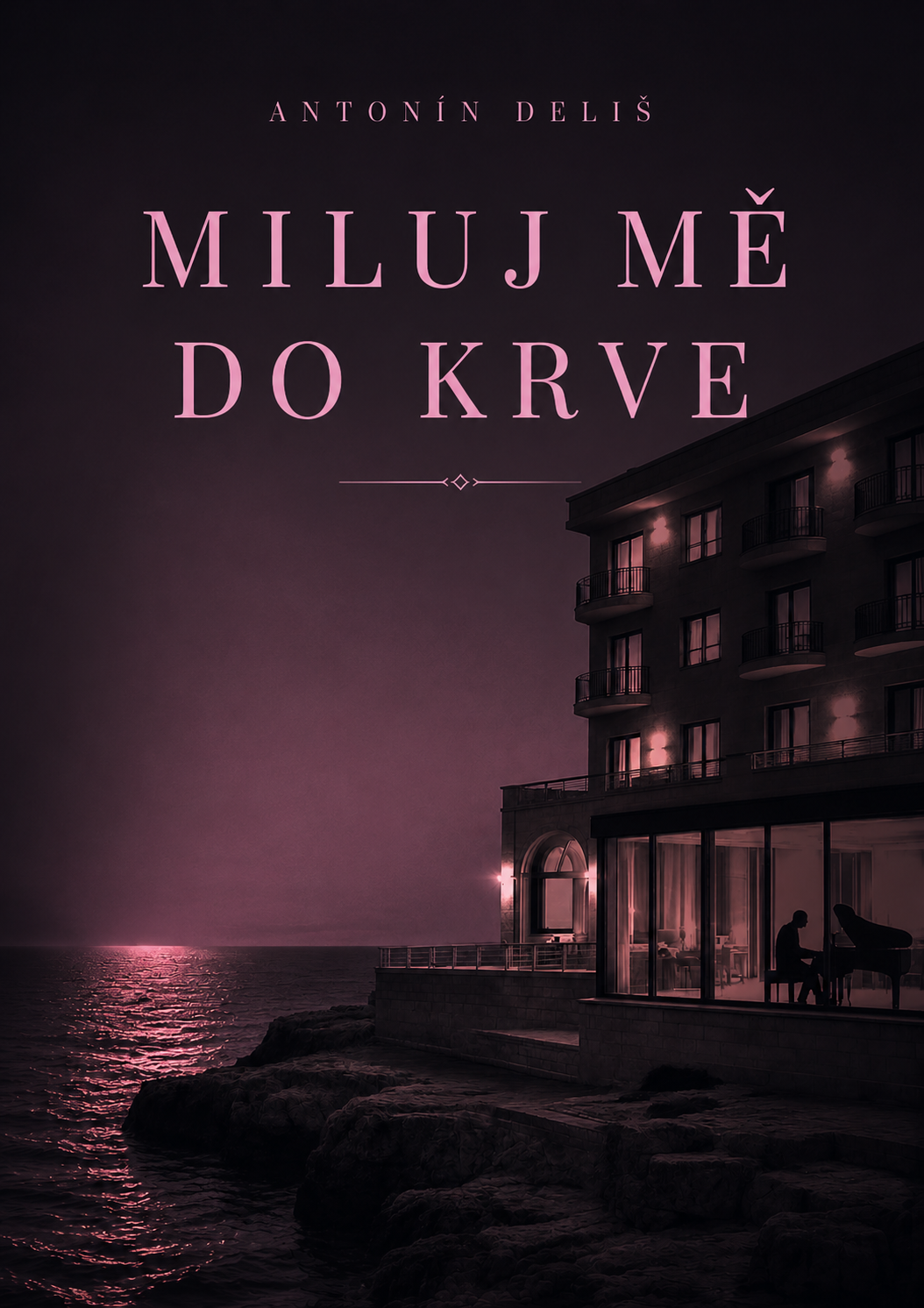
In the beginning was the return of my friend's daughter from a language stay in Malta. In the car on the way from the airport, she talked about how she scraped her legs bloody on the cliffs where she met a young Algerian. Miluj mě do krve instantly popped into my head – and before this girl set off for Malta again a year later for her studies, the book was already finished.
Miluj mě do krve arises from several layers: from Malta, from a family vacation story, from middle-aged male desire, from the silence of a long marriage, and from the question of how much a person can talk themselves into believing when validation is missing.
In the beginning, there is no grand plot.
The situation there is rather this: a man arrives with his family at a place where he also has a lover, a past, or at least the idea of one crucial relationship. Yet everything that could be melodrama takes place in subtle shifts. In messages. In silence. In who saw whom. Who knows what. Who assumed what.
Also important was the idea of an explosion that does not happen directly at the center of the story, but exists as an echo. As an event that is spoken of, that is recalled, that hangs in the air. Not to turn the novella into a disaster story, but because the human psyche sometimes works the same way: something blows up somewhere nearby, and yet the blast wave still reaches us.
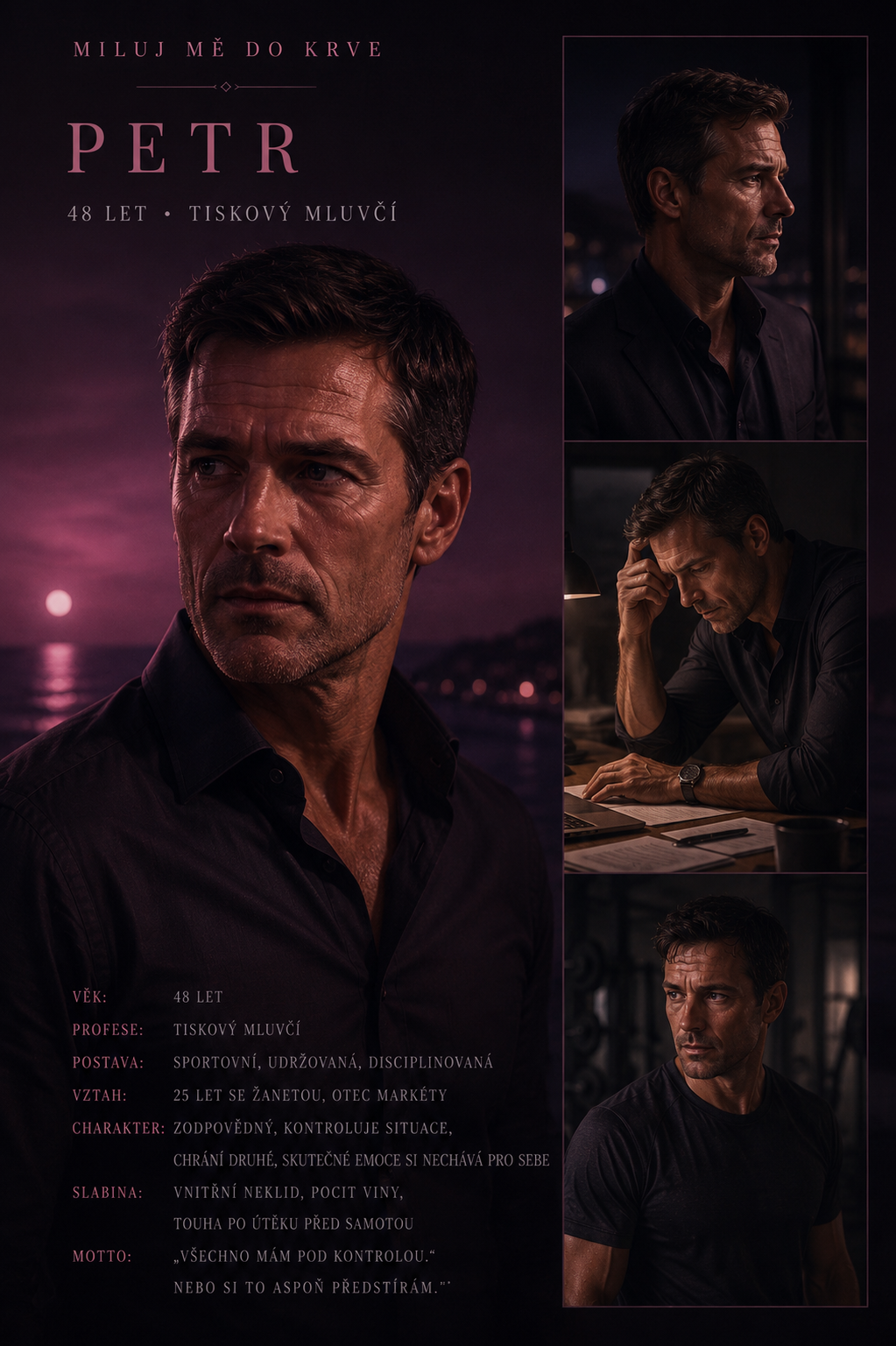
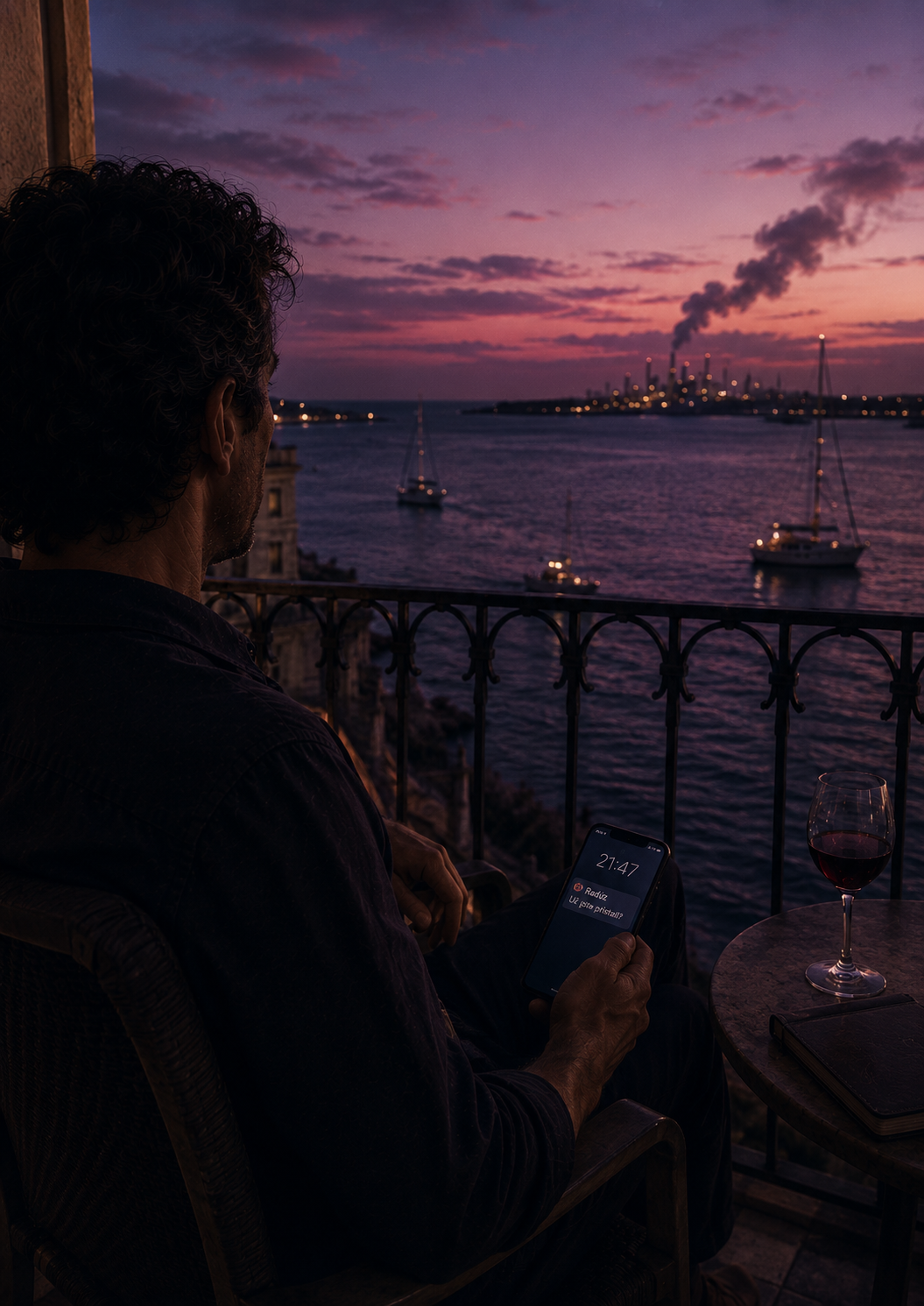
Another inspiration was the question of interpretation itself. What if love isn't one fixed story? What if it's a slightly different version every time, depending on who is telling it? Petr can be a man who truly loved. He can be a man who was mistaken. He can be a man who desires Radúz. He can be a man who desires mostly himself in Radúz's eyes. And the book doesn't try to quickly decide for him. Instead, it lets him walk around the island for ten days, listen to music, watch his family, check his phone, and slowly realize that the hardest thing isn't telling the truth to others. The hardest thing is stopping lying to yourself in a way that once helped you survive.

 ForendorsČÍST · AKTIVNÍ
 WattpadČÍST · AKTIVNÍ
 SpotifySOUNDTRACK · AKTIVNÍ
 Kniha u partneraTIŠTĚNÁ KNIHA · AKTIVNÍ
 Databáze knihKARTA KNIHY · AKTIVNÍ
 Google PlayE-KNIHA · KOUPIT
 VinylVINYL · AKTIVNÍ
 AudioknihaPŘIPRAVUJE SE