ENDRALON.SPACE

ANTONÍN DELIŠ · HEAVY CONTEMPORARY ARTIST

GUIDE ↗
Pět minut u pisoárů — Antonín Deliš

PSYCHOLOGICKÝ ROMÁN · THRILLER · QUEER NOIR

Pět minut
u pisoárů

Antonín Deliš

Psychologický román Antonína Deliše s prvky thrilleru a queer noir o identitě, důvěře, touze a rozdílu mezi intimitou a poznáním.
Vybrat, kudy vstoupit ↓

VSTUP DO SVĚTA KNIHY

Vyber si, kudy vstoupíš

Čtení, tištěná kniha, hudba a další podoby románu na jednom místě.

OFICIÁLNÍ TRAILER

Pět minut u pisoárů

Vstup do příběhu — vizuál ke knize Pět minut u pisoárů

ÚVODNÍ POVÍDÁNÍ O KNIZE

Vstup do příběhu

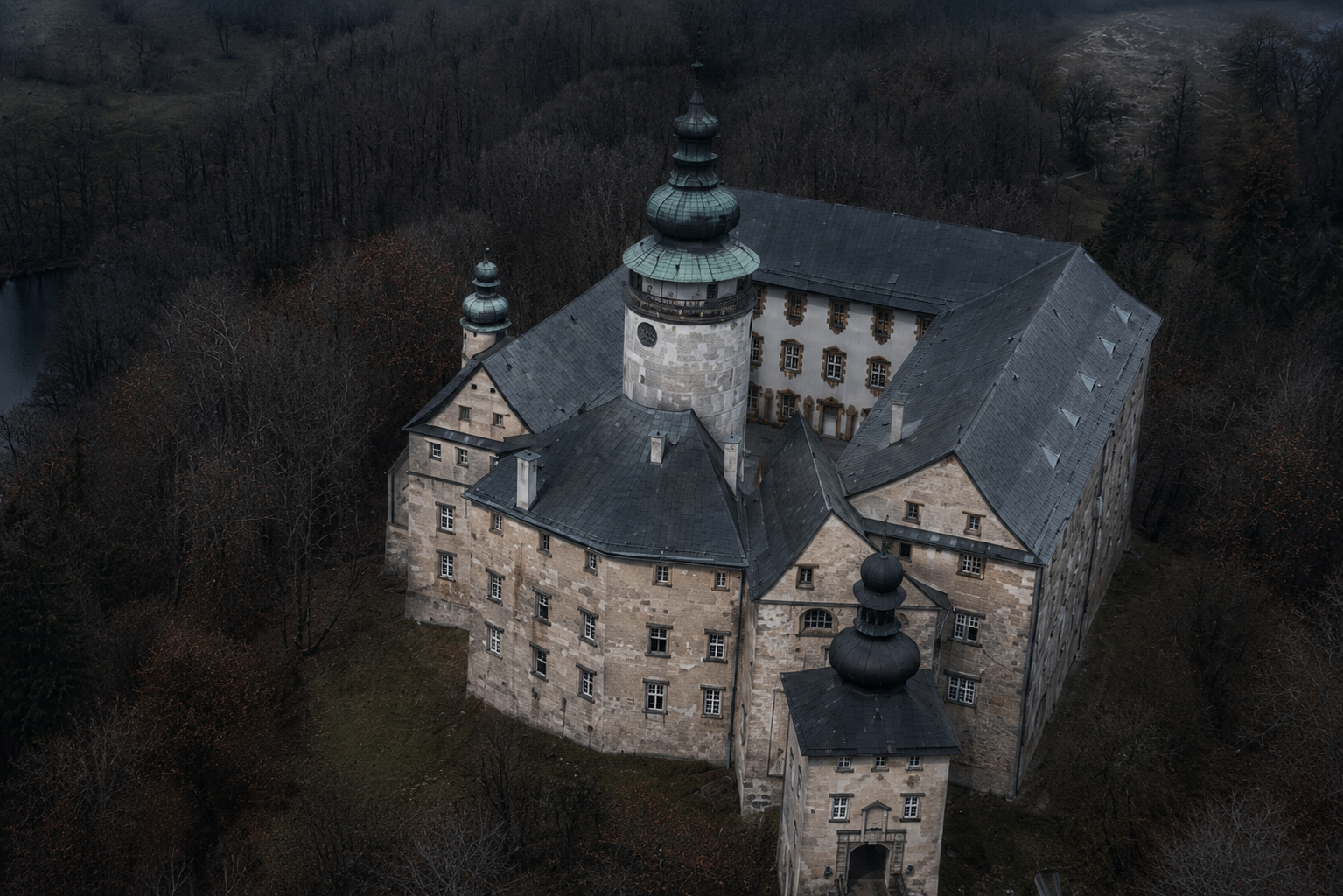
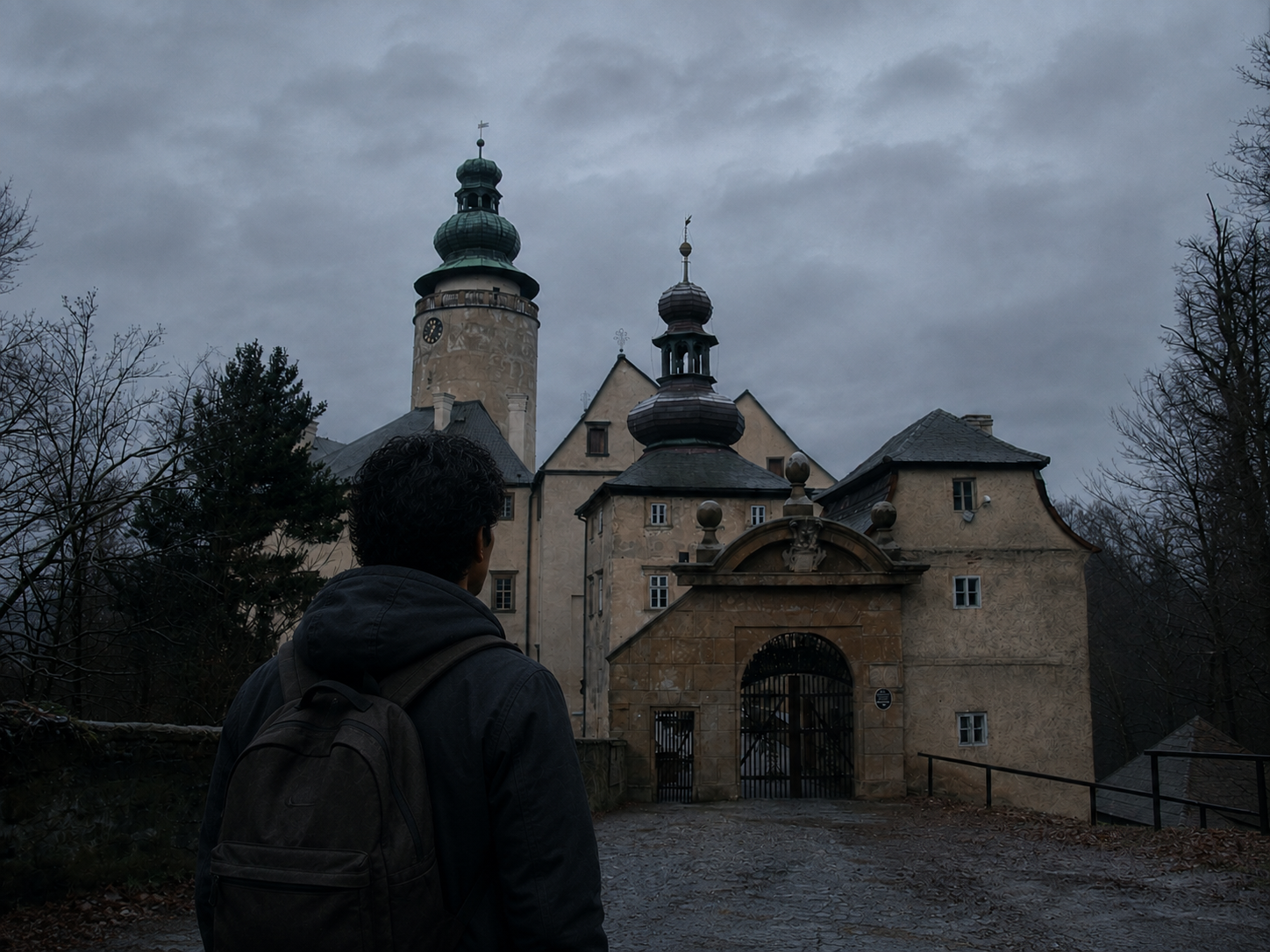
Jablonné v Podještědí before Christmas is not just a backdrop. Neither is Lemberk. Daniel's world back then still has a very specific taste and smell. His parents' shop, winter air, wet jackets, cigarettes, food, foreign bodies, the cold stone of the historical monument, old wood, and dust. Daniel does not perceive people solely through his eyes. He notices hands, clothing, voice, and movement, but also how someone smells, what was left behind in their jacket, or how a kiss tastes. Then Christmas and Covid arrive. Daniel completely loses his sense of smell and taste. They do not merely weaken; they simply vanish. Coffee stays hot, food has texture—it can be greasy, spicy, or crunchy—but taste is nowhere to be found. The person next to him has a temperature, voice, breath, and touch, but neither smells nor stinks. This very change is meant to be reflected in the narrative style itself. Before the illness, the world of the book will be full of scents and tastes; afterwards, both layers simply disappear from the prose. Only later, in the next stage of his life, does Nico enter this impoverished world.

HLAVNÍ POSTAVY

Min a Nico

Minh „Min“ Trần / Daniel Trần

Minh „Min“ Trần / Daniel Trần

Daniel is a Czech of Vietnamese origin and uses two names without leading two lives. To a part of his surroundings he is Daniel, to others Minh or simply Min. Neither name is a disguise, and neither name is a lie. That is precisely why he understands well that a person can use different forms of their name in different environments and still remain the same person. In Jablonné, he has a safe family background. His parents run a shop, and Daniel could stay in it, help out, and one day perhaps take it over. No one has to force him to do it. The danger of that possibility lies precisely in how easy it is. Daniel wants to find out if there is a life he will choose for himself. He is very attentive to people and physical details. He can quickly gauge embarrassment, desire, or a change in mood, and in intimate relationships, he is used to leading rather than following. He notices clothing, hands, voice, movement, and—before the illness—scents and tastes. This very ability to read another person will later give him perhaps far too much certainty. Daniel is not a detective, nor does he want to become one. At the beginning, he wants a job. Later, he wants someone else. And in both cases, reality proves to be more complex than what he prepared for.
Nico

Nico

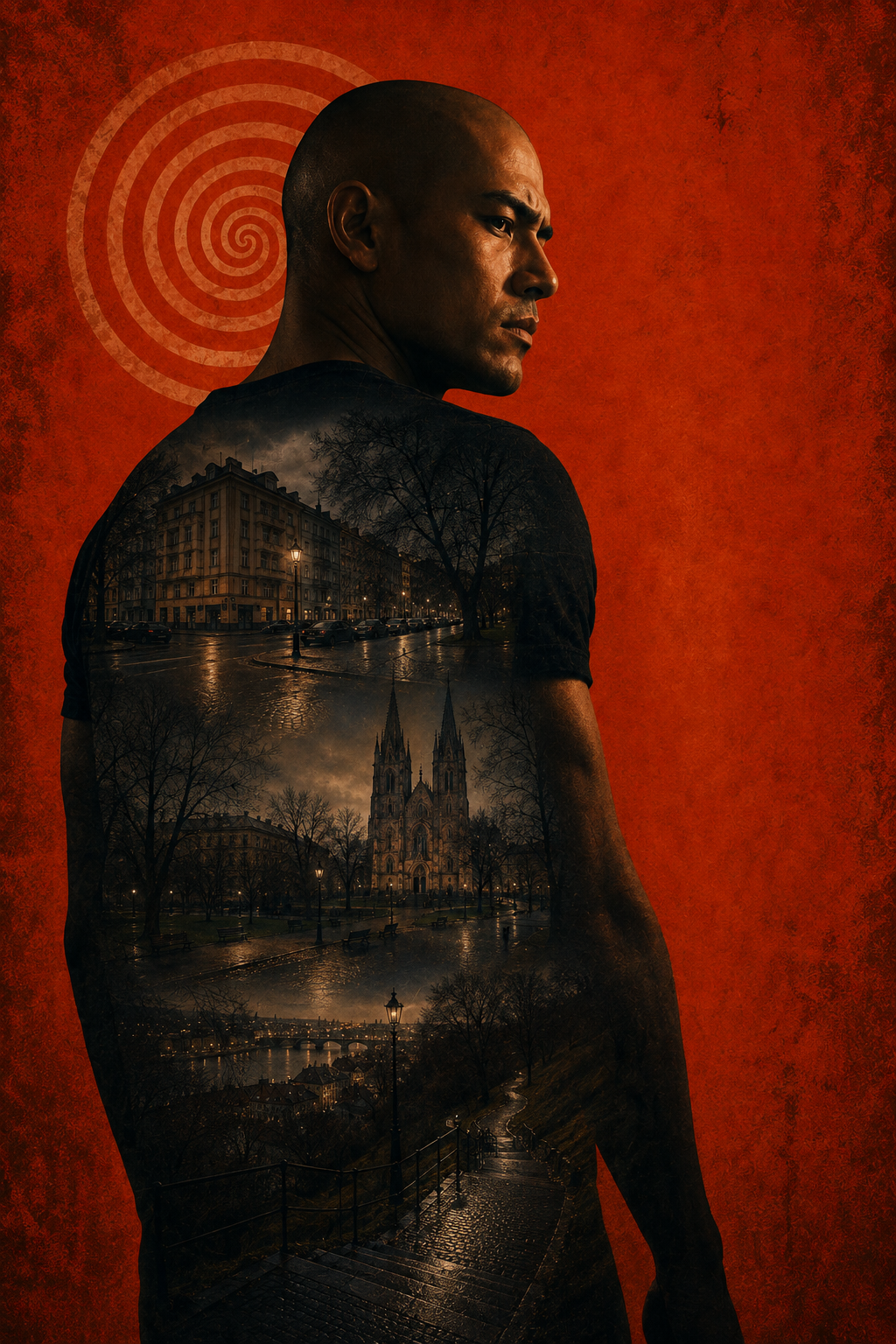
Nico enters Min's life only later. He can be tender, ridiculous, vulnerable, and very attractive, and from the beginning, he does not come across as a walking mystery or a thriller villain. In intimate situations, unlike Min, he is more open to guidance, shyness, and surrender of control. Min relatively quickly recognizes what a certain look, touch, or word does to him, and gets the feeling that he can read this particular man extraordinarily accurately. He knows when Nico blushes, when he tries to talk his way out of something, when he wants Min to decide for him, and when a certain sentence hits him harder than touch itself. But physical openness is not the same as complete knowledge of a person. Some things about Nico's past have more than one version. And so do some names.

SVĚT KNIHY

Dvě jména

The motif of the double name in the book does not function as a simple "the real name reveals the real person." Min himself is proof that identity does not work this way. Min and Daniel are two legitimate forms of the same person, not two masks. That is precisely why he does not automatically find it suspicious when he discovers that Nico has a similarly complicated relationship with his name. On the contrary, Min's own experience offers him a very good reason to accept certain things without mistrust. A person can show another their ID card, their body, their embarrassment, and their desire, and still not show them their entire life.

Dvě videa — vizuál ke knize Pět minut u pisoárů

SVĚT KNIHY

Dvě videa

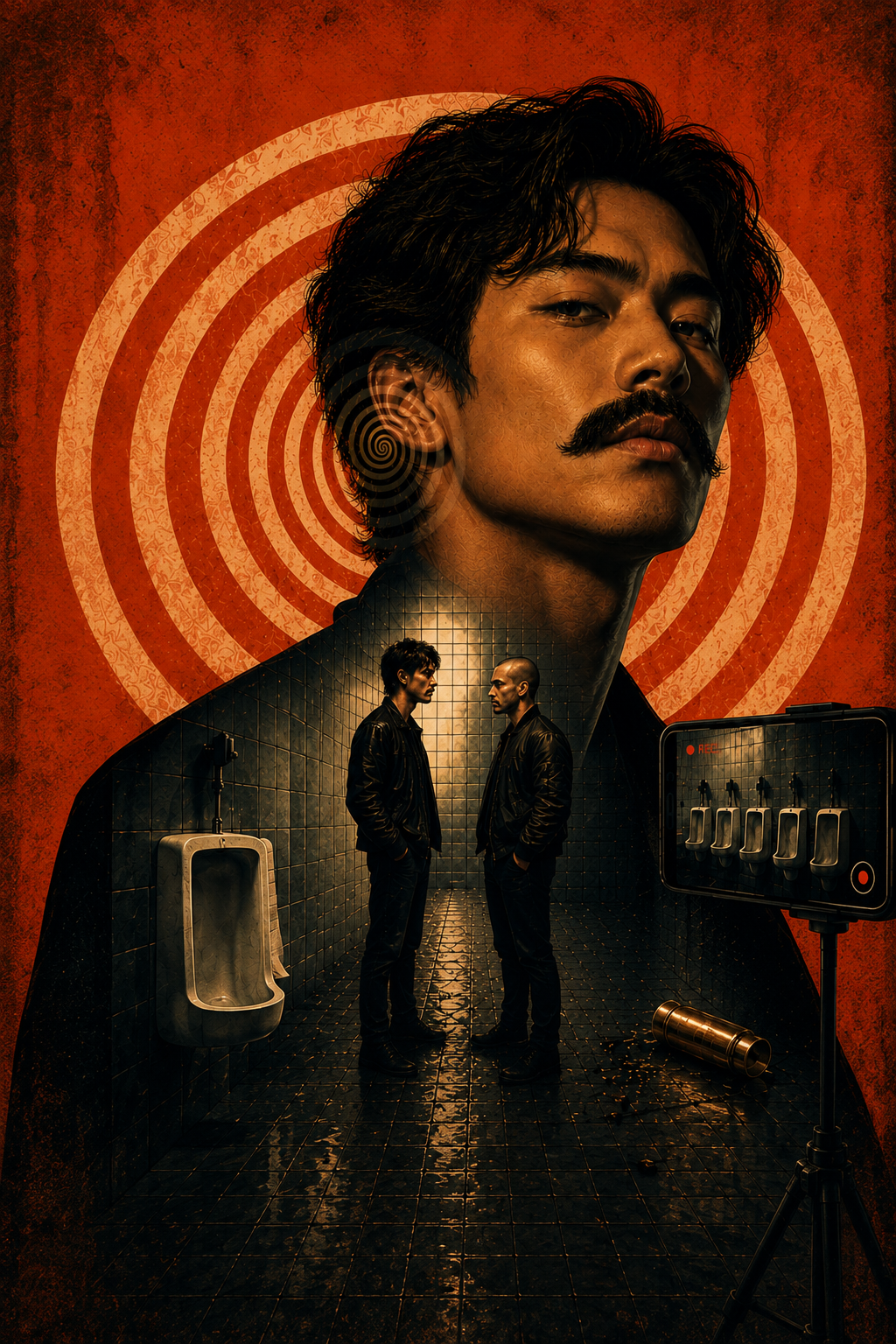
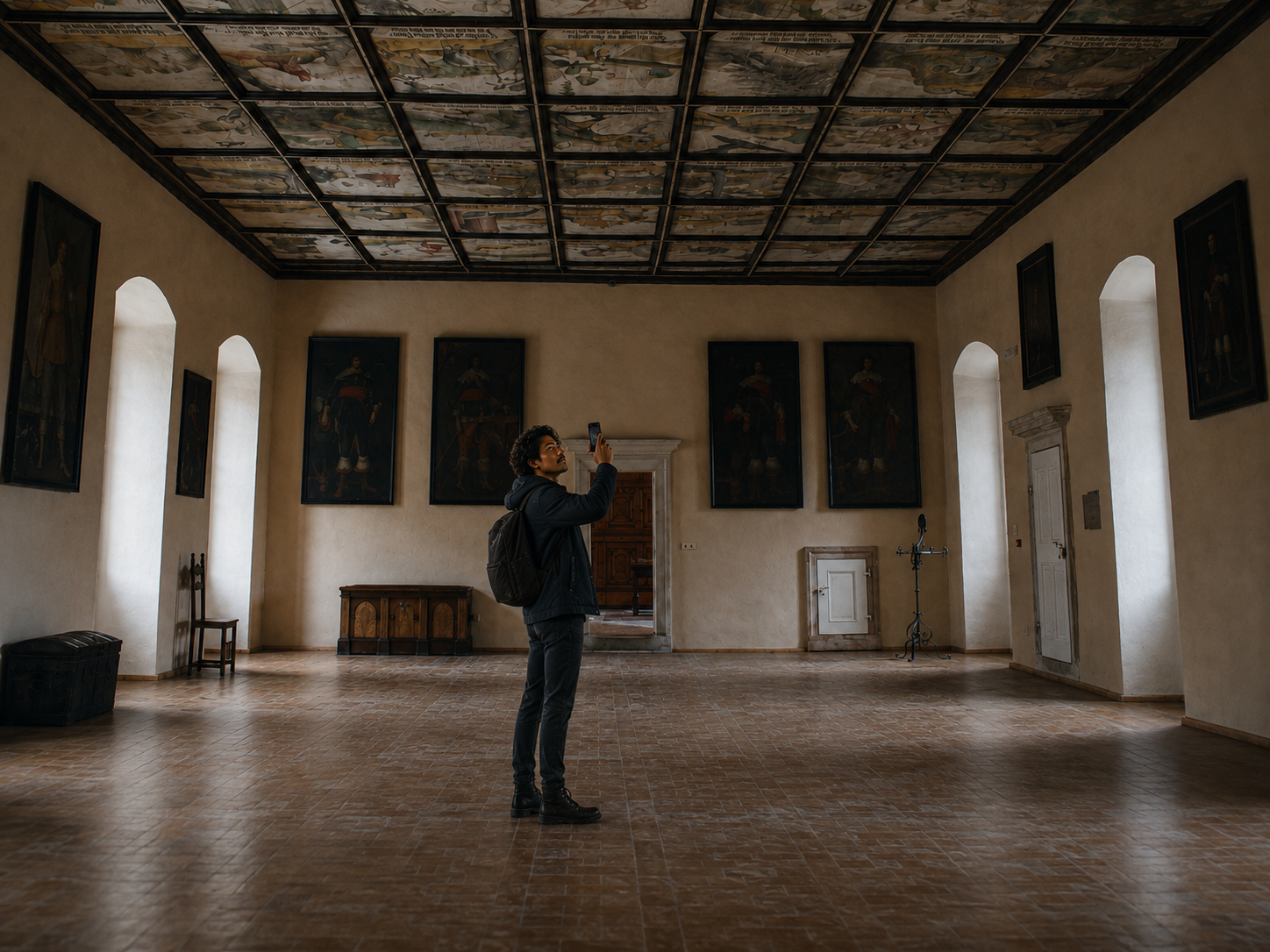
The camera enters the story twice, and each time it means something different. The first video is purely practical. With permission, Daniel films the interiors of a historical monument so he can prepare for his work as a guide. He is expressly forbidden to publish the recording. The camera captures rooms, display cases, objects, empty spaces, and the voices of people to whom no one assigns any special significance at the moment of filming. The second video is created for a completely different reason. This time, the camera is part of an intimate game between Min and Nico. It is about shyness, the gaze, the consent to be seen, and the excitement of pushing the boundaries of privacy further than one would normally allow. Min is not allowed to publish the first video; with the second one, the very possibility that someone else will see it is part of its appeal. And in time, it may turn out that an image once released into the world no longer necessarily belongs only to the person who made it.

Pět minut u pisoárů — vizuál ke knize Pět minut u pisoárů

SVĚT KNIHY

Pět minut u pisoárů

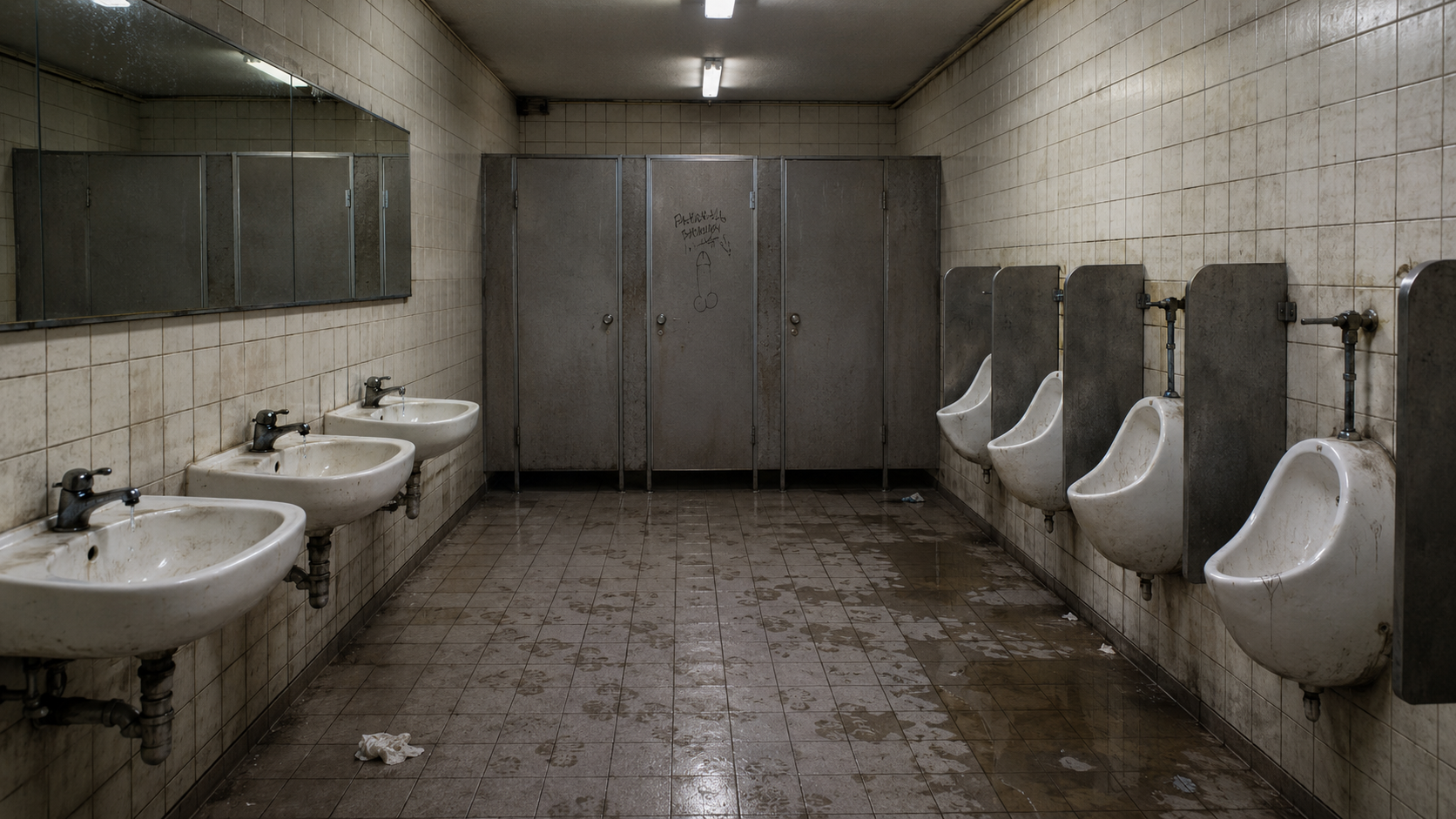
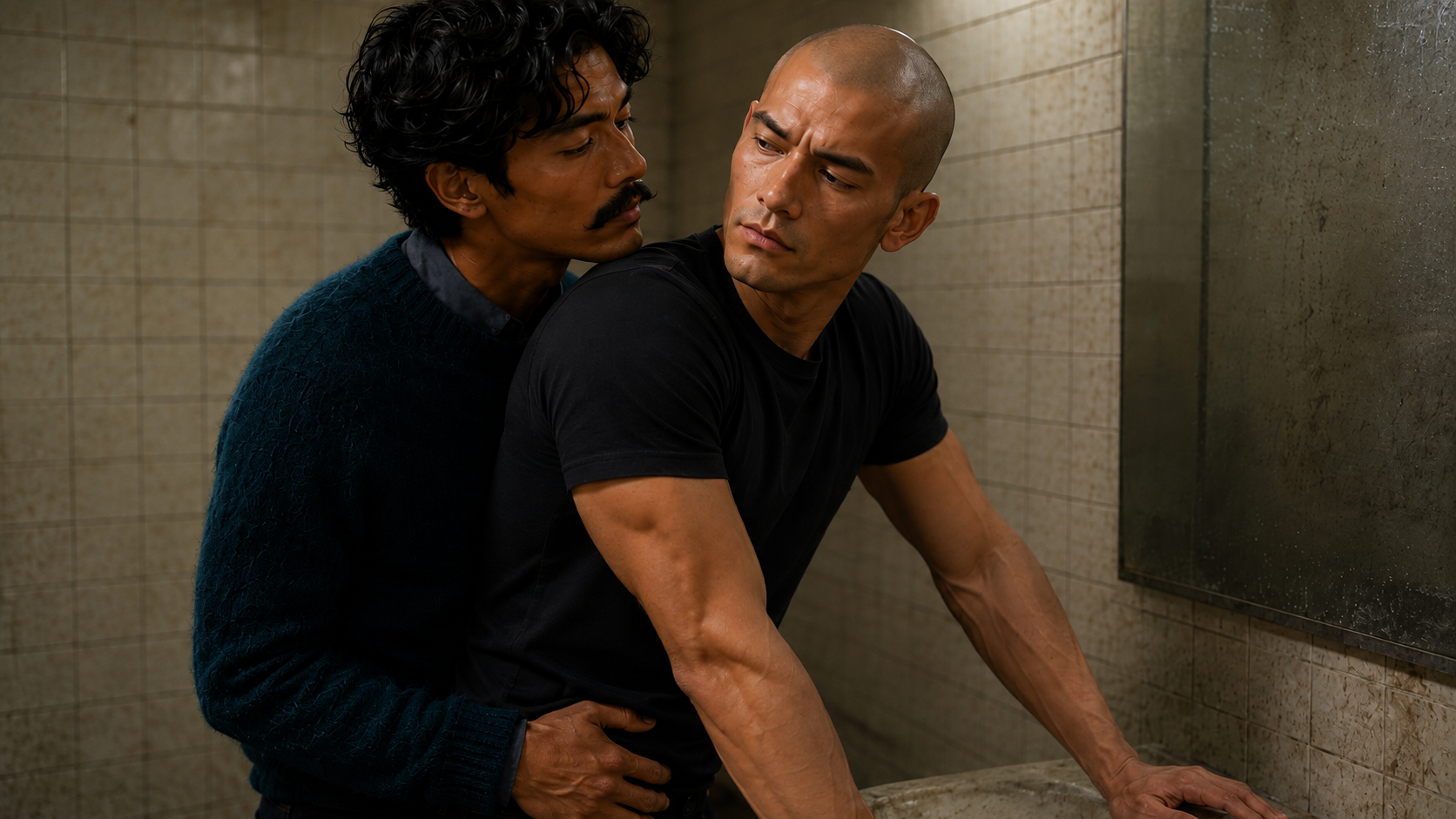
The book's title refers to a specific situation between Min and Nico in the men's public restrooms. Wet tiles, metal partitions, a mirror, urinals, jeans, smoke trapped in clothing, sweat, soap, and the scent of disinfectant and urine—at least for those who can still smell them. It is an ordinary, somewhat dirty, and very physical place that for a few minutes transforms into a space of erotic play, trust, dominance, shyness, and the gaze of other men. At that moment, Min has almost no doubt about who is in control of the situation. Yet intimate power and real power are not always the same thing, and some moments begin to look completely different the second time one looks at them.

SVĚT KNIHY

Čich a chuť

One of the prominent motifs of the book is the complete loss of smell and taste following covid. Not as a flashy metaphor and not as a supernatural ability to "sense a person." Before the illness, Daniel was simply a very sensory person. He did not just perceive what a man looked like. He perceived the smoke in his jacket, sweat, soap, breath, beer on his lips, cold air trapped in his clothing, and his own reaction to the proximity of a stranger's body. Even before Christmas, he occasionally has simple, casual sex with a man he knows from Jablonné. It is not a grand romance or a secret lifelong love. It is one of the people whose body Daniel also knows by scent and taste. When, after the illness, he finds himself similarly close to the same man, everything physically functions the same way, and yet something is fundamentally gone. The same mouth, the same skin, the same person, but without taste and without scent. Only then does Daniel truly understand how large a part of the world he has lost. Nico is later a man he will know only in this new world. Min will never have a memory of what Nico smelled like.

SVĚT KNIHY

Mužství

Pět minut u pisoárů is also a novel about the male body and how masculinity is read. Jeans, a shirt, a shaved head, a mustache, hairy forearms, a leather jacket, an unbuckled belt, a bomber jacket, or tattoos can mean attraction in one context and danger in another. The book moves on the boundary between the erotic fantasy of male dominance and the real forms of power. Not everything that is safe in fantasy is safe in the world outside it. And not everything that feels like submission in an intimate situation means actual powerlessness. Sometimes one person can perfectly control the body of another while having no idea who is actually driving the story around them.

SVĚT KNIHY

Co v knize najdete

  • contemporary job hunting horror
  • Jablonné v Podještědí before Christmas
  • a family business as a safe haven and a possible future that Min wants to step out of
  • an interview for a tour guide position at a nearby historical monument
  • an applicant who prepares far too well
  • a video taken with explicit permission and a prohibition against publication
  • suspicion that arises precisely from things done in good faith
  • covid and the complete loss of taste and smell
  • the physical world before the illness and its strangely flat form afterwards
  • the move from northern Bohemia to the next stage of life
  • a Czech Vietnamese man with two names
  • a man who has his own relationship to the question of names
  • erotic dominance and submissiveness without a simple division of actual power
  • public men's restrooms as one of the central settings of the book
  • the second video, the publication of which is part of the game
  • a single cartridge case
  • a tattoo whose meaning depends on the story one hears about it
  • things that look completely different upon a second glance
  • a thriller that for a long time can pass as a relationship novel

SVĚT KNIHY

První obraz knihy

The first image of the book is not a crime. It is a man in front of a computer, looking for work. Min is sitting in Jablonné v Podještědí, opening one job ad after another. For some he does not meet the requirements, for others they are not met by almost anyone who would actually want to work for the offered money. Some companies do not respond at all. Others thank him with an automated sentence so quickly that he doubts whether anyone even opened his resume. Downstairs in the shop are his parents. If he wanted to, he could go down and work. That is precisely what he does not want. Then he finds a job offer for a guide. It is not a dream career, a life's calling, or a great opportunity. It is something else. And Min decides that this time he will do everything right. Perhaps that is precisely where the trouble begins.

Prostředí — vizuál ke knize Pět minut u pisoárů

SVĚT KNIHY

Prostředí

The story begins in Jablonné v Podještědí and the landscape of northern Bohemia. It includes a parental shop, a row of garages, and places in a small town that exist somewhat out of the main view, as well as a historical monument on a hill, the path upward, a winter forest, a police station, and Christmas. Later, the setting changes. Prague arrives, apartments, big city streets, places where a person is truly alone with someone, as well as places where they only think they are. Public toilets, a telephone screen, and the internet gradually begin to carry the same importance as physical rooms and corridors. Pět minut u pisoárů is not a novel confined to a single house or a single city. Its setting changes just as Min's way of perception does. At the beginning, northern Bohemia has a smell and a taste. Later on, it no longer does. Some places Min sees directly for the first time and the second time through a screen. And it is precisely the second view that is sometimes the more dangerous one.

Nábojnice — vizuál ke knize Pět minut u pisoárů

SVĚT KNIHY

Nábojnice

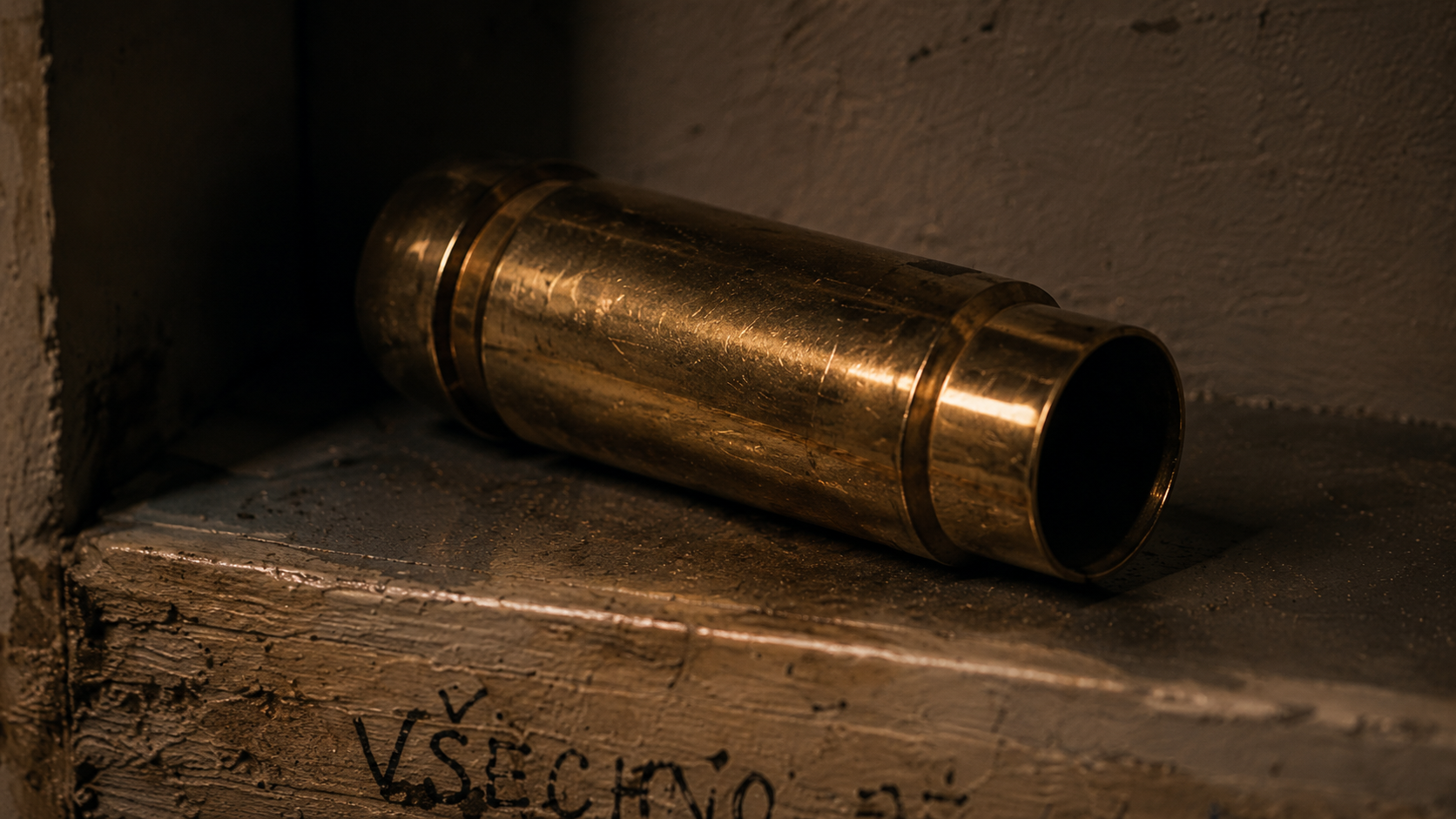
One of the recurring objects in the book is a fired cartridge case. It is not automatically evidence or a murder weapon. It is an ordinary object that can be explained very easily if a person believes the story surrounding it, and much harder at the moment when they stop believing that story. The exact same thing can at various moments signify professionalism, a memory, a decoration, a warning, or something for which no comfortable explanation remains. Yet the cartridge case does not change. The person looking at it changes.

O čem Pět minut u pisoárů je — vizuál ke knize Pět minut u pisoárů

SVĚT KNIHY

O čem Pět minut u pisoárů je

It is a novel about trust, identity, shame, and desire. About how easily we confuse intimacy with knowledge, and how it is possible to know another person's body very intimately and yet not know everything essential about the person living inside it. About how two names do not have to mean a double life — and how sometimes they do. It is also about the difference between intimate and actual power. About the fact that a person who looks defenseless in one situation may not be powerless at all. About images that look like definitive proof of reality, even though the camera always captures only what is right in front of its lens. And also about the fact that a person does not have to overlook a warning sign because they are stupid. Sometimes they just find the story into which that sign fits all too convenient.

ZAJÍMAVOSTI ZE SVĚTA KNIHY

Zajímavosti ze světa knihy

Pět minut u pisoárů is based on several real experiences, but the novel itself is a work of fiction. Names, characters, places, professions, and specific circumstances have been transformed into a standalone story. Jablonné v Podještědí forms the starting world of the book. The historical monument itself is fictionalized so that the story is not a reconstruction of a specific real event. The complete loss of smell and taste after COVID manifests not only in the plot but also in the style of narration. Before the illness, the world has a pronounced olfactory and gustatory layer; afterwards, both layers disappear from the prose, just as they disappear for Min. The protagonist's dual name is not a sign of a secret. Quite the contrary. Min and Daniel are two legitimate forms of the same person. Because of this, the mere discovery that someone else uses multiple names does not automatically cause Min to take it as a warning. The erotic level of the book is not separated from the thriller. Questions of dominance, submission, shame, gaze, and control belong directly to how Min interprets the other person. The title of the book therefore denotes not only a place, but also a moment that, depending on what a person currently knows, can be understood in several completely different ways.

PRO ZARYTÉ FANOUŠKY KNIHY

Ještě zůstat ve světě

AUTORSKÝ A VYDAVATELSKÝ CYKLUS

Jak vznikají a vycházejí moje knihy

My books are not published in all formats at once. Each goes through a gradual authorial and publishing cycle.

  1. I write the book.
    The text, characters, world, atmosphere, and the entire authorial context are formed.
  2. At the same time, I compose music.
    Songs, motifs, moods, and a soundtrack are created for the book.
  3. I release the music.
    First on SoundCloud, then on Spotify, Apple Music, Amazon Music, and other platforms.
  4. I release physical music.
    Selected projects are followed by vinyl.
  5. The book goes to Forendors.
    It appears there in advance as part of supporting my work.
  6. The book goes to the Endralon Space website.
    It gets its own page, information, excerpts, links, and context.
  7. The book goes to Wattpad.
    I publish it there gradually, chapter by chapter.
  8. The printed book follows with partners or via the printing platform.
    This is a publicly available edition of the book.
  9. After that, I am preparing an e-book.
    First PDF, then EPUB. It is not just saving a file, but typesetting, checking, and preparing a readable version.
  10. The audiobook follows.
    That comes only after the text and book part of the cycle.
  11. Finally, signed author copies arrive.
    I have the books printed, sign them, and send them to readers personally.

What this means for readers

When a PDF, EPUB, audiobook, or signed copy is not yet available for a book, it is not an error or a forgotten item. It means the book is currently in a certain stage of publication. I add formats gradually, without a fixed time promise, as the entire authorial cycle naturally reaches its completion.


TECHNICKÉ ÚDAJE

Název
Pět minut u pisoárů
Autor
Antonín Deliš
Žánr
psychologický román / thriller / queer noir
Formát tištěné knihy
148 × 210 mm
Rozsah
243 stran
Datum vydání
1. 9. 2026
Jazyk
čeština
Vydavatel
endralon.space
Tištěná kniha
Dostupná na Lulu
E-kniha na Google Play
Připravuje se — čeká na schválení

SOUČÁST SVĚTA ENDRALONU

Součást světa Endralonu

Pět minut u pisoárů is a novel about a man who is convinced he can read others well. Perhaps he truly can. Yet a body, a glance, an ID card, a phone call, or a video may not be answering the same question. Some things a person only understands upon a second look. And in the meantime, thousands of other people may see some of these images.

Connection to the cycle

Pět minut u pisoárů is a standalone novel, set in the same world as the pentalogy Dry your hair at 15:30, 2:45. Some characters, events, and their consequences intersect between the books; however, each of them is told from a different proximity and in a different light.

ENTER THE WORLD OF THE NOVEL "Pět minut u pisoárů"


FORENDORS →


WATTPAD →


READ HERE →


SPOTIFY →


VINYL →


AUDIOBOOK


BUY BOOK AT RETAILER →


RATE BOOK ON DATABÁZE KNIH →

VSTUP DO SVĚTA KNIHY

Vyber si, kudy vstoupíš

Čtení, tištěná kniha, hudba a další podoby románu na jednom místě.

Sdílet článek

Další možnosti sdílení

Další aplikace najdete v nabídce „Sdílet do aplikace“, pokud je podporuje vaše zařízení. Odkaz můžete také vložit do libovolné sítě nebo zprávy.

PUBLISHED · NEW TITLES

Open worlds

All books ↗

IN PREPARATION · 2026

What is happening now

Books in progress, newly finished texts and everything currently moving forward in the world of Endralon.

Open updates ↗

SEARCH THE SITE

VISITOR ARCHIVE

Who has passed through this world?

Today—

Traces of people among books, soundtracks and night cities.

TOTAL
12 937
THIS MONTH
—
Yesterday
—
Visitor measurement is temporarily paused.