
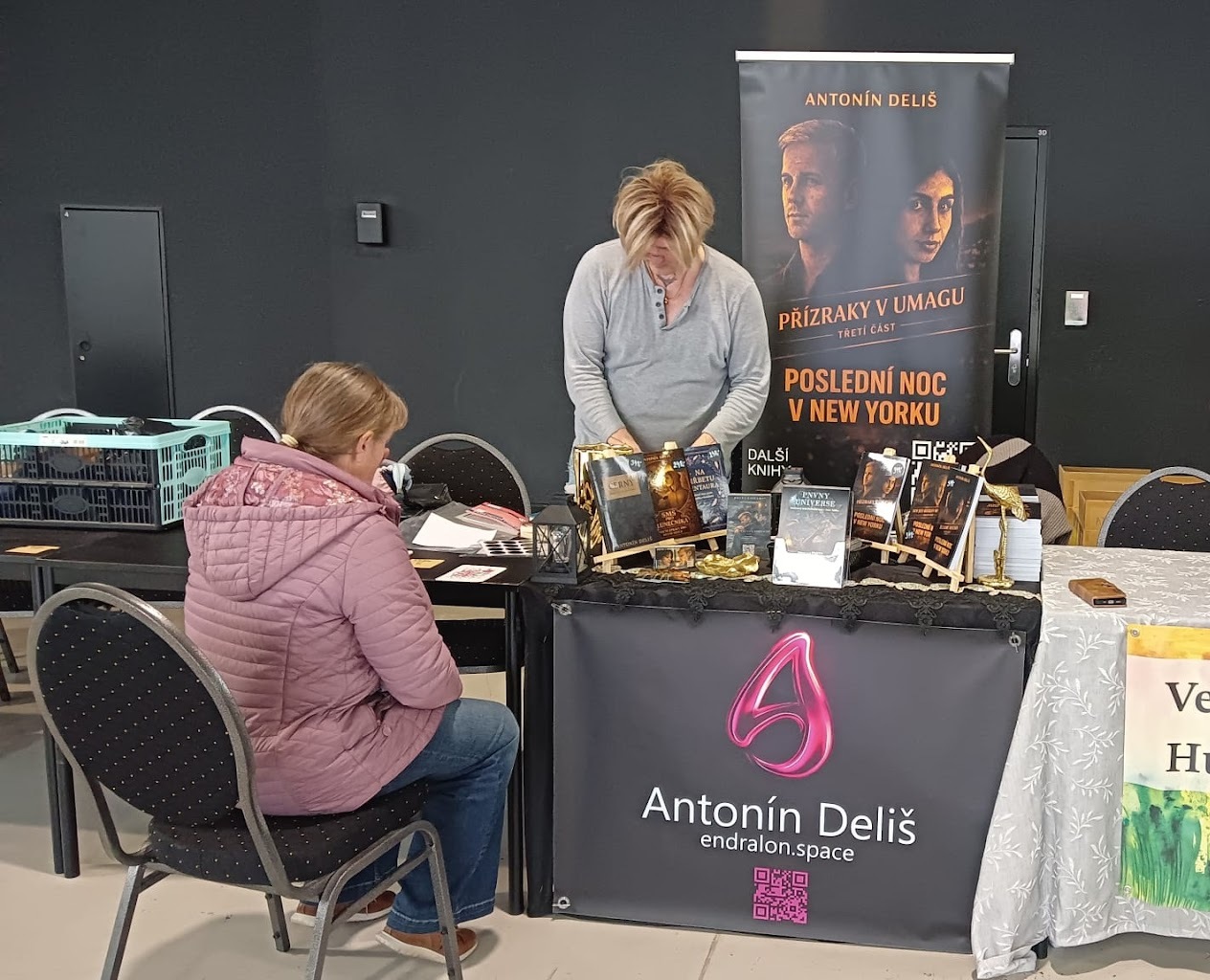
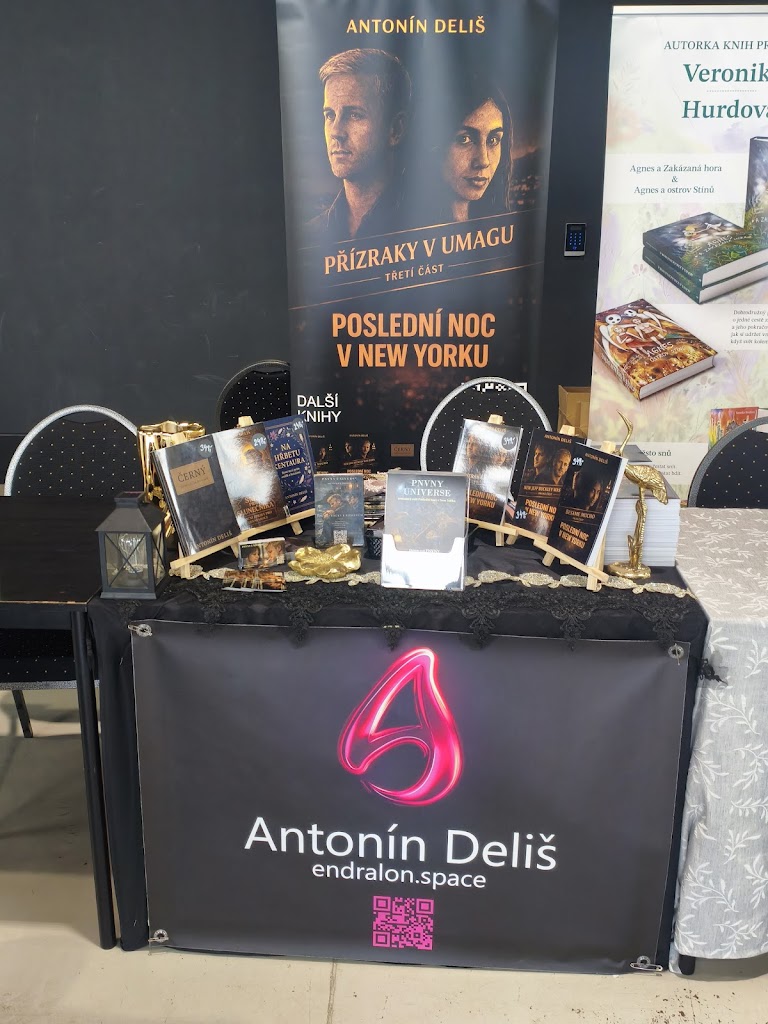
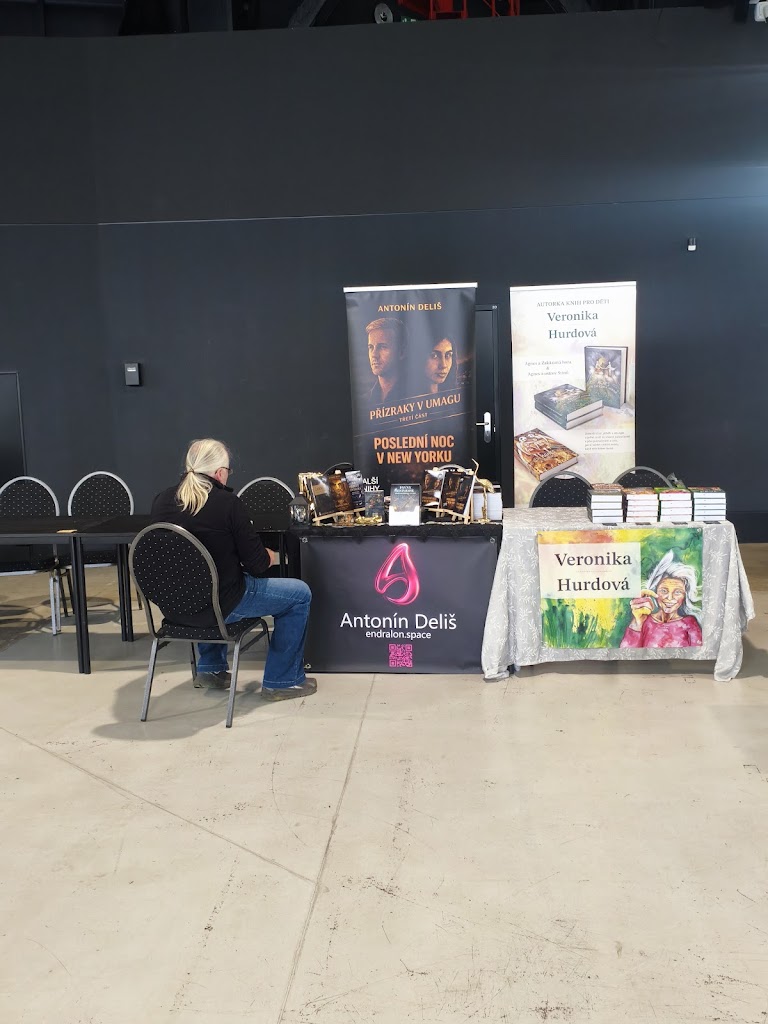
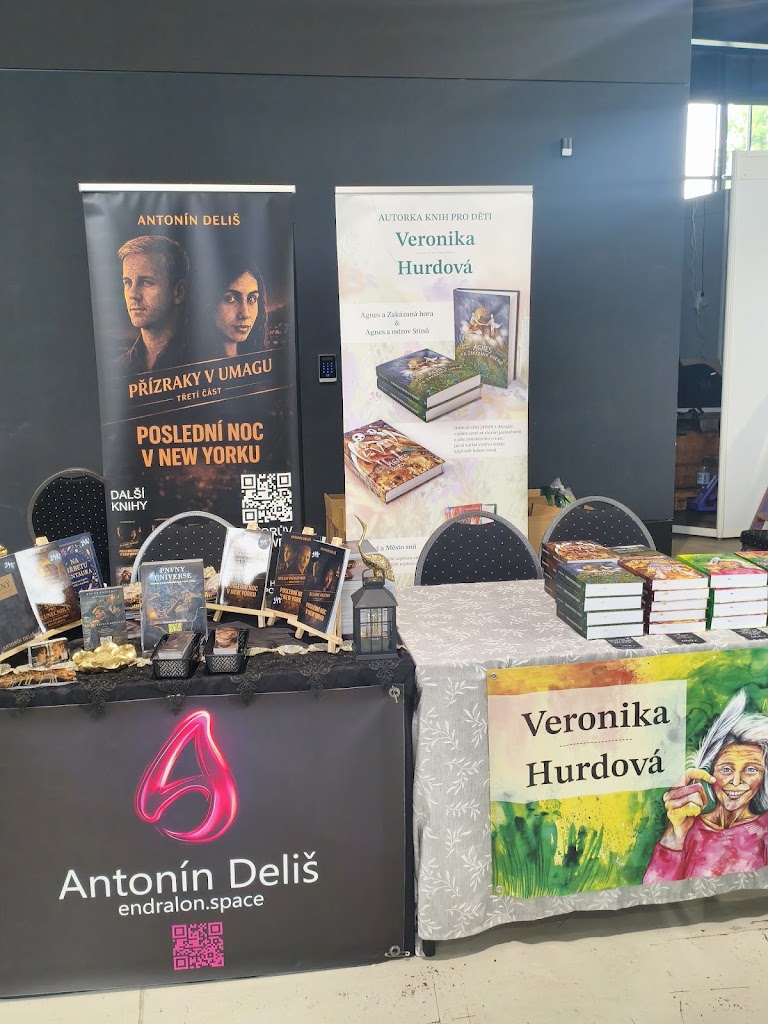
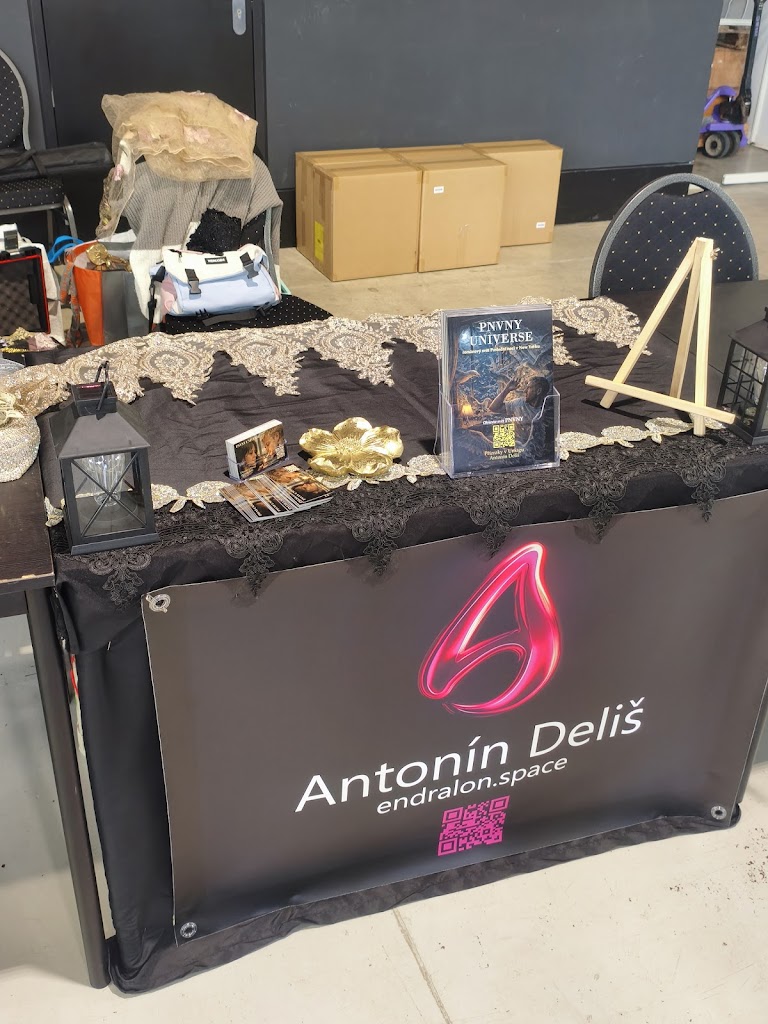
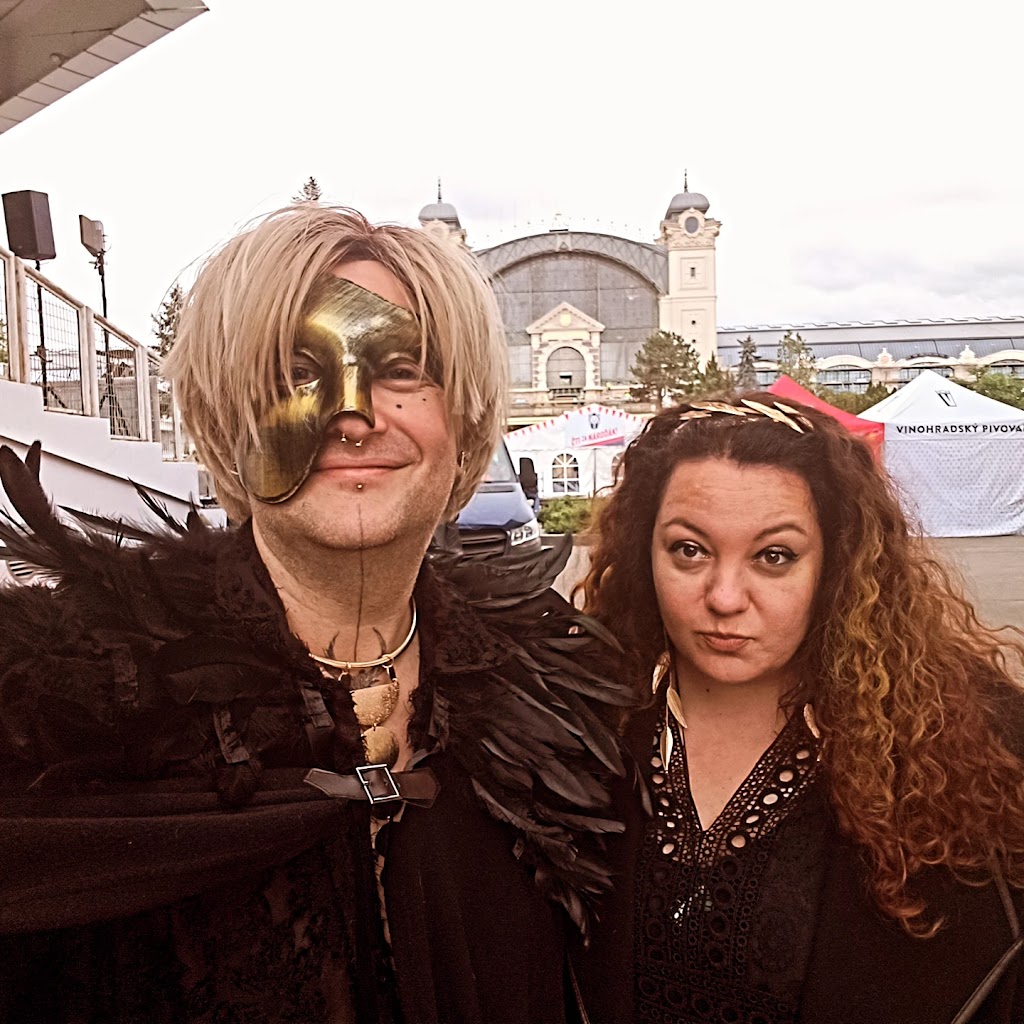
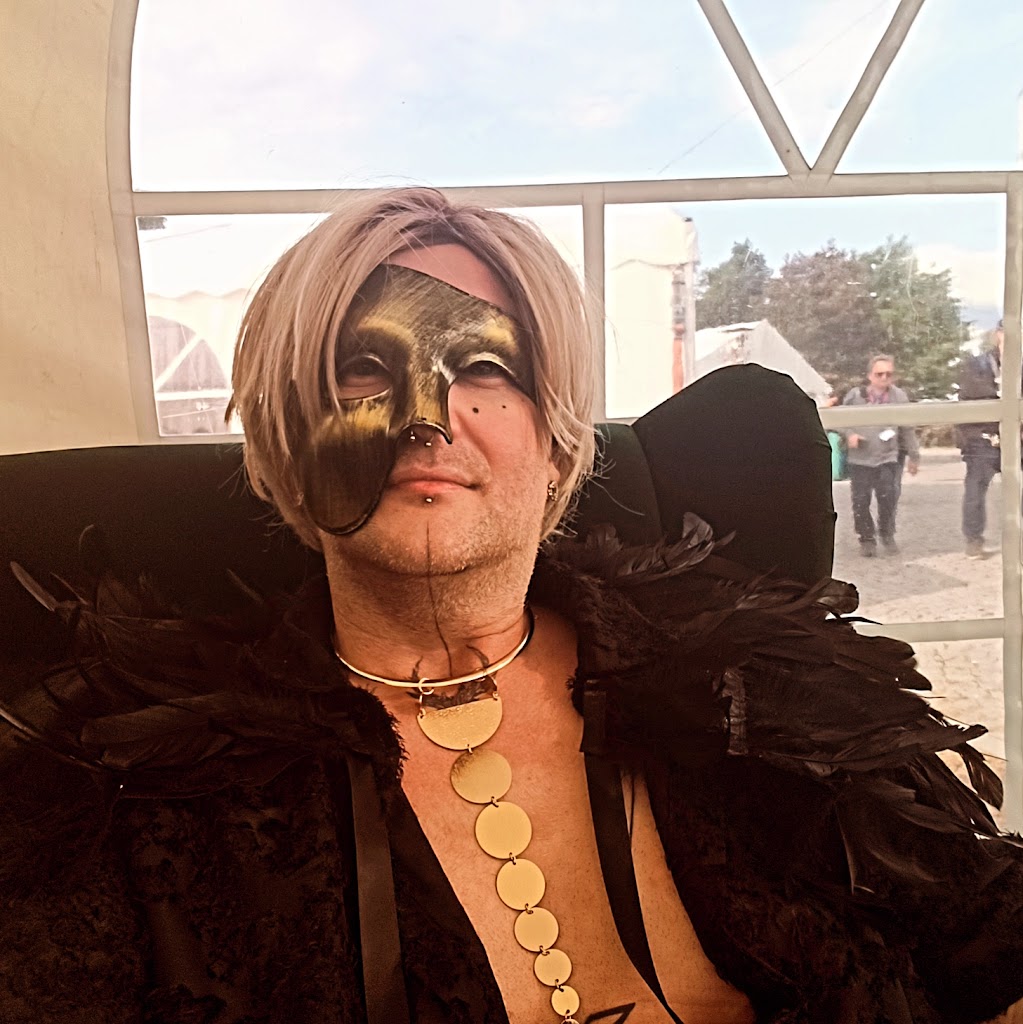
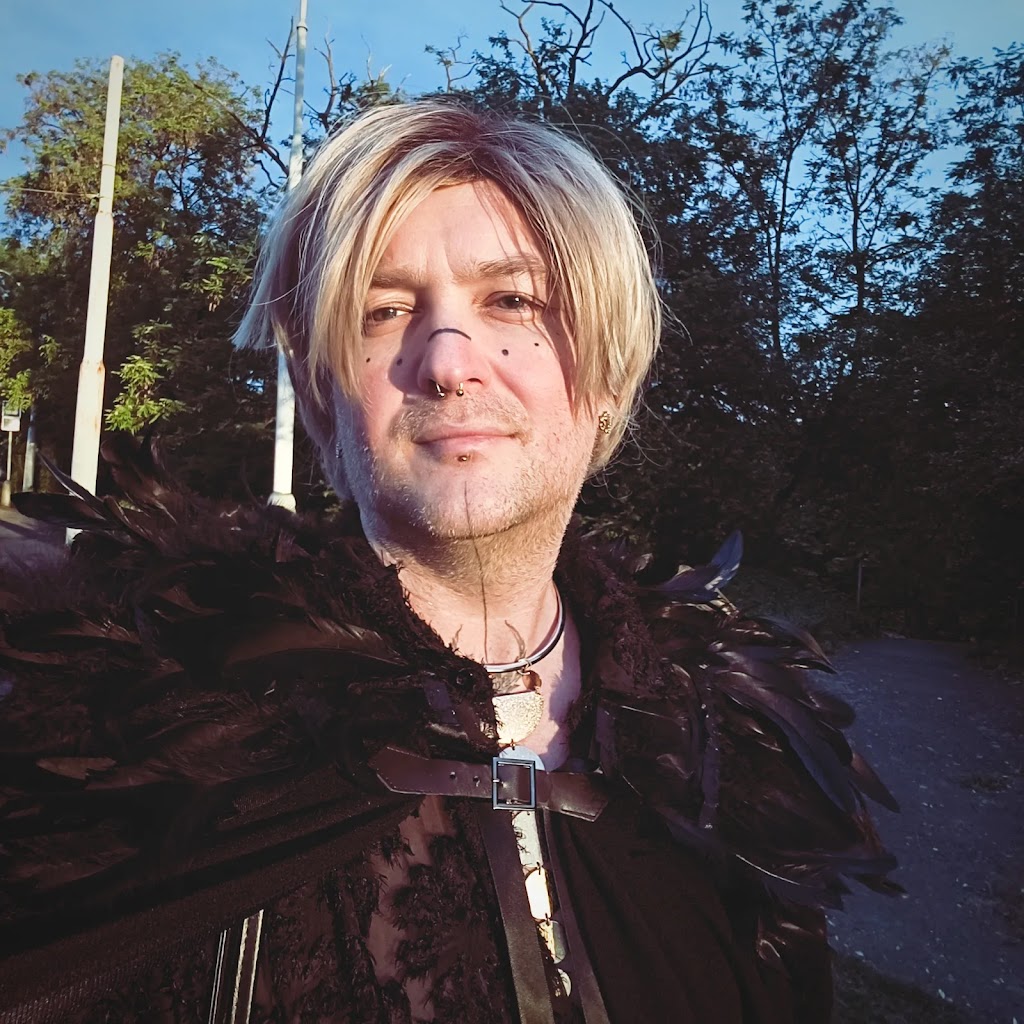
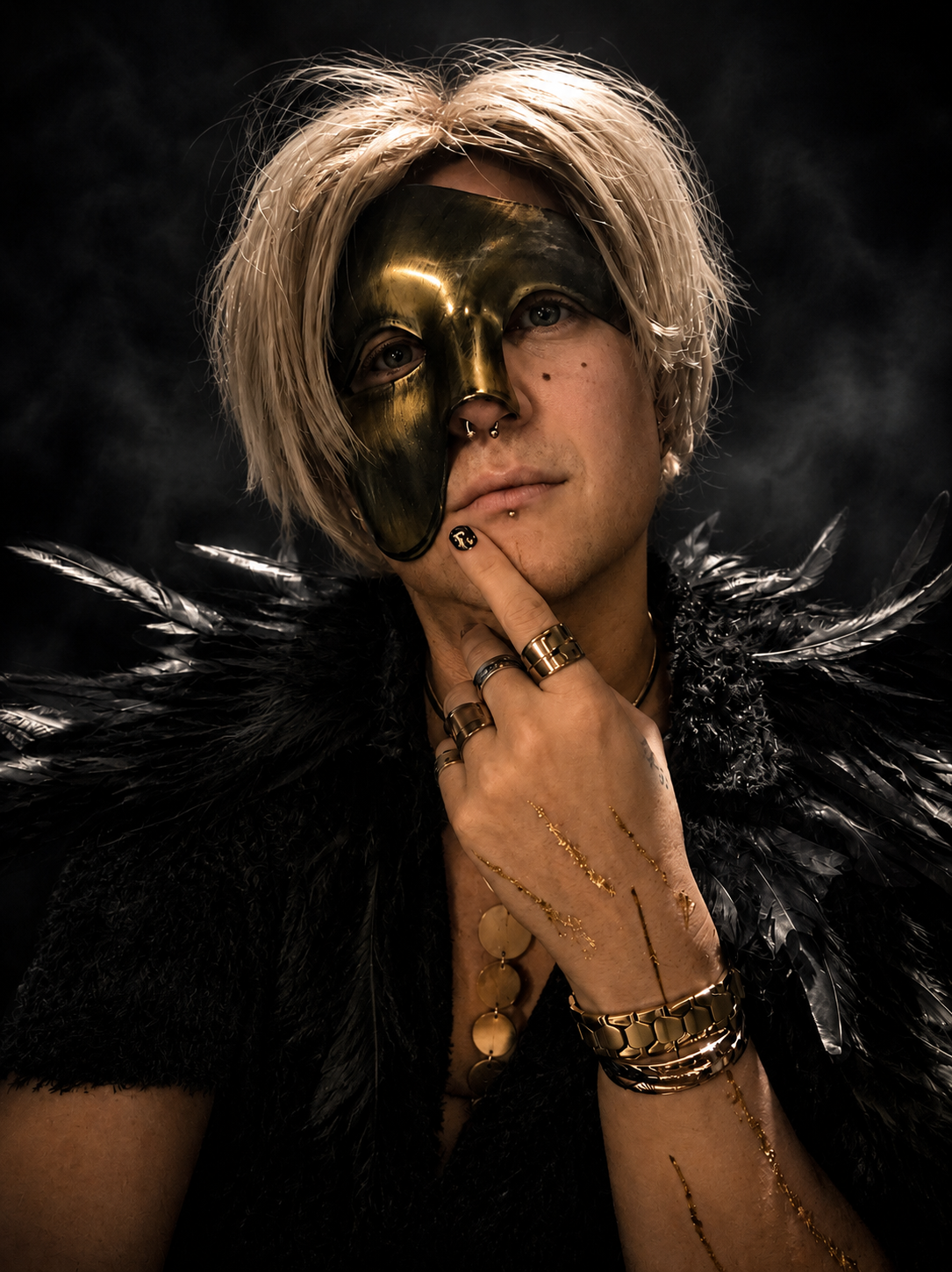
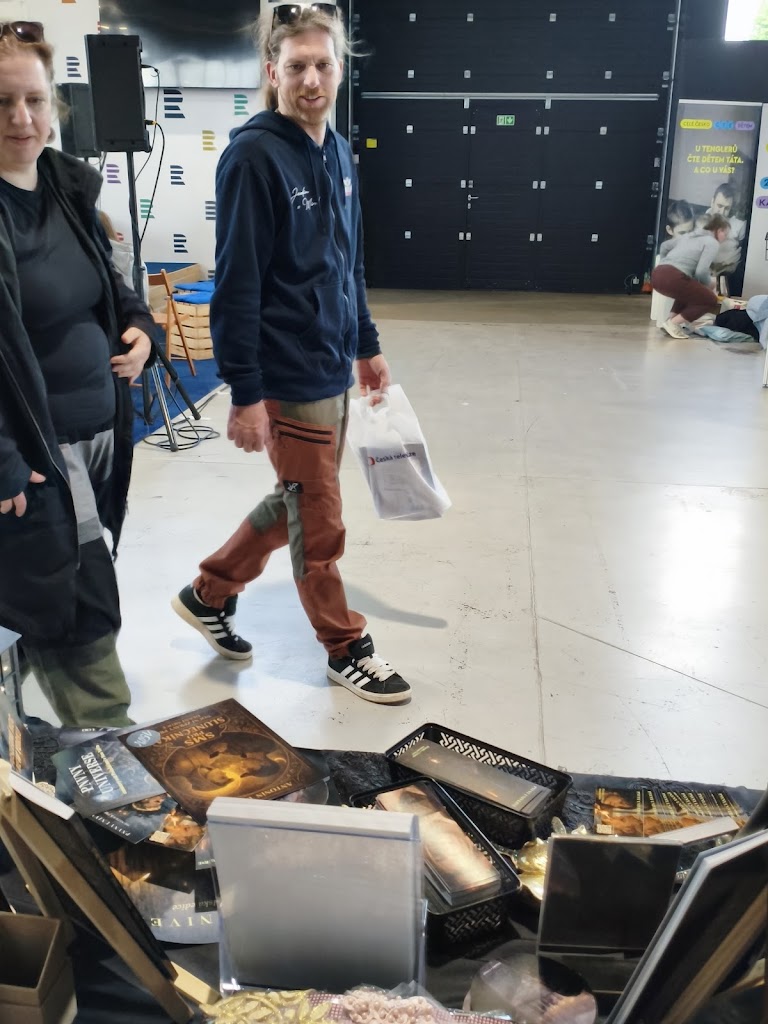
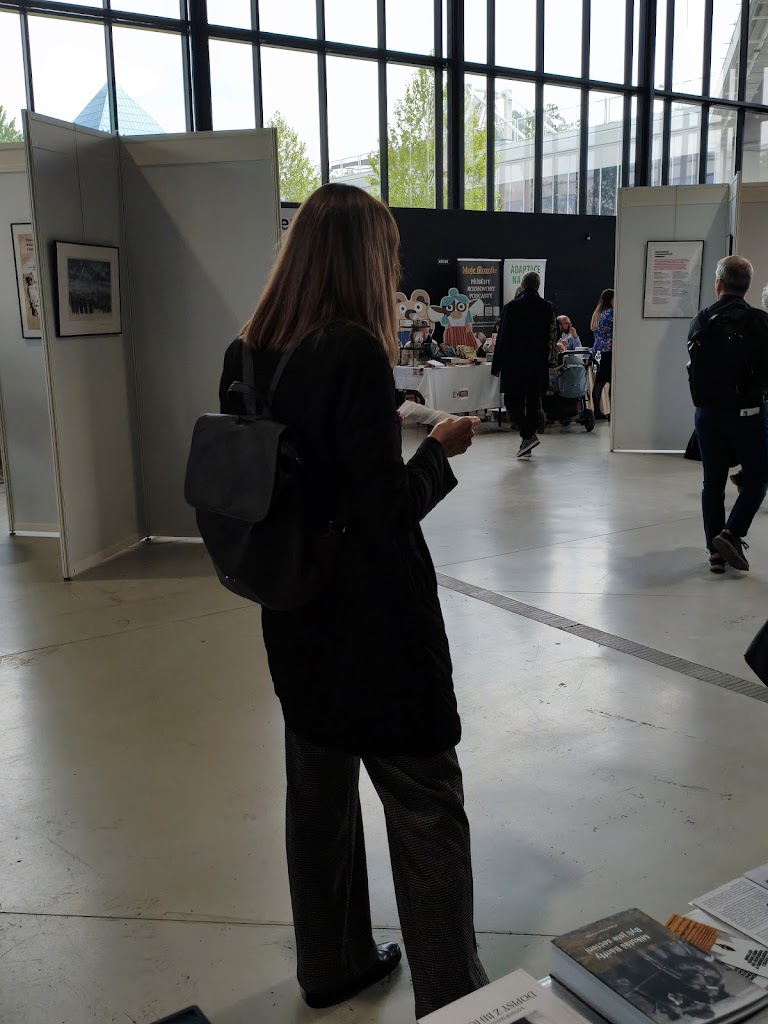
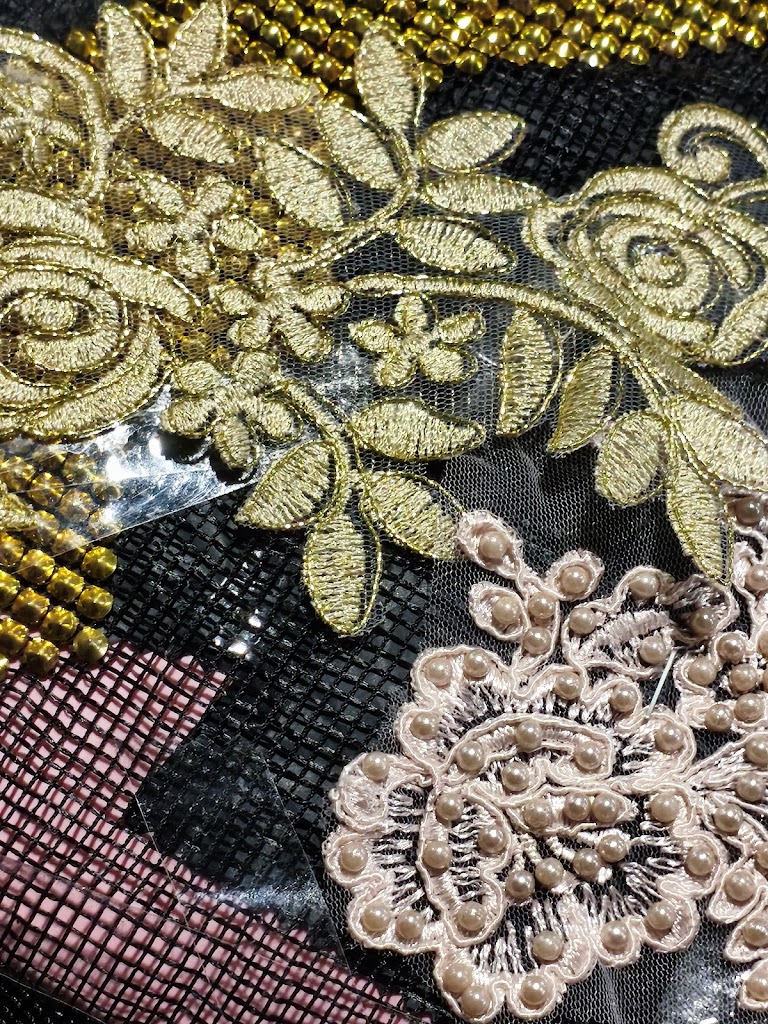
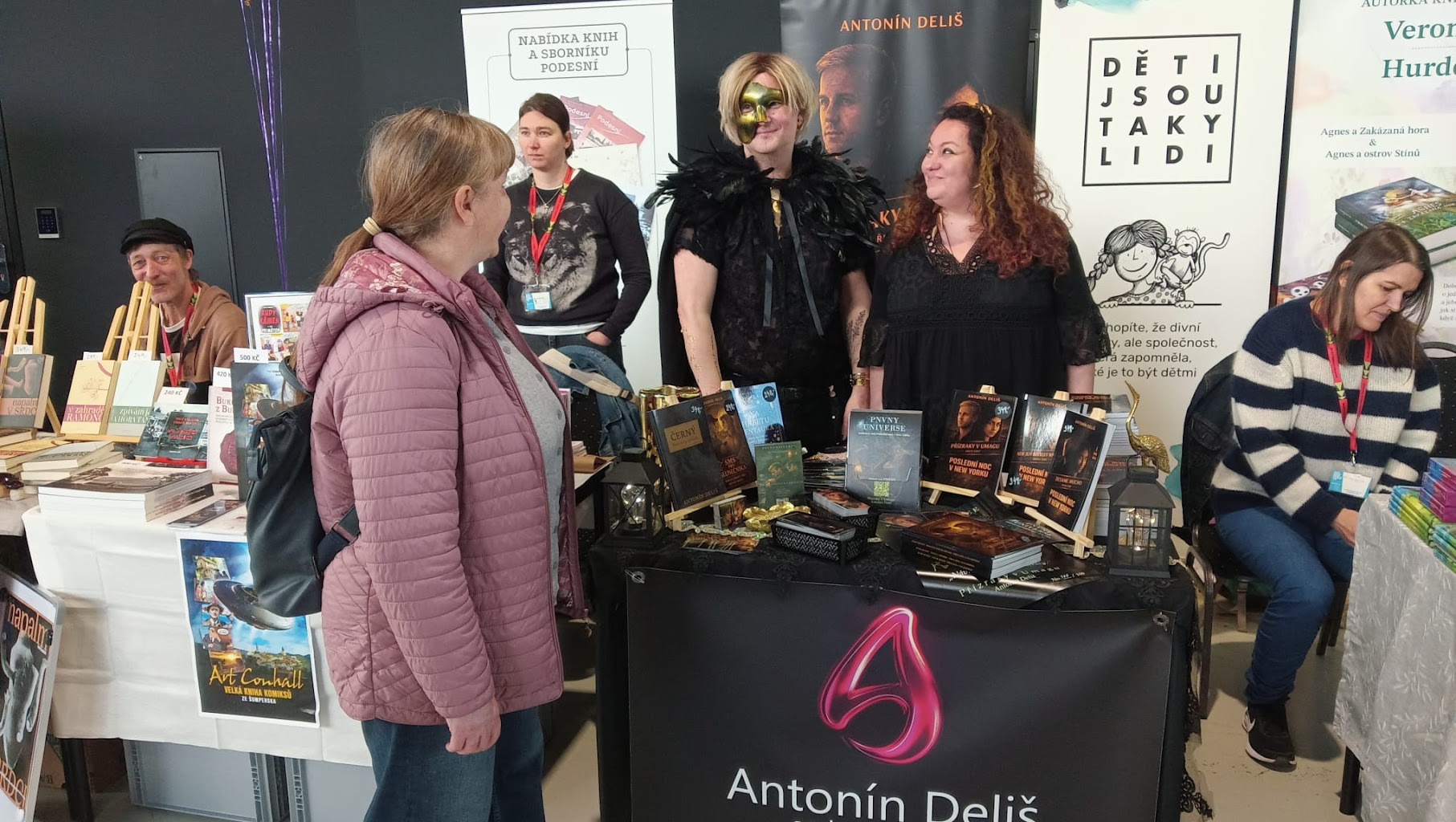
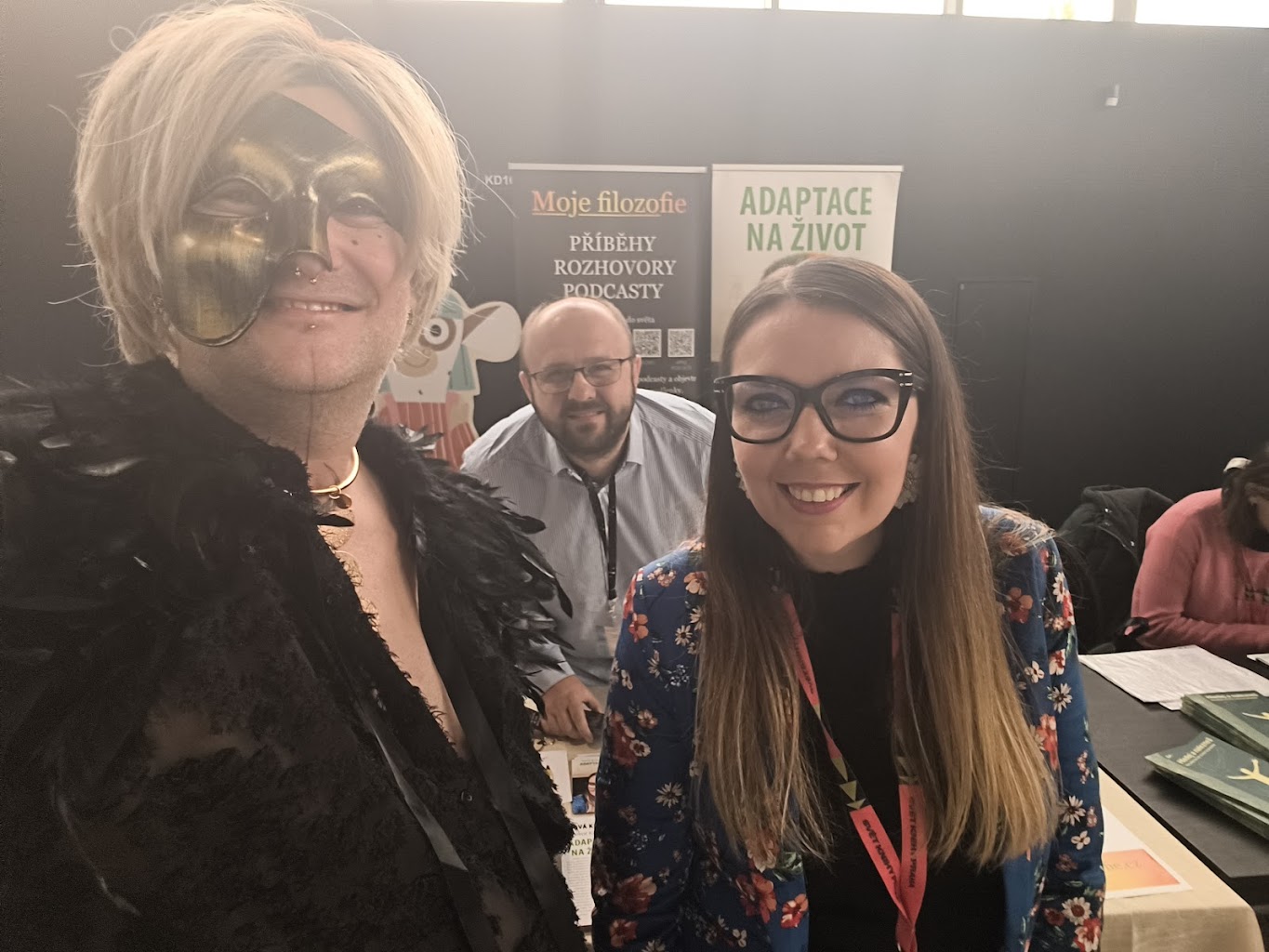
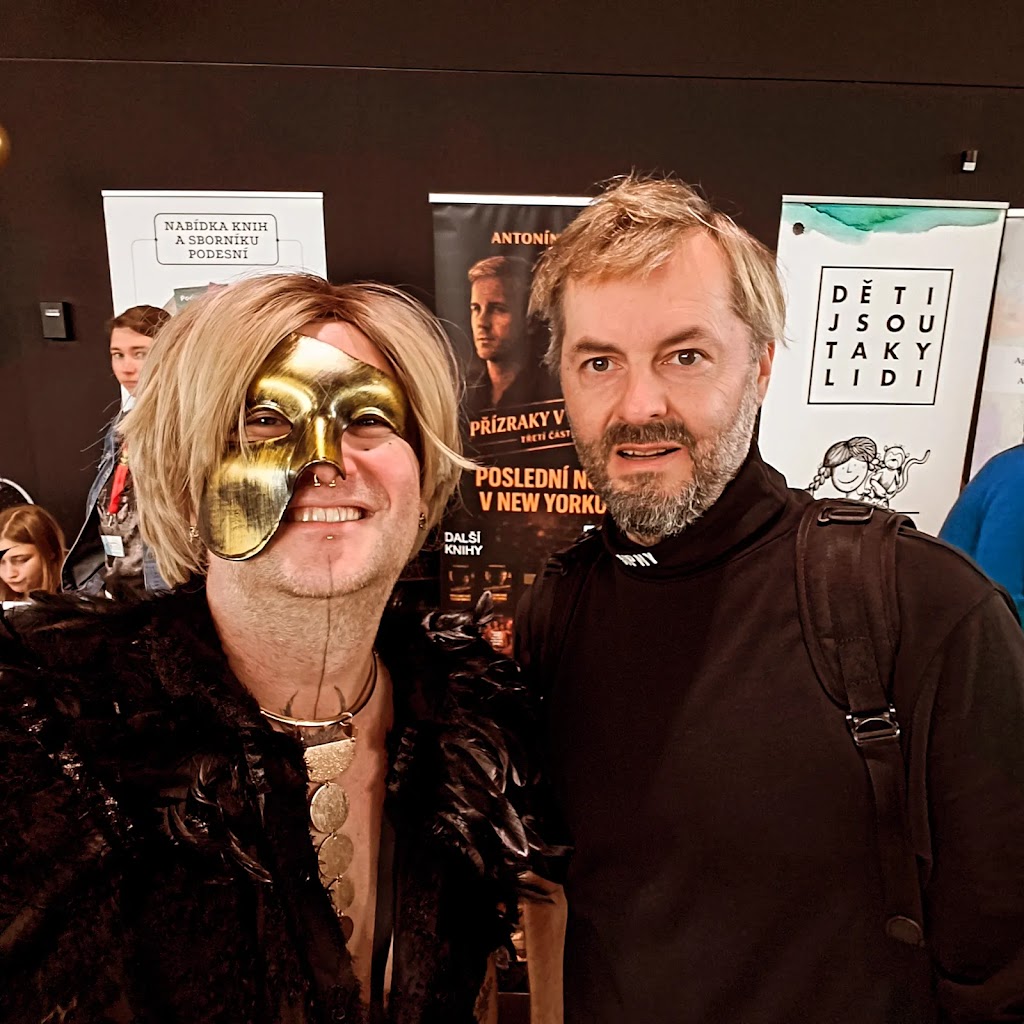
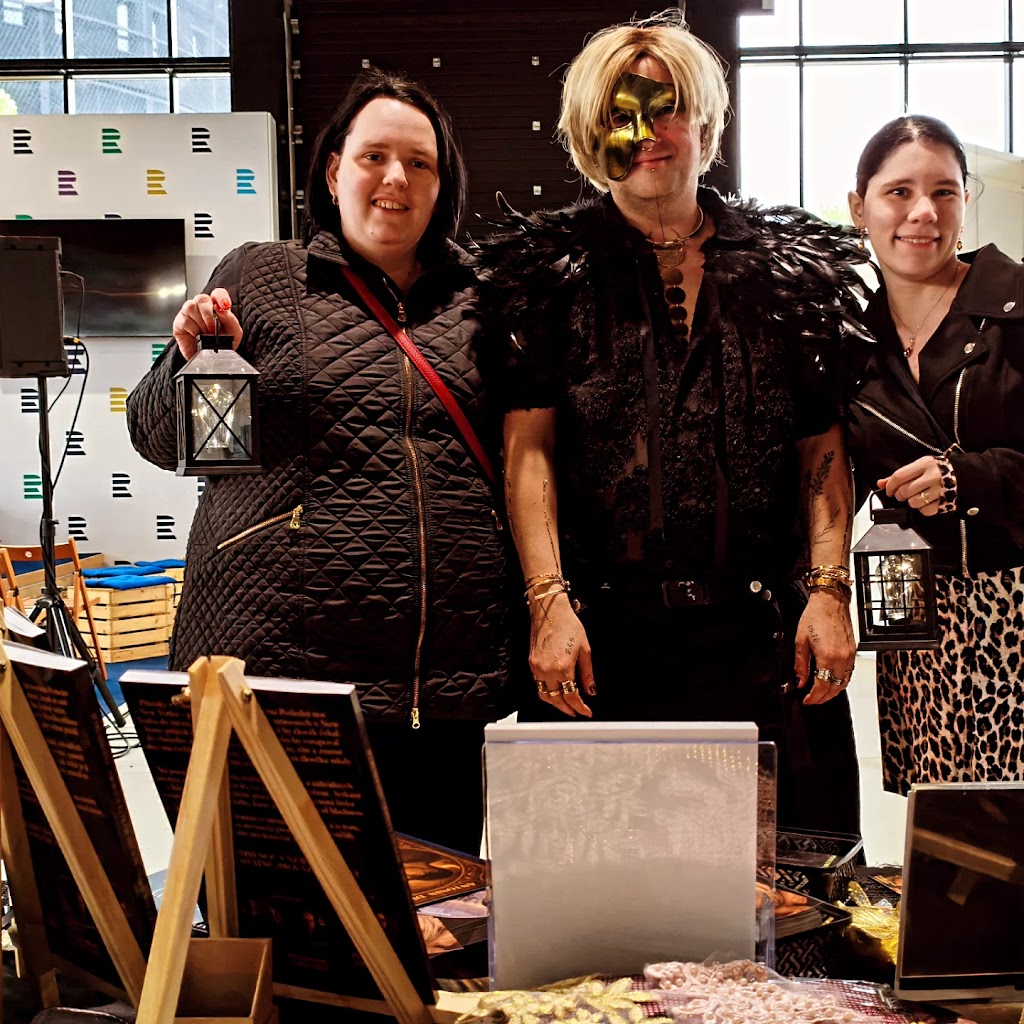
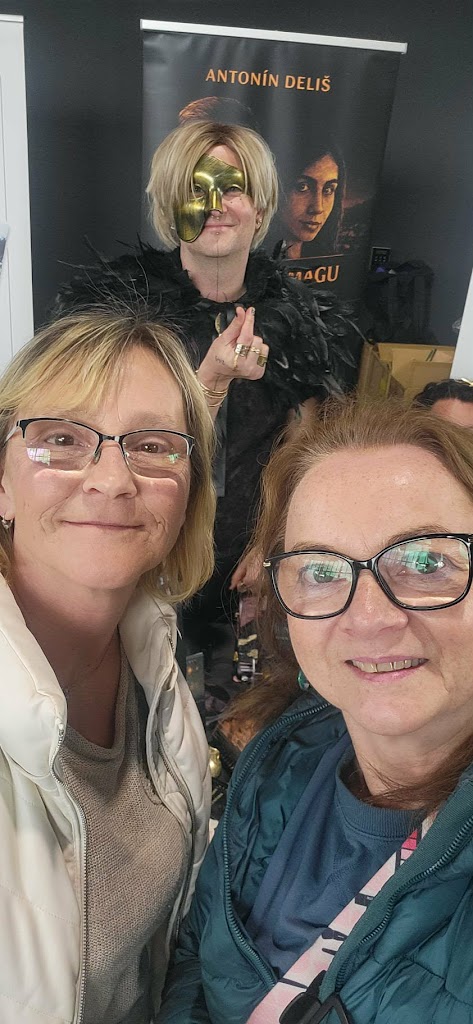
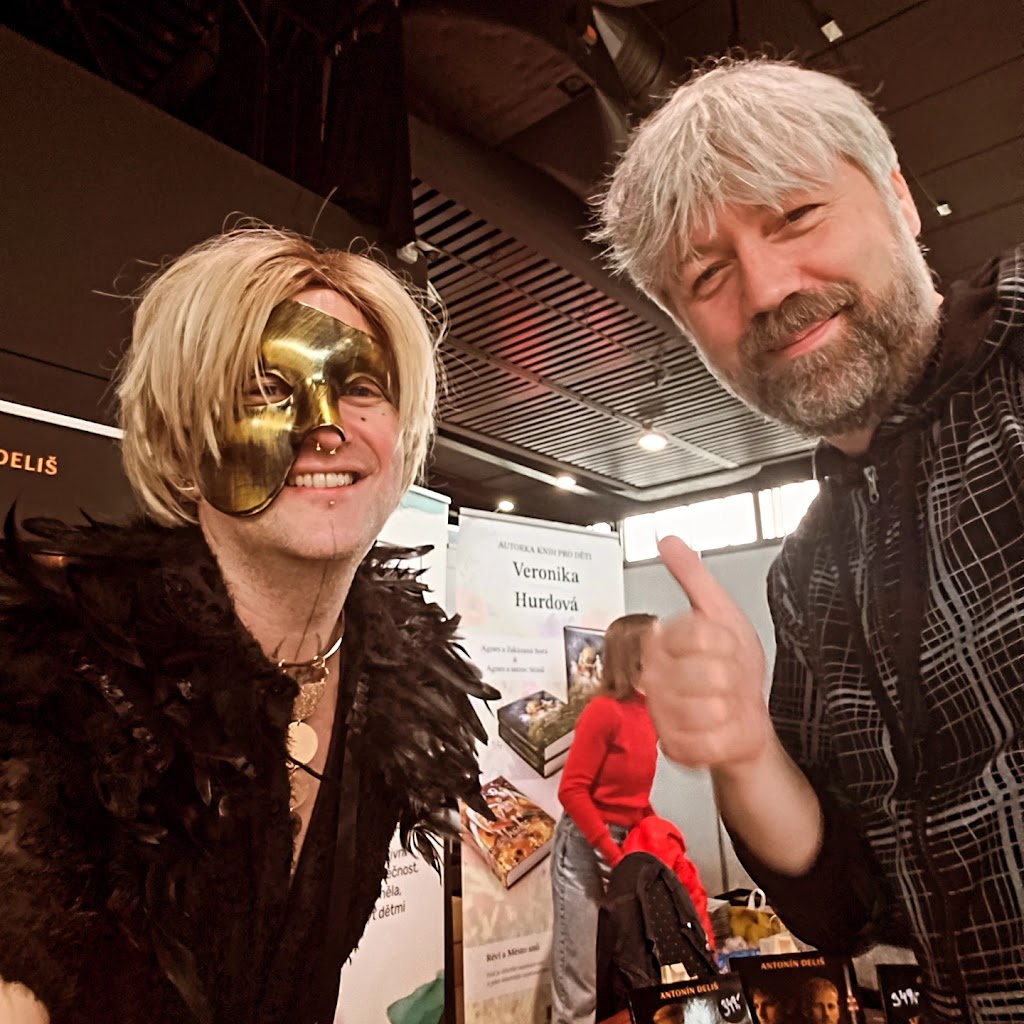
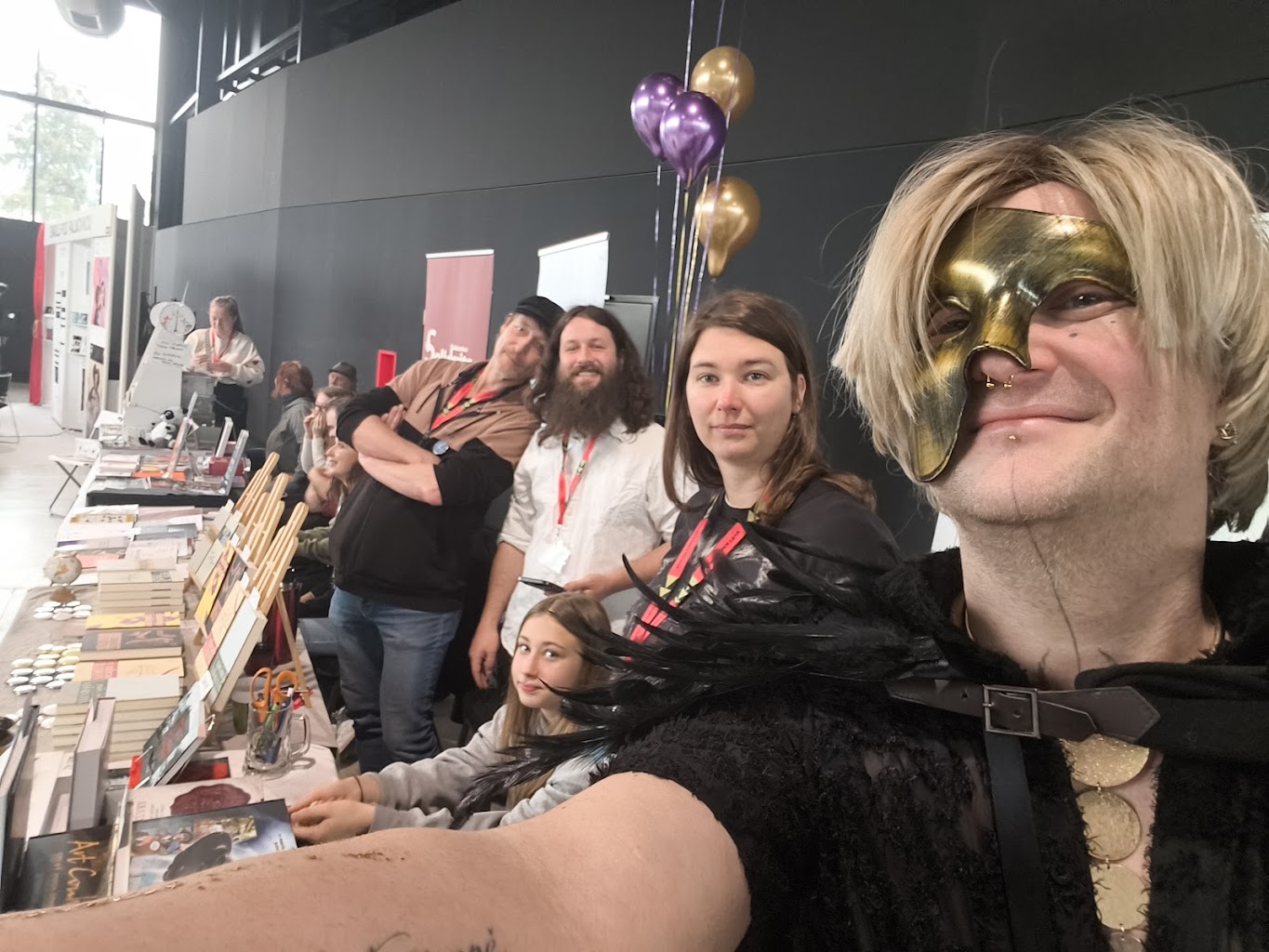
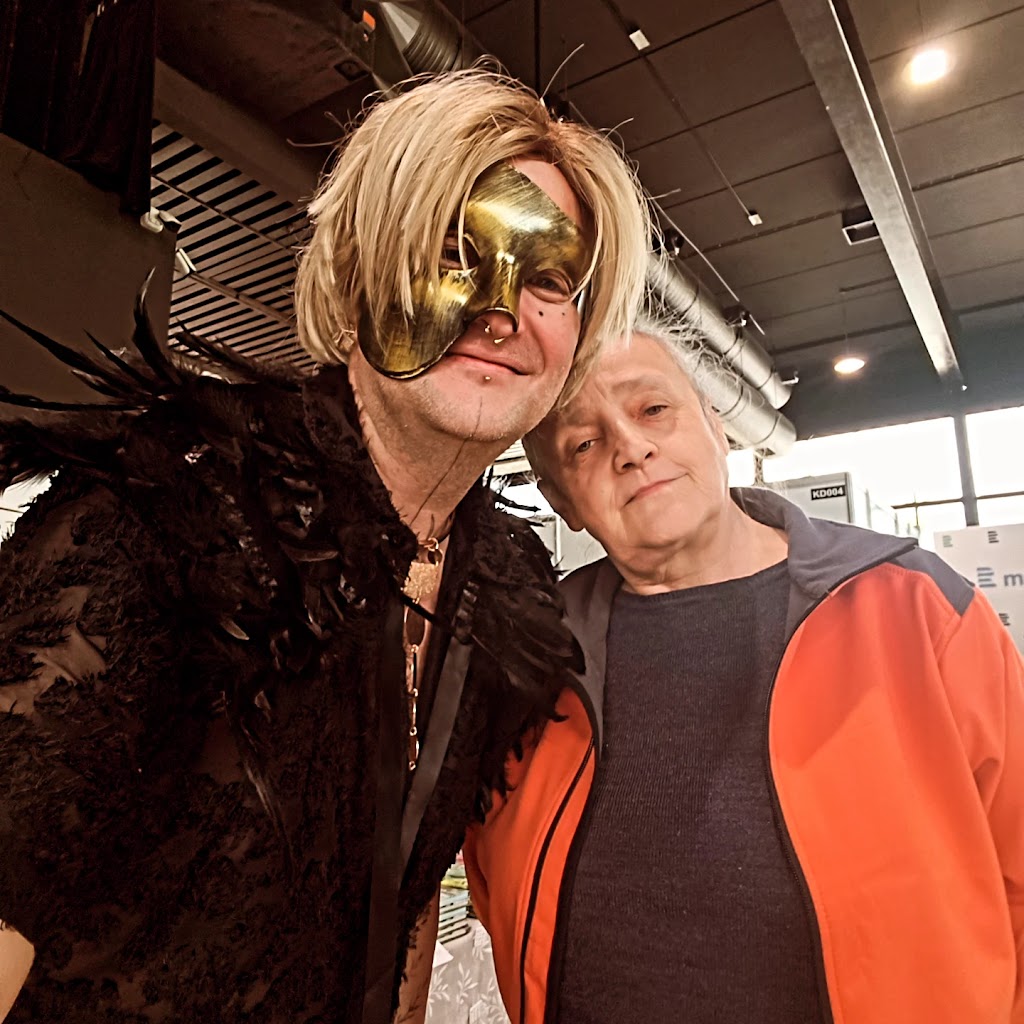
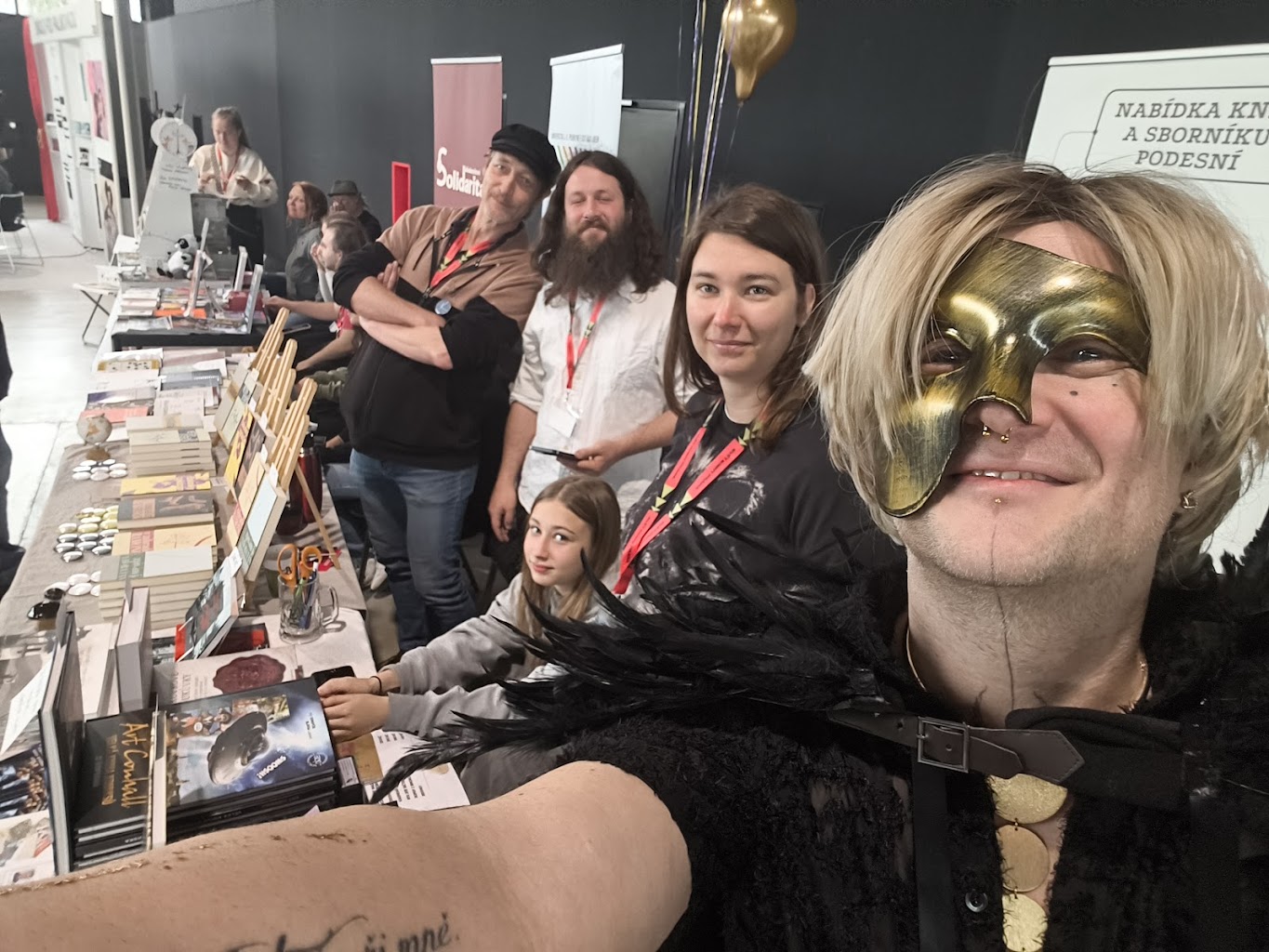
I came to Svět knihy in 2025 as a reader. A year later, I returned as a small exhibitor in a collective author exhibition. For four days, I stood behind a black-and-gold table, looking across it into the exhibitor hall, at the stream of people, at famous names, at unknown authors, at my own expectations and my own fatigue.
These are not judgments upon the world. These are records of seeing my world through an author's eyes.
The first day after the festival
I am not writing this text as the most offended of the offended.
Perhaps rather as the smallest of the small, who first appeared at Svět knihy in 2025 as a reader, walked through the festival for all four days, and returned in 2026 as a small exhibitor in a collective author exhibition.
I am making notes for this article on the first day after the festival. I woke up completely crushed and exhausted. Not just from the festival. Also from a personal loss that touched the festival and ultimately intertwined painfully with it.
During the night, the immense fatigue of the past four days physically caught up with me. Standing. Talking. Lights. The stream of people. The bustle of the festival. And perhaps not just four days. Perhaps the entire sixty days leading up to the festival caught up with me, during which I worked intensively online to bring people to Svět knihy.
For sixty days I posted, made videos, issued challenges, sent out invitations. E-mailed. Shared. Reached out to readers one by one. I was building a trail around my participation in the festival. Views across social media climbed to roughly six hundred thousand. I had, metaphorically speaking, produced six hundred thousand digital flyers. For free. For myself, yes. But also for Svět knihy.
And yet I didn't even get a free electricity connection.
It is a bit like coming to a restaurant, ordering dinner, wine, paying for the service, and then finding out that tap water has also landed on your bill.
I am not saying this as a complaint. I don't want to curse the festival. I don't want to write a venomous review. I understand that Svět knihy is an economic organism. The fair has to make money. Renting the Prague Exhibition Grounds certainly isn't free. People need to get paid. Equipment, production, security, booths, navigation, program, communication — all of that costs something.
It is completely fine to have a capitalist plan to make money.
I would just like to state the second part of the same sentence: the author wishes the same.
The truth is, though, that in the end I wrote to the Svět knihy team that I wouldn't pay extra for the power connection and would make do with a power bank—so no hard feelings.
The smallest of the small
When I write "the smallest of the small", it's not a pose. I mean a completely practical thing. I could afford to pay for the cheapest exhibition space in the collective authors' exposition. After the discount, it cost me roughly twelve thousand crowns. The discount was for registering before the end of the year and amounted to about five hundred crowns.
For some, that might be a small amount. For me, it was a decision to go all-in.
Someone might object: nobody forced you. You should have assessed the risks. You shouldn't have put more into it than you can bear.
And yes. That's true. A healthy estimation of risk is important. Except that in my case, even the minimum with which I went to the festival meant going all-in.
Not everyone is born rich. Not everyone has great incomes. Not everyone has a background, reserves, a car, a team, a publisher, a sponsor, or a budget that can bear it when something is "just given a try".
I certainly don't belong among those who could boast of golden feathers.
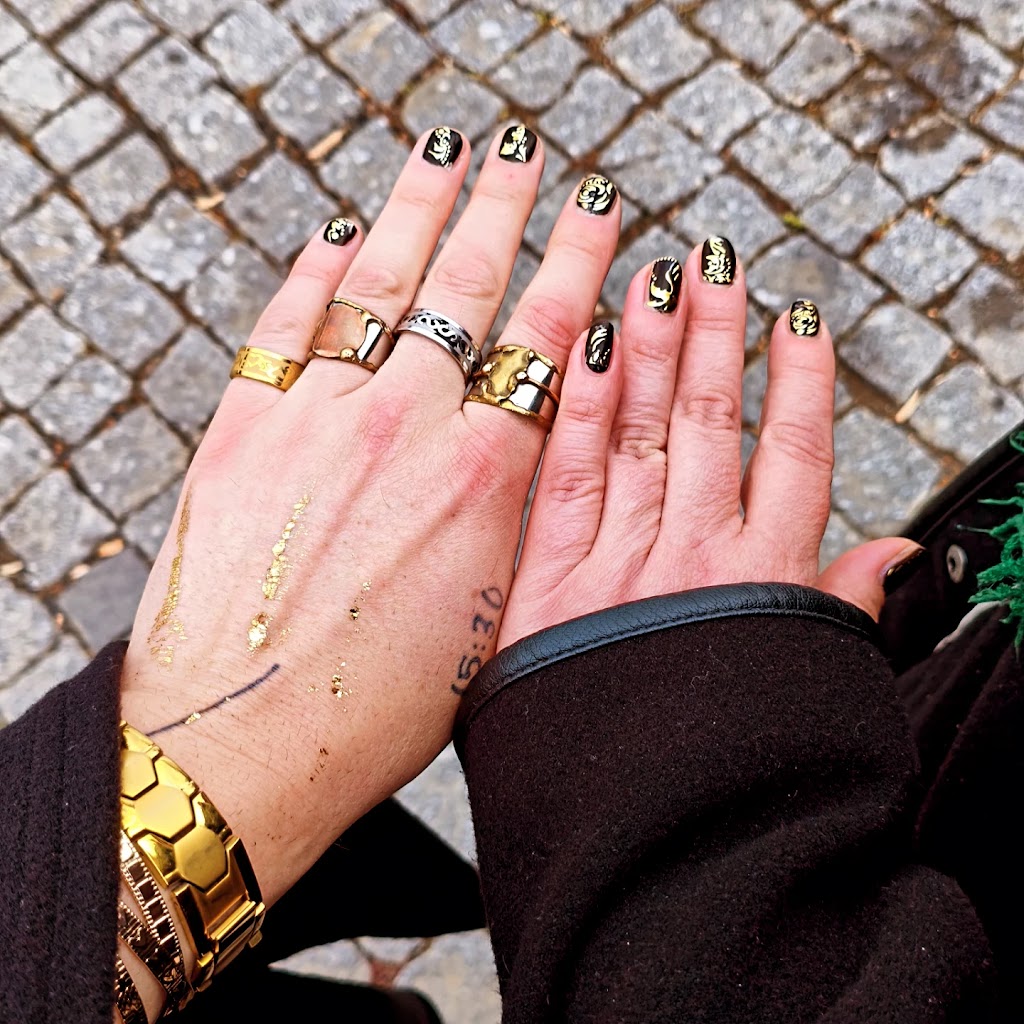
Even though my booth was black and gold and then some.
If the festival wants to make a profit, the author is allowed to want to make a profit too
As a newcomer entering the system, I noticed one thing: it is often said that a fair is primarily a presentation. That one does not go there to make money, but to be seen. To advertise. To network. To enter the public consciousness.
Yes. All of that is true.
But it is not the whole truth.
I also encountered authors who went to the festival with a completely simple premise: there is a need to make money. And that seems to me completely legitimate.
When an author pays for a space at a book fair, where visitors pay admission partly to look at books and buy books, it is legitimate to hope that they will sell their books. And that some profit will remain for them after deducting expenses.
Even if they offer a fair discount. Even if they give an autograph, a bookmark, a book prophecy, a smile, a piece of themselves, and four days of energy.
If the economics are legitimate on the organizer's side, they should not be embarrassing on the author's side.
First indignation: unloading and the table
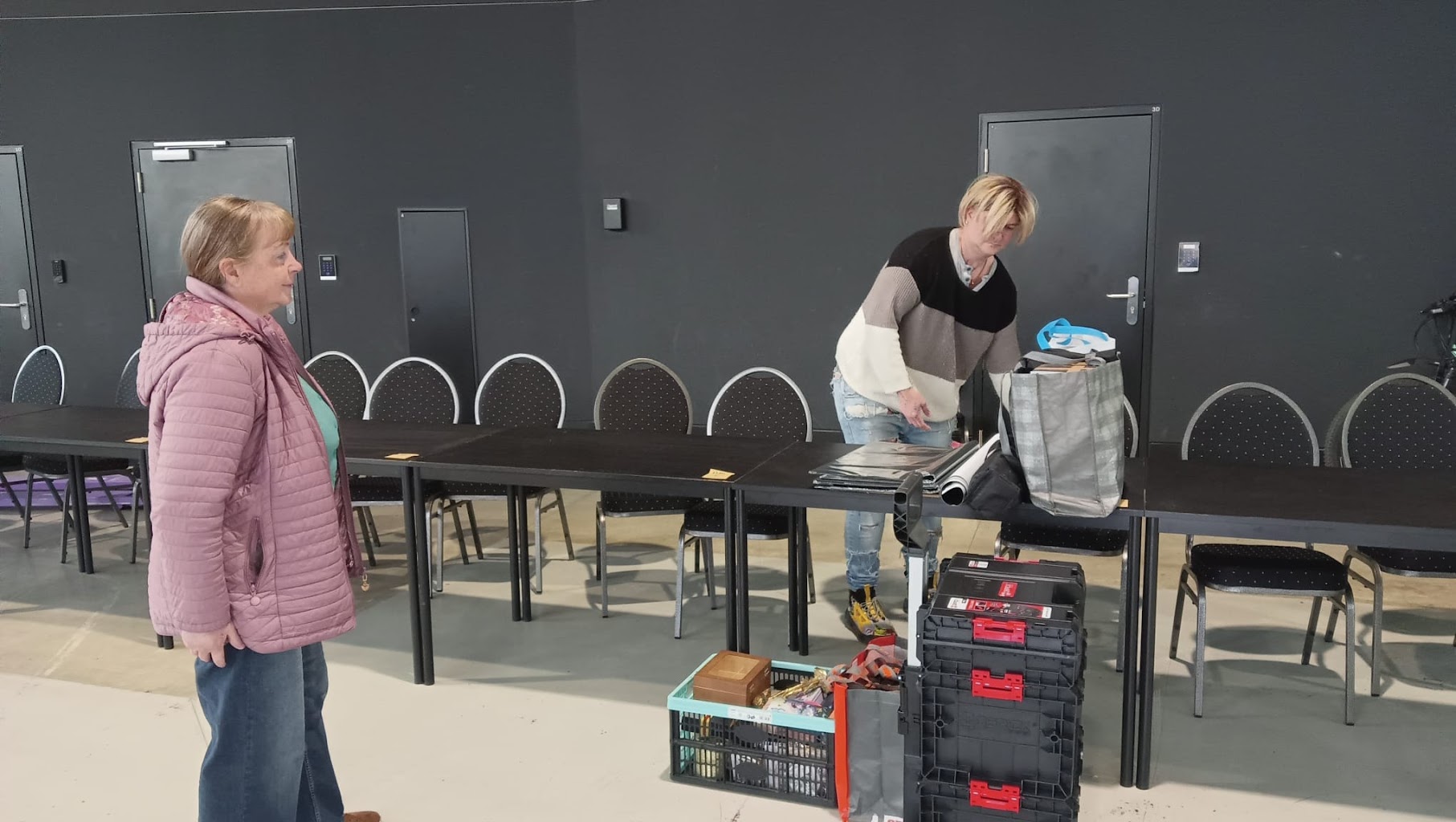
My first indignation didn't come when I stepped into pavilion D. It came before the festival, when an email arrived saying I could only bring my things in on Wednesday after 2 p.m.
Up until then, I had lived under the impression that I would be able to bring them in gradually starting Monday. I had planned my logistics accordingly. I'm not an exhibitor who automatically has a car, a van, or people at their disposal. I figured I'd bring everything over in pieces, gradually, without a heavy load. At that moment, I didn't even have enough money on me to afford a more elegant solution.
In the end, my dad helped me—quite old to still be helping a man my age. Originally, I wanted to be independent in this too. To transport everything myself. But that turned out to be unrealistic.
It catches a person by surprise. Why can someone bring things in starting Monday and I can only do it from Wednesday? Maybe there were operational reasons for it. Maybe the collective exposition wasn't ready yet. Maybe the tables weren't delivered on time. Maybe it was completely different.
That is mere speculation.
And the world is not built on speculation.
The second blow came on the first day upon entering pavilion D. I had a feeling of betrayal. Not a dramatic betrayal. Not a personal deception. Rather that peculiar inner halt when one realizes reality does not match the image upon which one built their presentation.
Perhaps it was not an agreement in the classical sense, because an agreement arises between two parties. It was more of a promise, announced conditions from which I proceeded. And in my view, that promise was not kept.
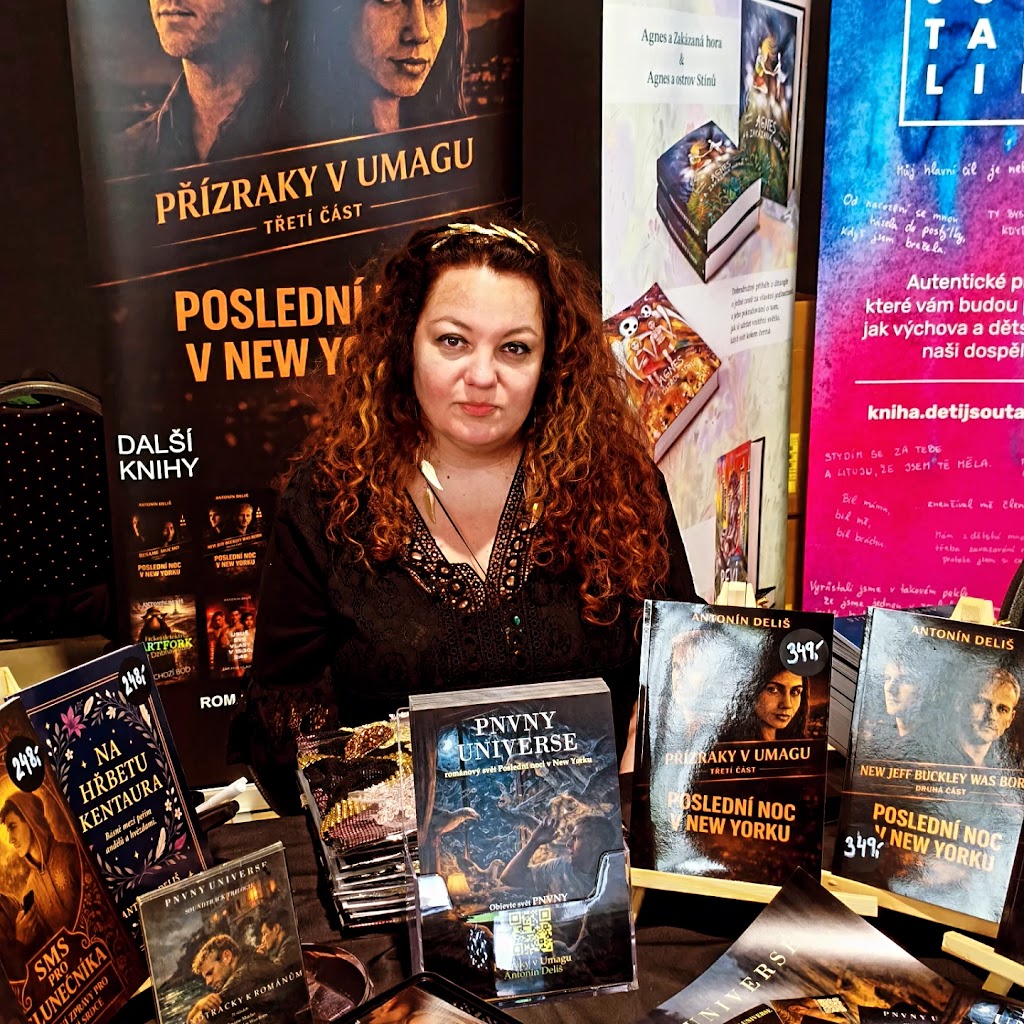
The basis was a table. A table with a greater width, as the attached photograph suggested. Upon it, I built the entire concept of my presentation. How many books would fit. Where the QR codes would go. Where the bookmarks. Where the book fortunes. Where the signatures. Where the black and gold world I had brought back.
That table was smaller than the desk I sit at at home by the computer.
It was not an aesthetic minor detail. It was a concrete dimension upon which the entire presentation depended.
And I was not the only one who was surprised by it. Some of the co-exhibitors from the collective exhibition felt similarly. Everyone dealt with it in their own way. Someone made a fuss and had themselves moved. Someone decided to take things as they are and make the most of them.
I chose adaptation.
There are things a person breathes through. This was one of them. I didn't erase the feeling. I didn't deny it. But I breathed through it and moved on.
I won't make a problem out of something when it ultimately isn't a problem that would stop the world. It's a problem of adaptation. And so I adapted. It's just a shame I couldn't wrap people's paperback books for them, because we all know how a paperback book ends up in a bag. At least I brought one home last year with a bent cover.
Pavilion D or a vacation to Egypt
Before the festival started, I used to joke that Svět knihy is my vacation to Egypt.
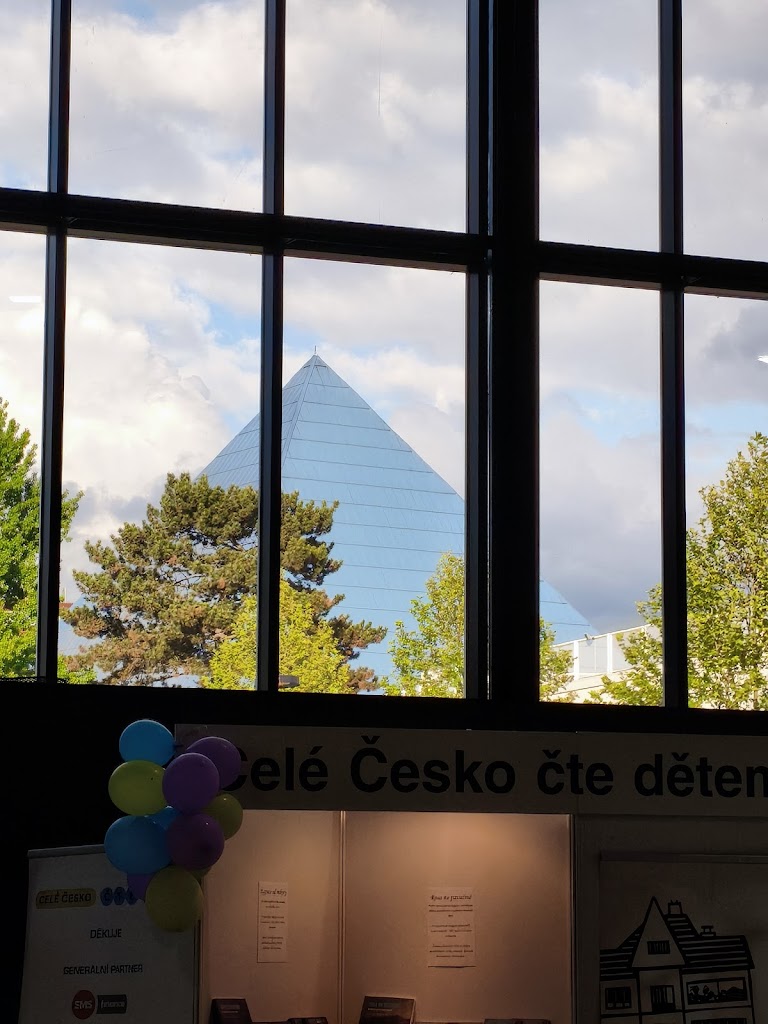
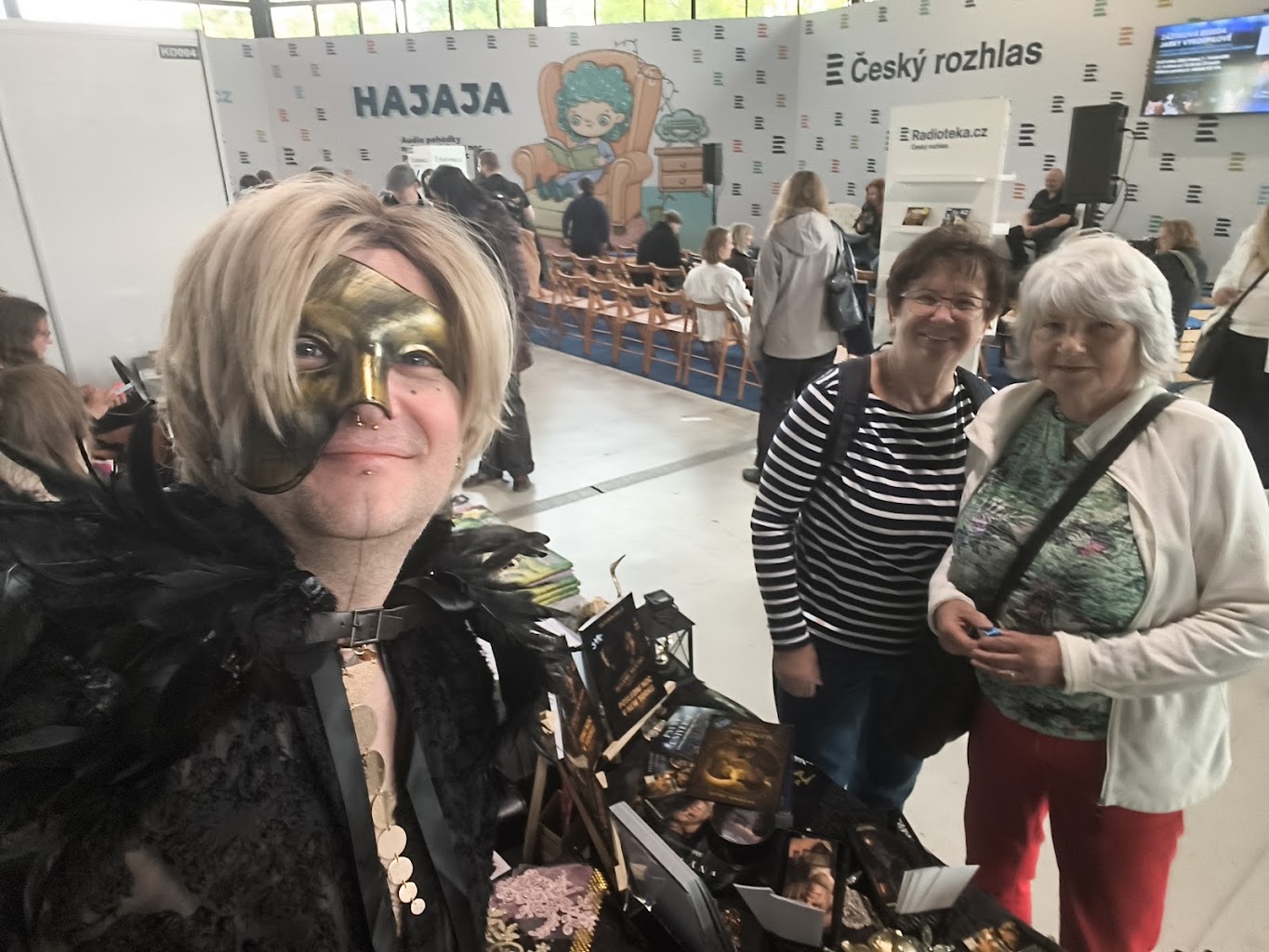
And then for four days from pavilion D I looked from my table at the top of the Pyramid Theatre.
Egypt therefore was. Just a little different from how one imagines a holiday.
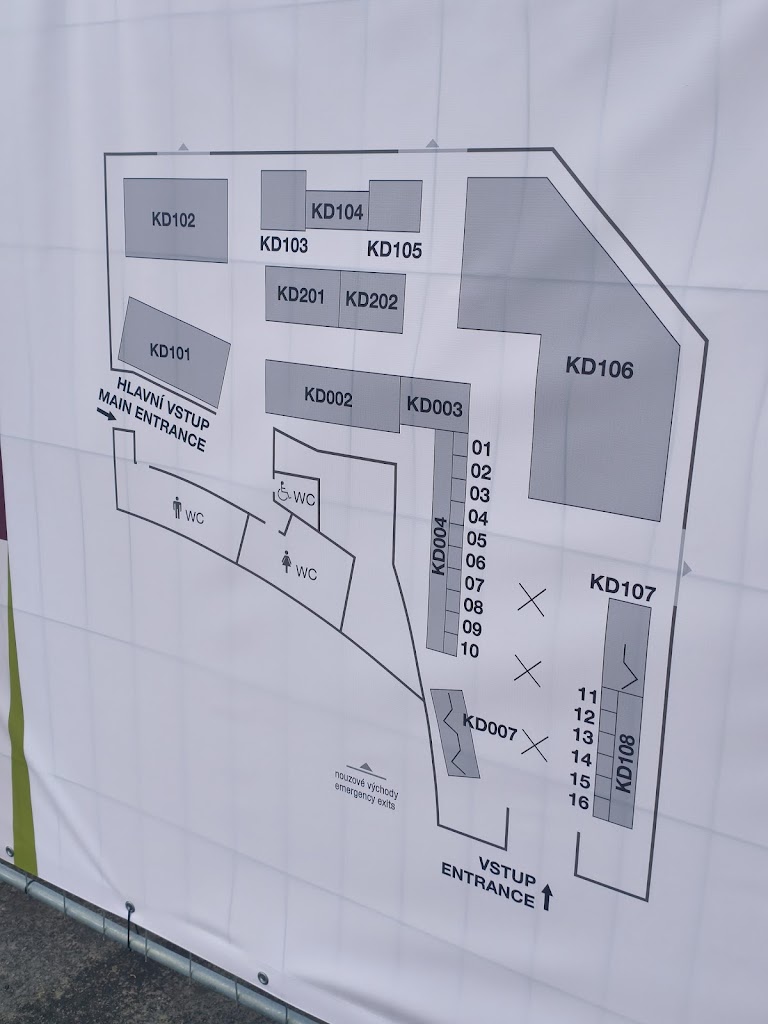
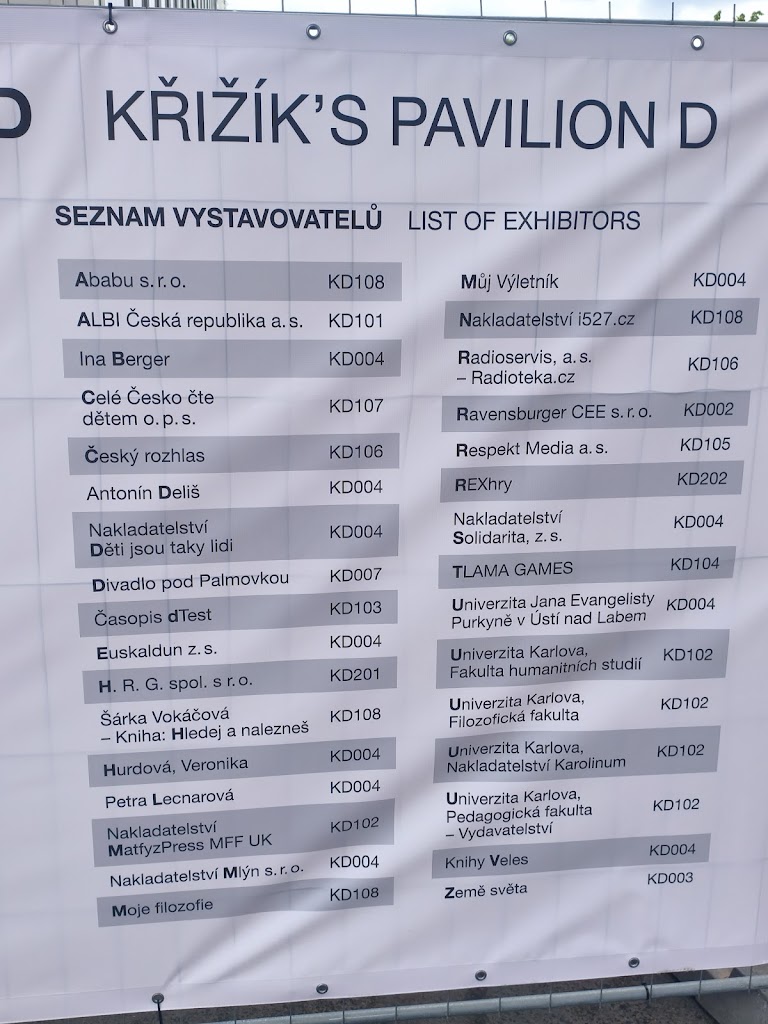
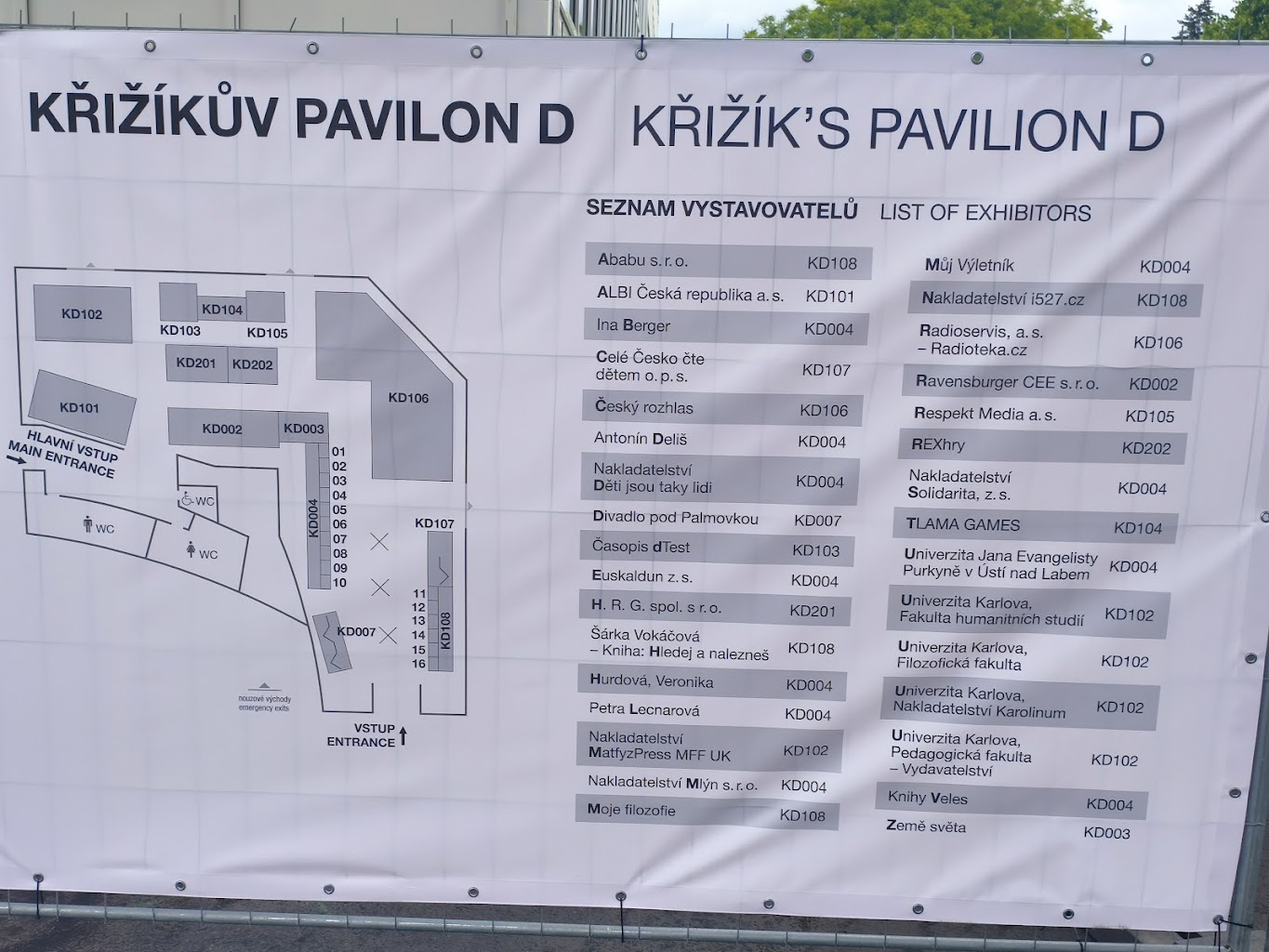
Pavilion D left a strange feeling in me. I understand that the operation of such an event involves safety, throughput, technical possibilities, and a lot of constraints that I as an exhibitor don't see. I also understand that everyone is looking forward to returning to the Trade Fair Palace and that the current pavilions, tents, and outdoor exhibitions are a certain stage of improvisation.
But that is precisely why it is good to call things by their name.
The part of the hall with the authors' collective exhibition felt more like a walk-through hangar than a place for meeting. Like a space for rounding up horses or driving sheep out of a fold. Not like a place where people are meant to naturally stop, slow down, look around, and talk.
Visitors often just hurried through the hall. They flowed like a herd through the corridor between the tables, heading somewhere without quite knowing where. The space didn't compel them to stop. If anything, it urged them onward.
Compared to other tents and parts of the festival, where the energy of sharing, joy, and discovery could be felt, this section felt like a dark dungeon with harsh ceiling lights shining into the eyes of exhibitors sitting on chairs, waiting to see if anyone would pause in their rush past their tables.
Of course, that description is far-fetched. It is not an architectural assessment. It is the feeling of an exhibitor.
And that is precisely why it belongs in a writer's diary.
I can imagine the space being partitioned differently. Not just a long row of tables against the wall. Maybe zigzag. Maybe islands. Maybe a single square island of tables in the middle that would disrupt the passing rhythm of the hall and force both the eye and body to stop.
I understand that having the background against the wall has its logic. Authors need to have boxes, bags, supplies behind them, a place to lean. But even so, I can imagine a different solution.
Not as a demand.
As the view of a person who stood there for four days and observed what the space does to visitors and exhibitors alike.
Author, self-publisher, marketer and caretaker
This text is not just an author's sigh. It is the perspective of a self-publishing author who is in the promotion phase and has to be everything at once.
My own author.
My own manager.
My own caretaker.
My own marketer.
My own person caring for a small child — a book, my own world, something vulnerable that I offer to people.
And from that perspective, it is legitimate that I do not look at the festival purely poetically. I look at it practically as well.
This does not mean I do not appreciate the opportunity I had. It does not mean I do not appreciate the people who came to me. Those who stopped by, bought a book, took a prophecy, spoke with me, took a picture, supported me, gave me a piece of their time.
But alongside gratitude, there is another perspective.
The view of a marketer's cold nose, who sits down over the results after a festival and is not satisfied with their author's performance.
Because they gave that author tasks. Prepared materials, strategy, posts, flyers, prophecies, visuals, a stand, an online ecosystem, QR codes, emails, videos for them. And now they are looking at what actually came out of it.
Numbers that are not very warming yet
To be specific, the festival's impact does not look triumphant at all so far.
I had about 250 books with me. They sold in the low tens. Realistically, maybe around twenty people stopped by and entered into some more genuine contact with me — I am not counting every fleeting turn of the head, every look at a QR code, or every passing „no, thank you“.
And as for the subsequent online impact, it is almost zero so far.
No new contacts on the website.
MailChimp zero.
Facebook zero.
Instagram maybe two new people.
I am not saying this as a definitive judgment. Maybe it is too early. Maybe some hooks take longer to bite. Maybe someone left the flyer at home, maybe they will open the QR code in a week, maybe they will return to the book later, maybe a festival operates on a different timeline than a cash register.
But the cold nose of a marketer looks at the numbers and says: very little impact so far.
And this is precisely where the disappointment comes in. Not from the fact that I didn't get rich. I didn't expect a miracle. But I hoped to make at least a minimum that would give me a few days of peace after the festival. That at least part of the costs would be covered so that I wouldn't have to deal with very basic questions of survival right after the end of Svět knihy: where to quickly get money for rent, for electricity, for the ordinary operations of life.
This is perhaps the least romantic part of self-publishing.
On one side a black-and-gold booth, a costume, books, dreams, prophecies, signatures, encounters, the entire literary world displayed on a table.
On the other side, Monday after the festival.
And the question: how am I going to pay for life now?
Moments that cannot be billed
And then there were moments that cannot be billed, measured, or converted into sales.
A sunny Sunday morning before the Exhibition Grounds even opened. Lili—Veronika Horáčková—and I were sitting outside by the "fountain," playing songs from the world of PNVNY, and I was joyfully singing all the songs from the books.
In my mind, I was jumping over benches.
Maybe for a moment I wasn't sitting at the table like a tired author counting sales, but standing somewhere inside my own concert. And Lili was its only, yet most important listener. She sat there with me, and I felt as though I were singing my entire world to her for a moment.
This doesn't fit into a spreadsheet.
Just like the small celebrations among exhibitors. For instance, the birthday of the exhibitor from the Mlýn a růže publishing house, who appeared in the collective exhibition space in the form of cotton candy. Or congratulations on my own birthday. Laughter. Joy. Brief flashes of lightness in a space that I otherwise often perceived as heavy, transitional, and sharp.
And those morning journeys.
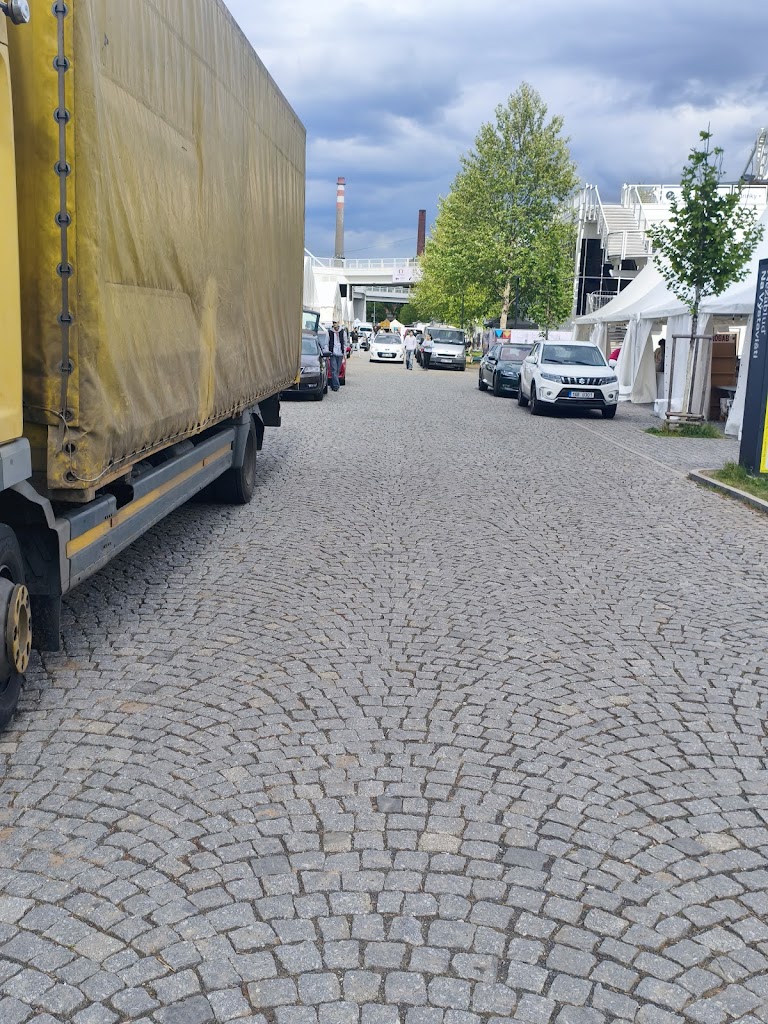
Walking from the tram to the Exhibition Grounds in the rain. Carrying a bag and the image of the day ahead, walking among the people toward the gates.
And the Friday rush through the crowd toward Pavilion D, because I thought I was late. Crowds all around. And running amongst them, a fan of feathers.
Even now, people are surely still gathering feathers there for good luck.
Costume as the first sentence
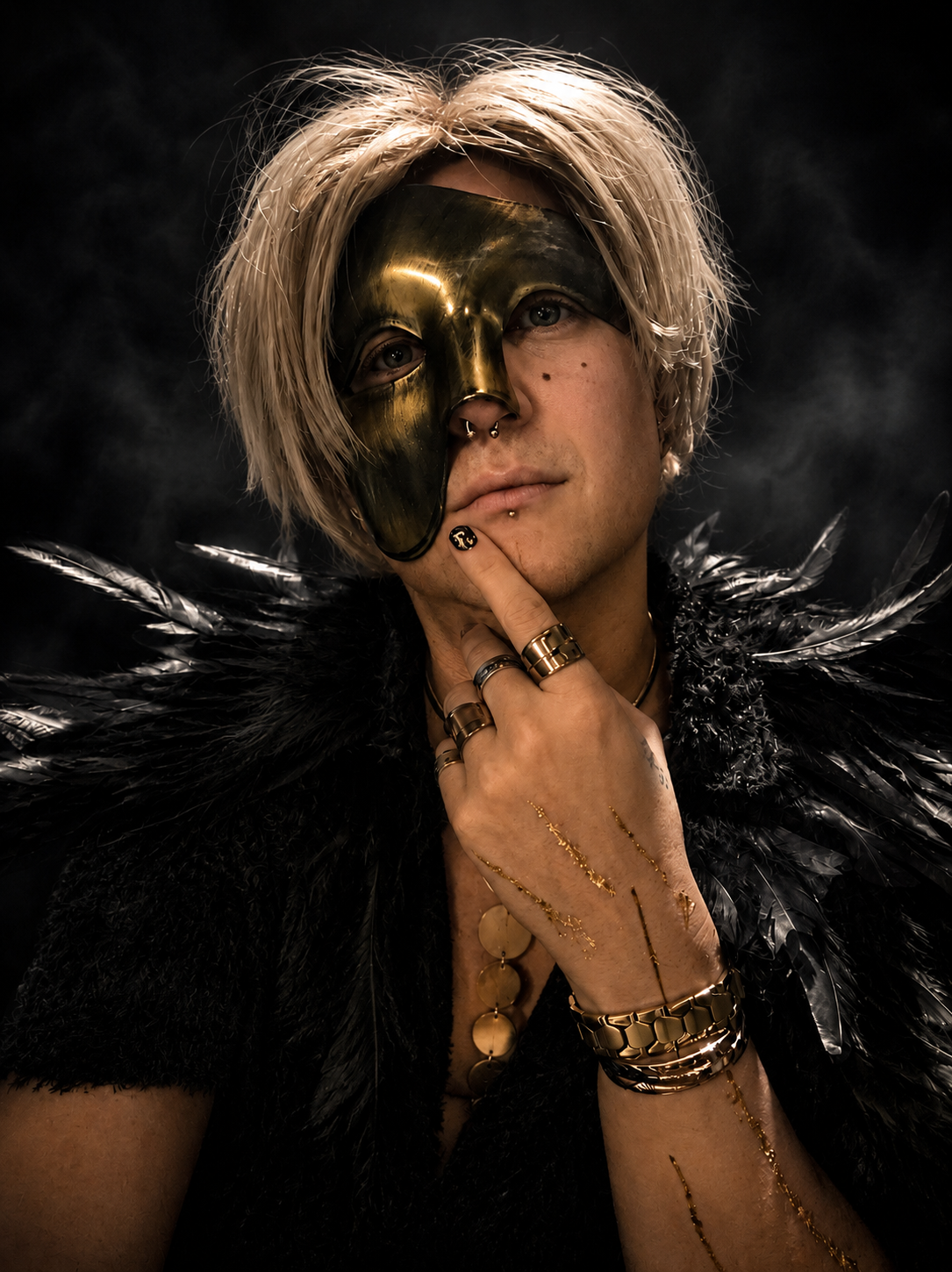
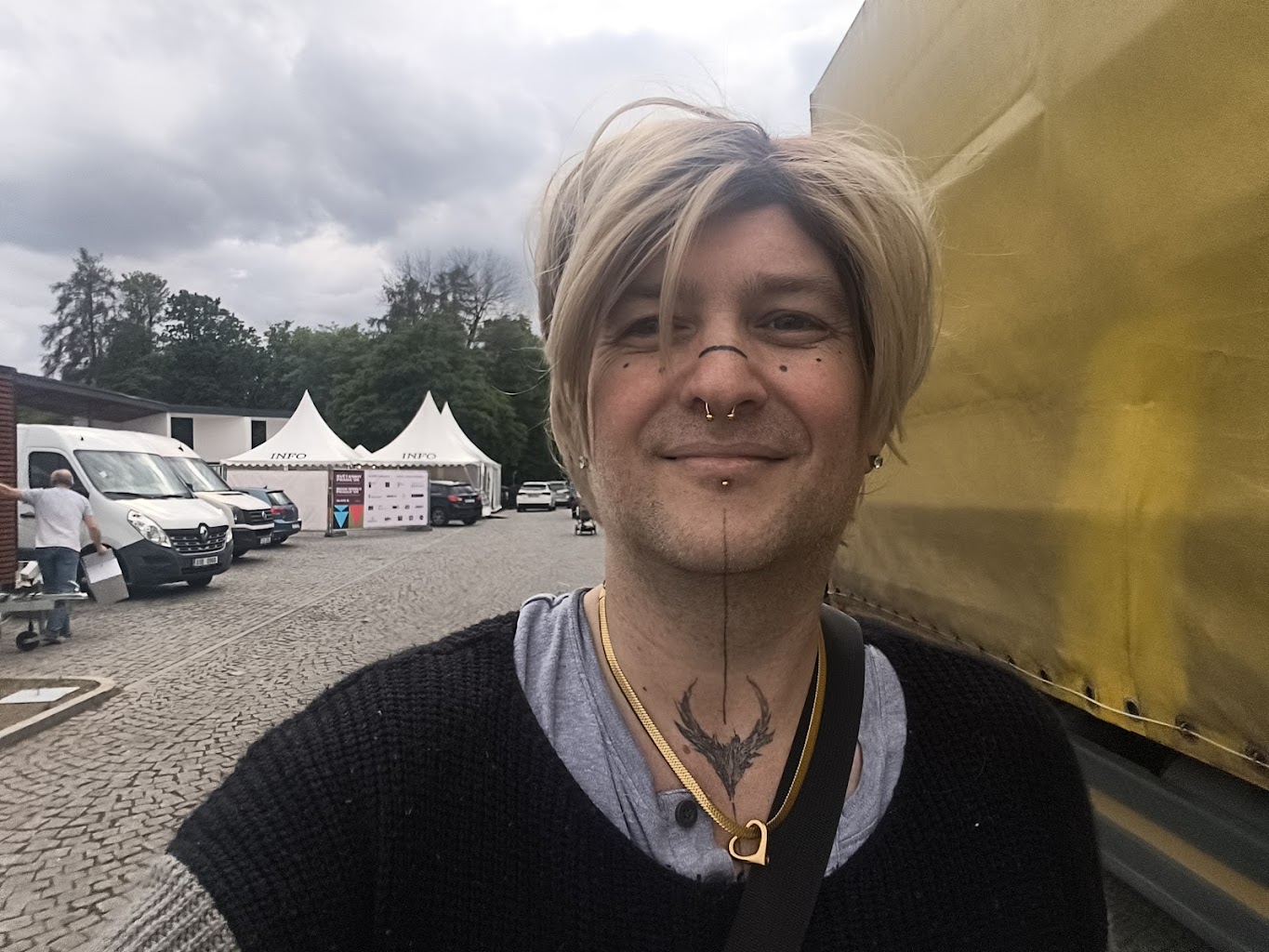
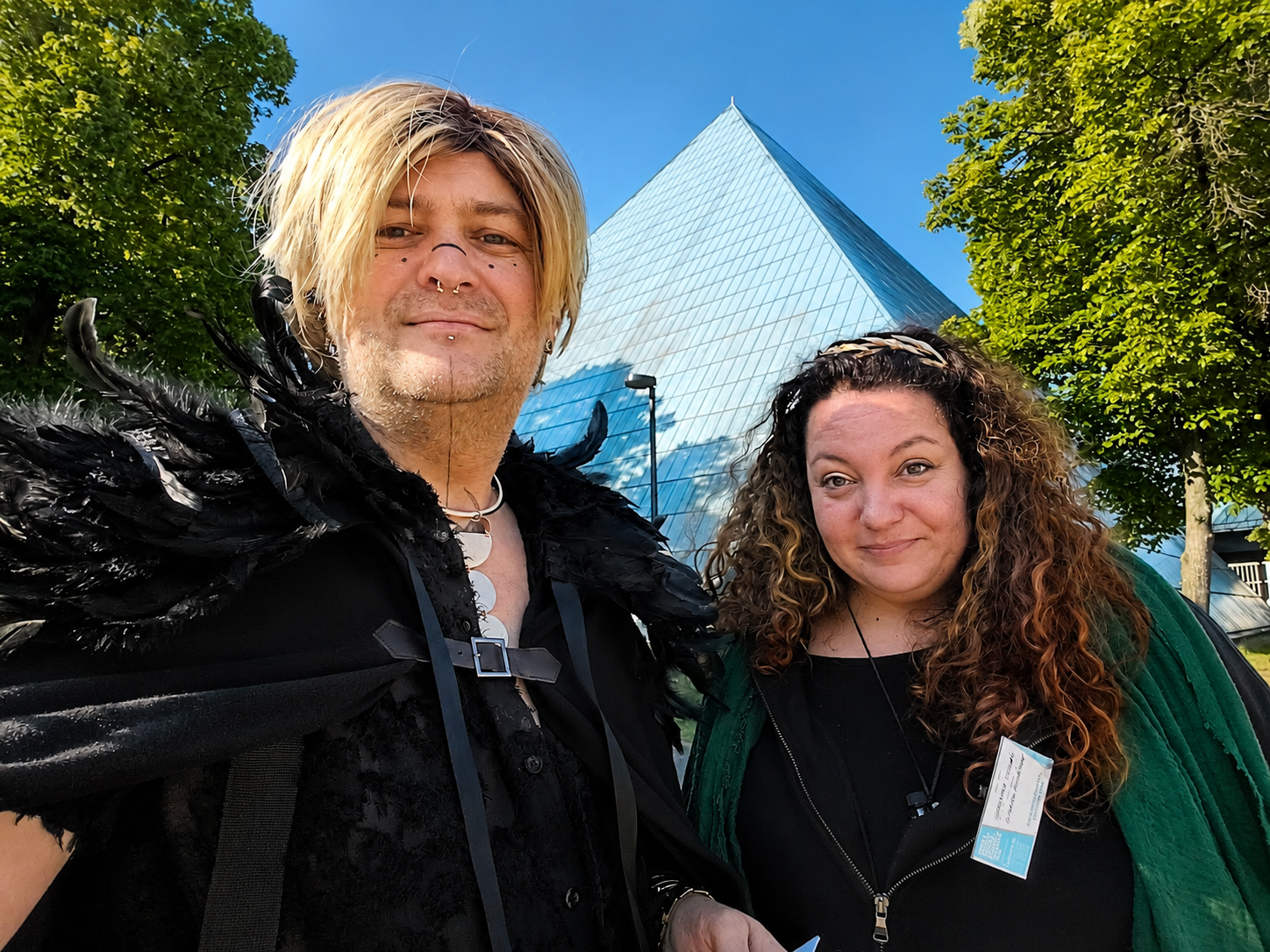
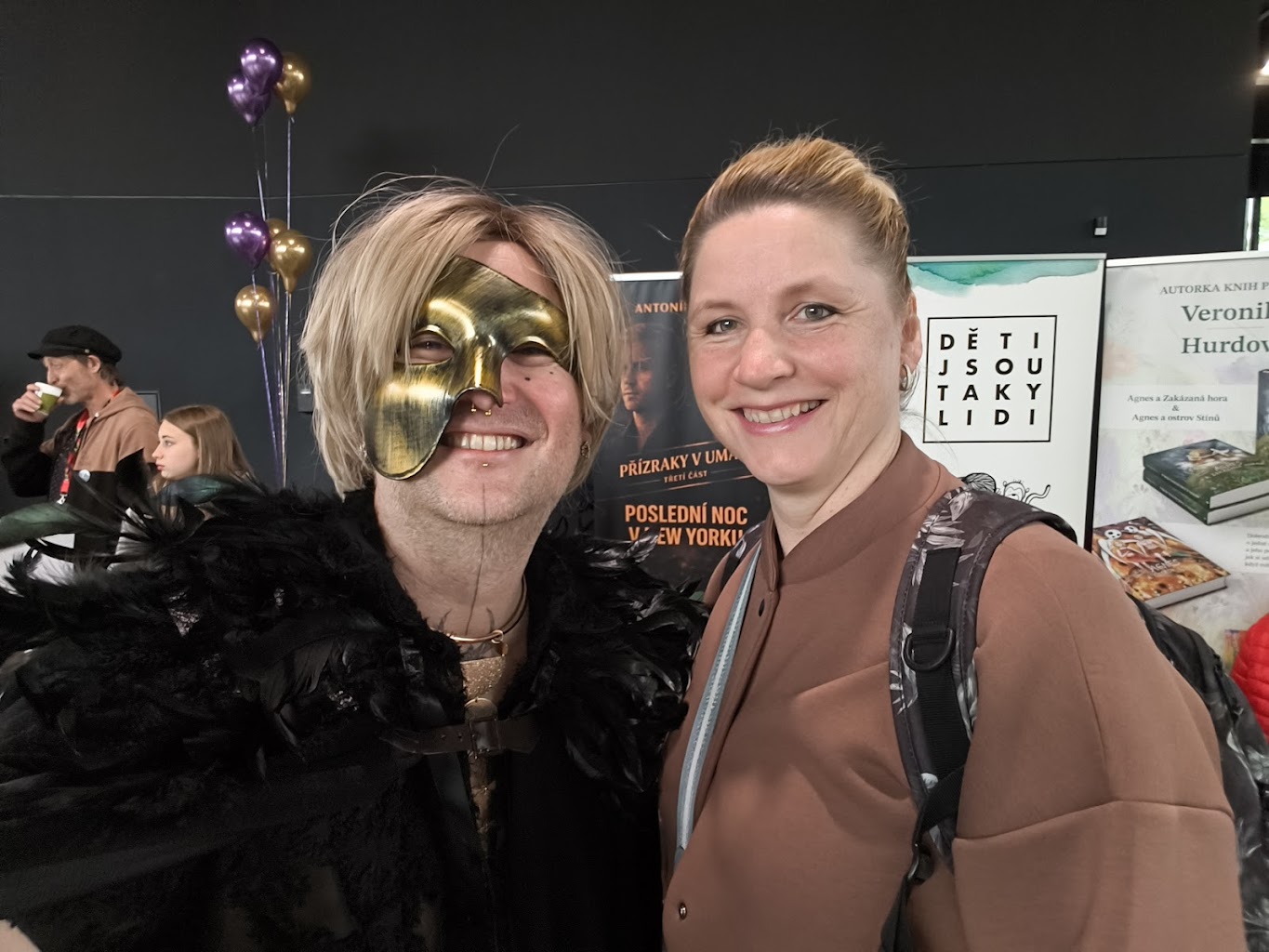
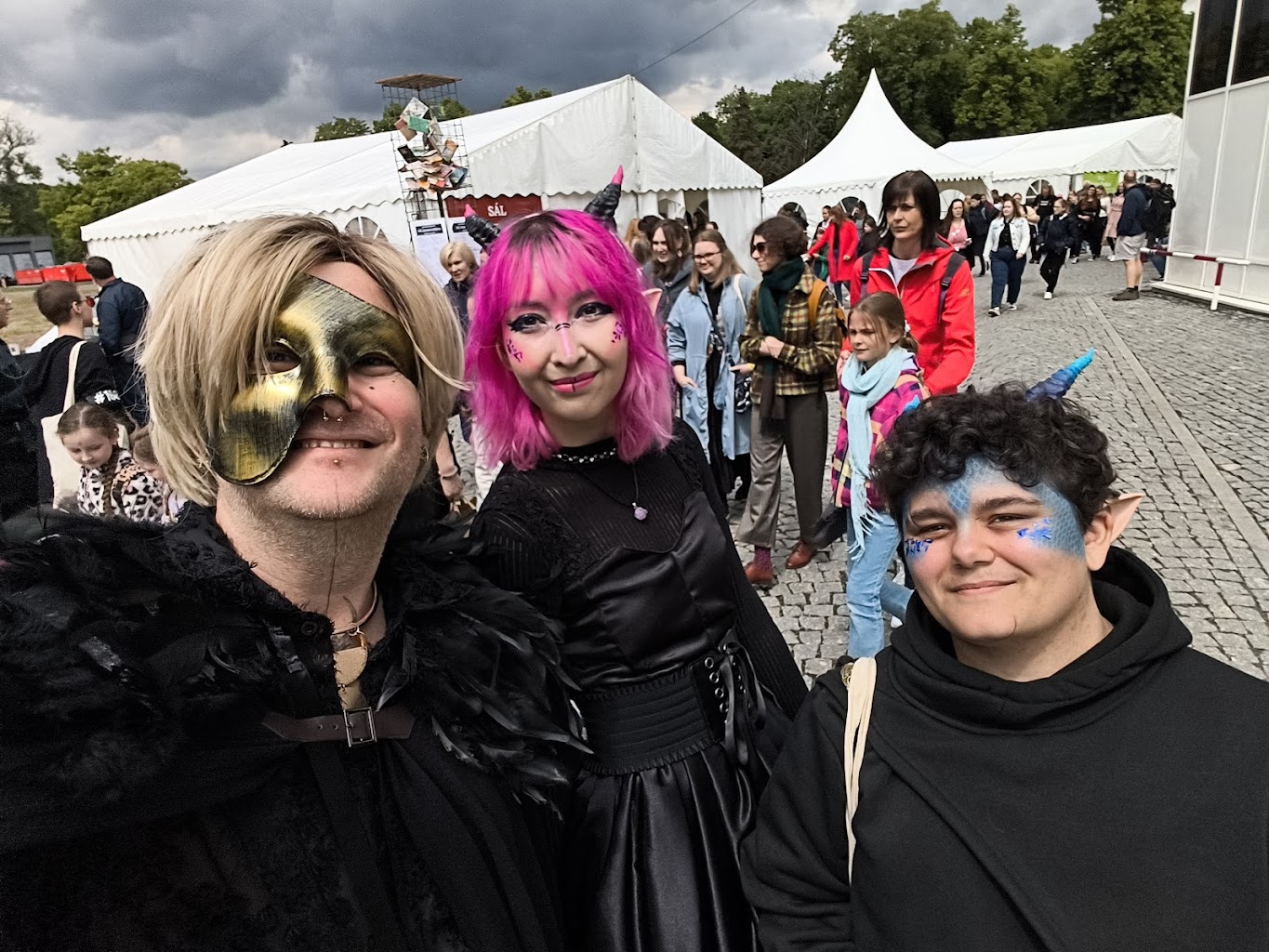
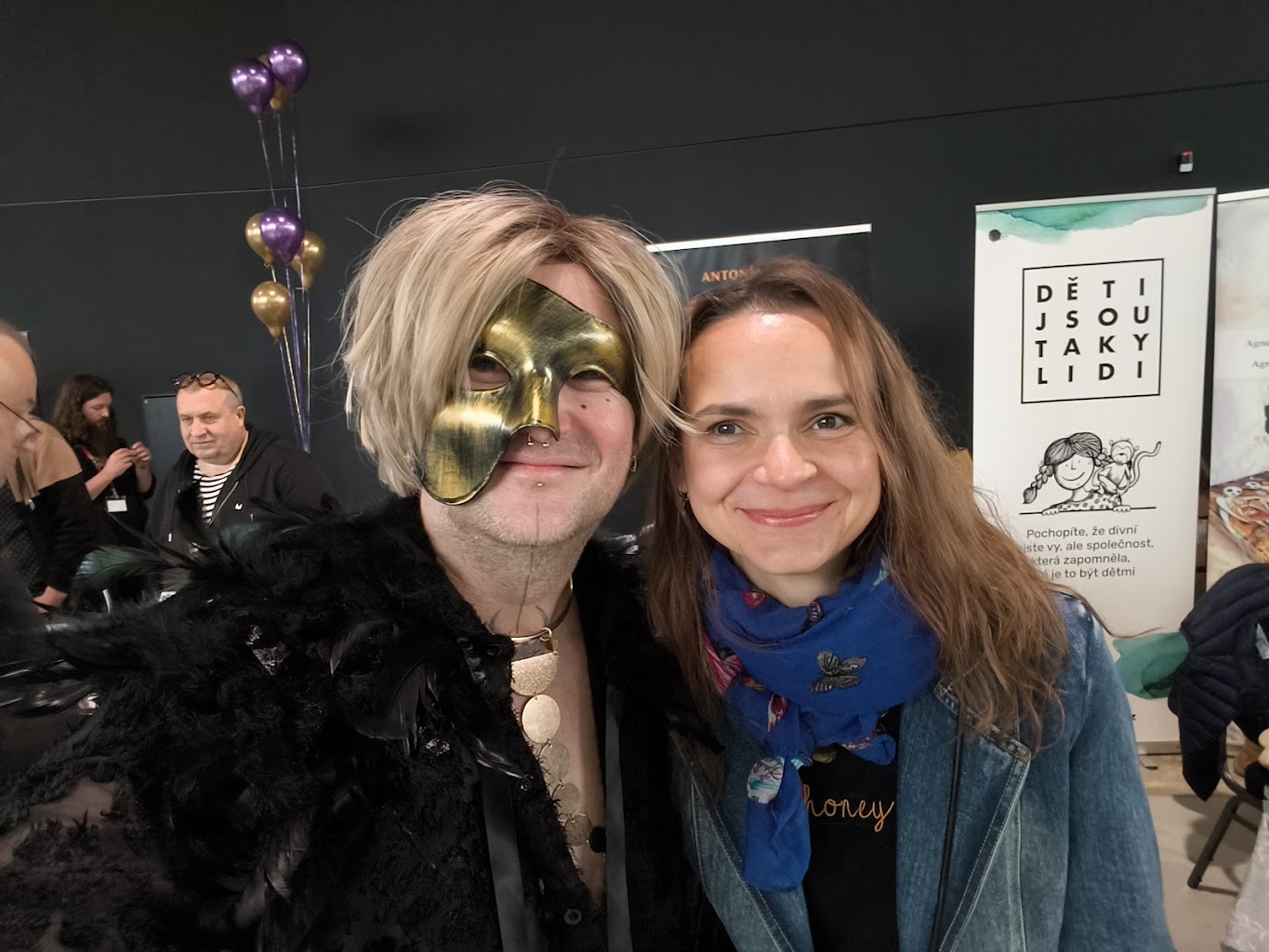
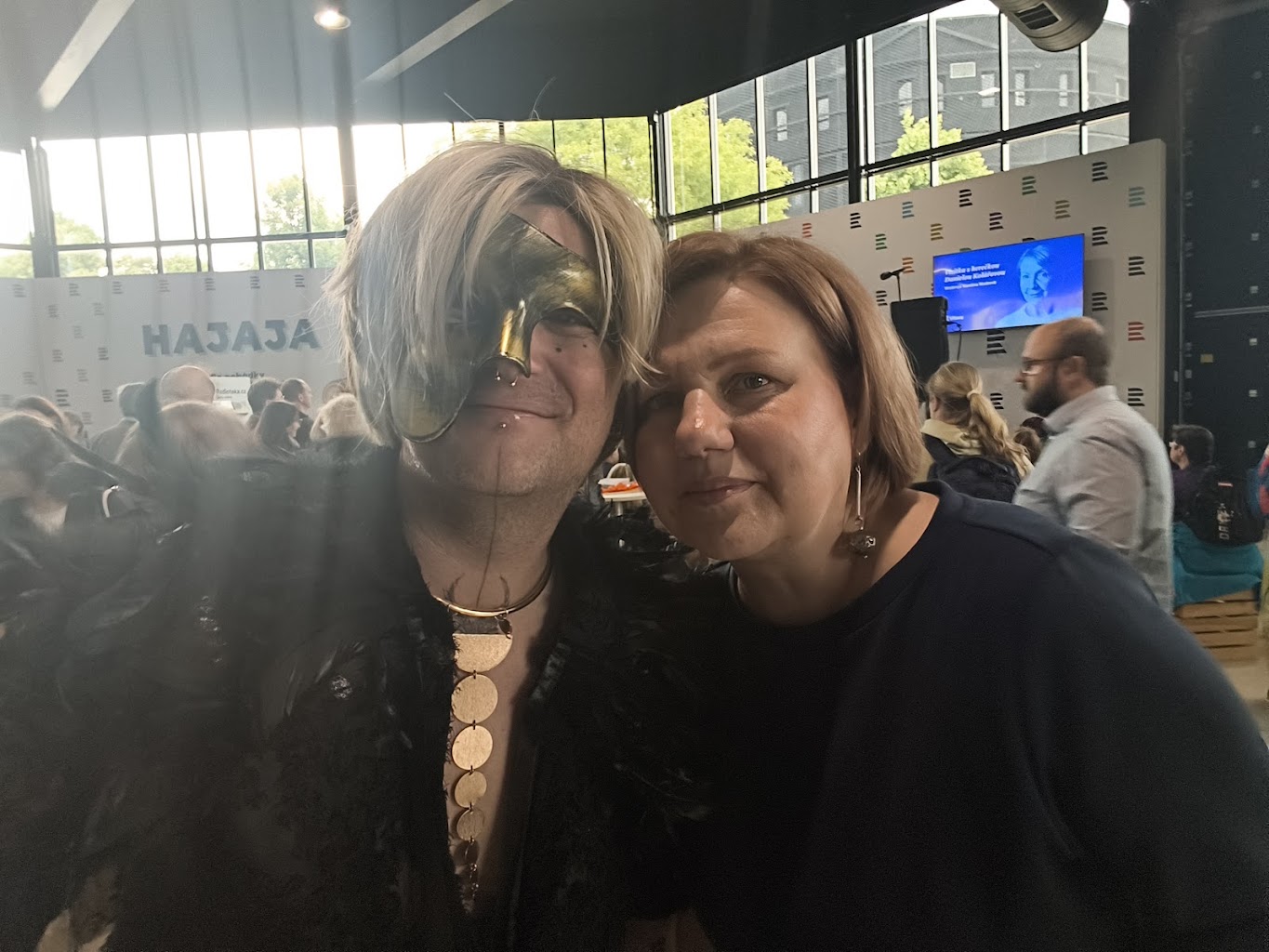
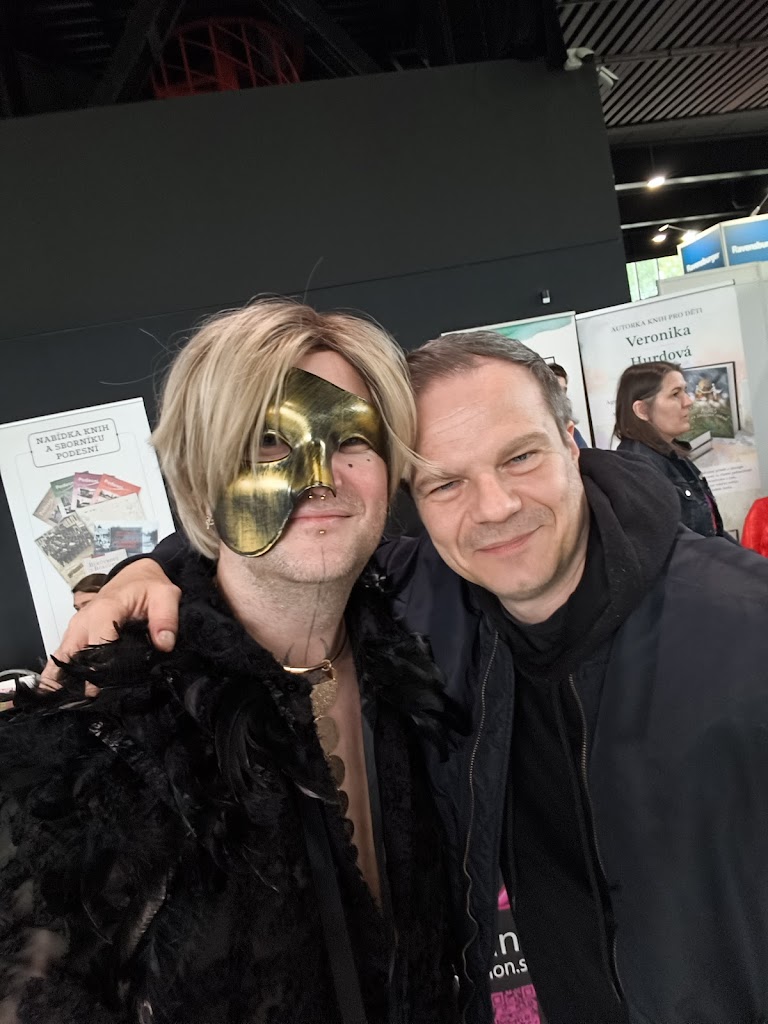
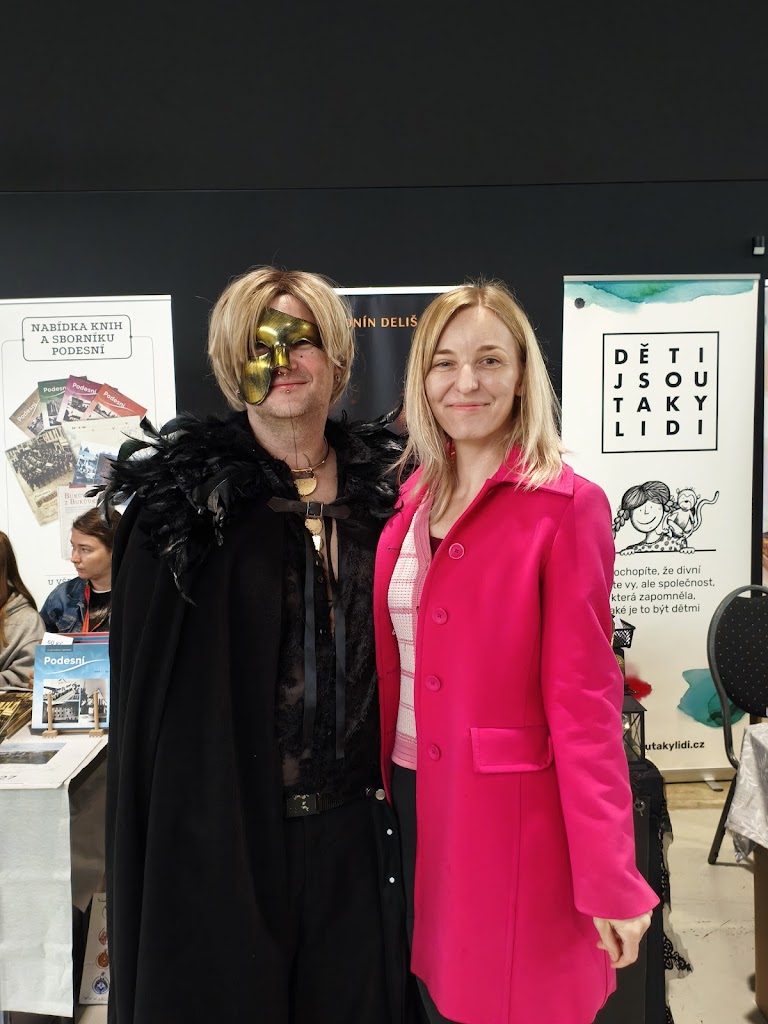
When it comes to presenting oneself at the booth, I must say one thing: my costume was the only truly strong helper at this major book fair.
I bow to the idea that came to me. To my inspiration. To my dreams and visions. Because it was the costume that ultimately saved me.
I didn't go to Comic-Con. I went to Svět knihy. Originally, I planned to go in a blazer. Then in a kimono. Finally, a dream came that turned all my plans upside down. Not just the look, but also the books I took to the festival.
The costume was meant to express that I was there in the world of Poslední noc v New Yorku. Perhaps also that I was queer. Maybe the whole booth was draped in gold and darkness also because during the festival I was facing a sad event that I dreaded—and which actually came to pass.
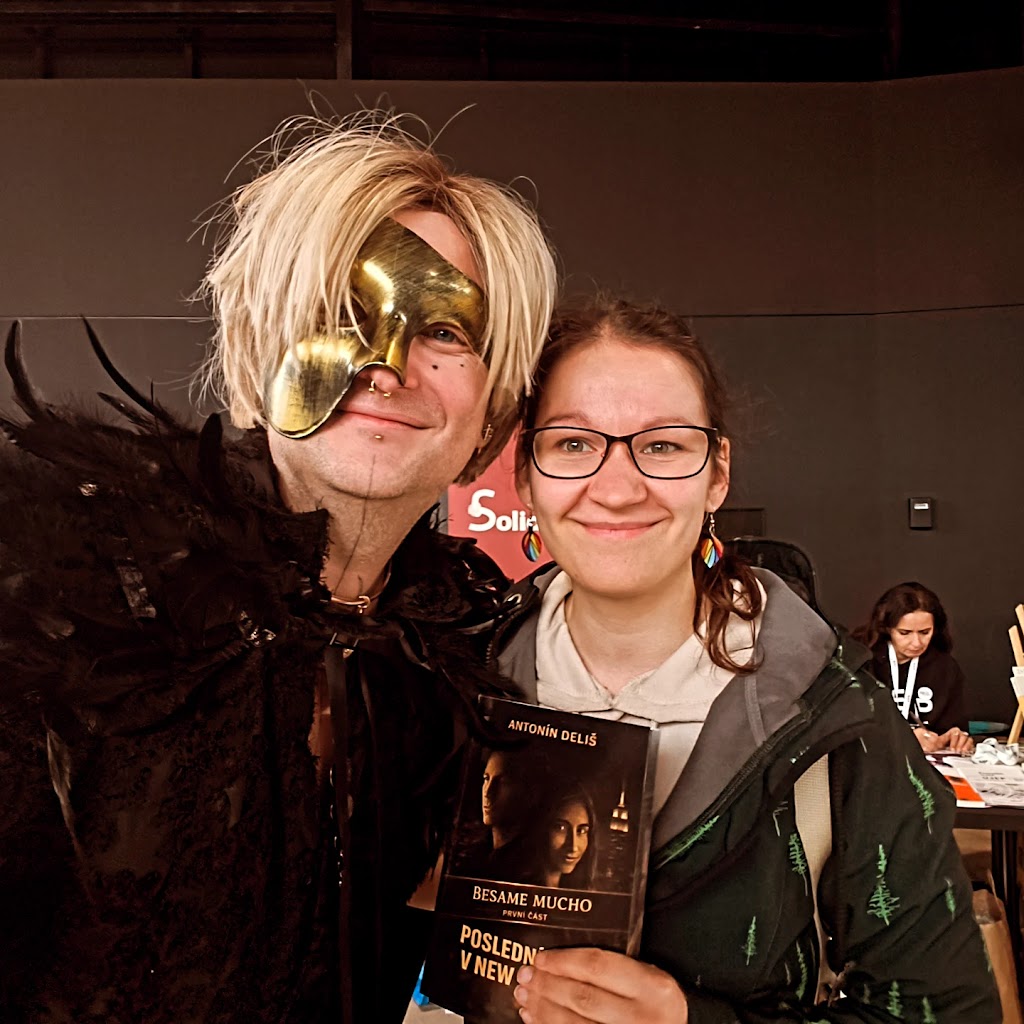
The costume opened doors for me through the interest of other people.
People took pictures with me. Sometimes perhaps even without the context that I am an author. And that was precisely what surprised me: that some people at the table in the collective authors' exhibition did not perceive me as an author, but rather as a salesperson or a strange attraction.
As if some simple piece of information were missing:
Authors are sitting here. Buy a book from them. You can have it signed.
Perhaps the space should have made it clearer. Perhaps the labelling. Perhaps the entire exhibition. Because at the little table I had to repeatedly defend myself:
Yes, I am an author.
Yes, I wrote those books.
Yes, I can sign them for you.
But the main thing is that the costume worked. It made people stop. It made them take pictures with me. It made some of them afraid of me. It provoked aversions and affinities.
And for that I am deeply grateful.
Because there is nothing worse than being invisible.
And I didn't have that feeling at Svět knihy.
A view across the table
Speaking of invisibility, I noticed a strange nature among the festival visitors. The crowd passing through the corridor between the tables changed, rippled, transformed over the course of four days — and yet certain patterns remained within it.
There were people who stood at a distance and secretly took pictures of QR codes. Apparently shy ones.
There were visitors who blew through like the wind and were gone.
Visitors who walked slowly and really looked around.
Visitors who walked past and were afraid of anything, just in case I happened to speak to them.
Visitors who refused before they even knew what they were refusing.
Visitors who were afraid of being pressured into buying — even though I am the last person who would ever want to force someone to buy something.
Quite the contrary. Things were being given away at my place.
And perhaps that seemed suspicious.
A free book prophecy. A free flyer. A bookmark. A smile. An invitation to a world. In a space where everything is for sale, a gift can suddenly seem more suspicious than a price tag.
Nothing, however, hurt more than those fleeting moments of superficial recognition.
“Oh, look, it’s Mrs. Konvalinková.”
“Oh, look, it’s Mr. Rosák.”
And then a glance toward me:
„Hm. And who is this? Some weird author sitting over here.“
The difference between a famous name and an independent author was sometimes almost physical.
I don't mean to say that all the visitors were like that. Quite the contrary. There were many wonderful meetings and conversations. A thousand and one good moments that were worth it.
But some looks were like a slap in the face.
Especially when I had the feeling that some people's eyes would pop out of their sockets, roll over the top of their heads, tumble down their backs and end up somewhere under the table just because the expected image of a writer wasn't sitting behind it.
Though that would almost sound like I was complaining about how the world works.
And that's not what I'm about.
I try to look at the world with my eyes wide open. Not only when it's beautiful, but also when it's ridiculous, harsh, superficial, touching, wounding or absurd. That's precisely why I keep this writer's diary.
These are not judgments upon the world. These are records of seeing my world through the author's eyes across the table into the exhibition hall.
Invisible I was not
Sometimes I left the table and observed it from a distance when it remained empty.
Like a small experiment.
Will anything change if I'm not there? Will people come closer? Will they start looking at the books, flyers, QR codes, and prophecies with interest once my presence isn't in their way?
Maybe I wanted to give them the space of emptiness. So they wouldn't have to react to me. So they wouldn't have to be afraid that I'd speak to them. So they could be alone with the table, the books, that black-and-gold world, without an author breathing his hope on them.
And maybe at the same time I was finding out something more painful:
Whether my presence draws people in or pushes them away.
Whether I am a helper at my table, or an obstacle.
Whether people are afraid of the books, or of me.
As an author, I also used to walk back and forth across the exhibition grounds. Not by accident. So that people would see me. So they would notice me even away from my table.
Just as throughout the festival I noticed a strange blue creature that I kept running into, and it didn't cross my mind at all that it was Hajaja. Meanwhile, I was sitting opposite the Czech Radio hall, where Hajaja was painted maybe two meters tall. The whole time I was thinking: what kind of strange blue mushroom is that? And only at home did my dad tell me it was Hajaja.
Perhaps some people had a similar feeling about me.
What is that? A cosplayer? An RP-er? A queer artist? Part of the program? Someone who got lost from another festival?
And that is precisely why I walked among the people. Slowly. Visibly. So that the image would get out into the space.
And then I returned to the table.
And there, perhaps, the image became fully explained:
Ah.
That is the author.
So that is why.
And maybe, in the end, it really happened.
A contest that I perhaps read in my own way
Maybe that's why it hurt a little when I didn't see any success in the contest for the most beautiful small exhibitor booth.
And here I must be precise: I don't even know if I was actually entered into that contest. I had the impression that small exhibitors were automatically included, but perhaps I misread the situation. Perhaps the collective exhibition of authors was judged differently. Perhaps not at all. And perhaps I just projected my own expectations into a single sentence about the evaluation of the online presentation.
That is why this cannot be an attack on the contest, the jury, or the outcome.
It is simply a record of how I perceived the situation.
Glory to the victors, honor to the vanquished.
Or more precisely: honor to everyone who tried to turn their small space into something with a face.
If I competed, then I competed honorably. If I lost, then I lost honorably. And if I wasn't even entered in the contest, then at least I recorded the feeling of a person who for the first time in his life stood with his world among others and hoped to be seen.
I don't want to make an unbearable defeat out of it. Rather, I'm writing down in my writer's diary the childlike spot that it touched.
It's not like in childhood, when I used to ride a sled or bobsled, finished last, and it brought tears to my father's eyes.
This time I was leaving the festival again with my father in the car.
And I was left with nothing but tears.
Not necessarily because of one competition. More because of the sum of everything. Fatigue, expectations, disappointment, pain, and the realization that some things a person only understands on the way home.
What wasn't seen online
When people talked about online presence, it's not true that I only cared about my own.
Before the festival, I actually went through the exhibitors' websites, tracked down their social media, saved them, and followed them. Just clicking through the websites of all the exhibitors took me about four hours. And that wasn't even a deep analysis. Just open, take a look, bookmark, close, move on.
Only then came tracking down social media, following, comparing, and getting a sense of who has a functional online presence and who is practically impossible to find.
And I was surprised by how many publishers and authors have their Facebook pages in disarray, links that aren't clickable, confusing websites, and unclear paths to registration or purchase.
I understand that everyone focuses their attention elsewhere. Some build on tradition, some on distribution, some on a name, and some on personal contacts.
But as a self-publisher who literally has to claw every single reader out of the ground, I find it hard to understand.
It is as if part of the literary world still lives under the illusion that zero presentation equals maximum mystery, and therefore maximum interest.
Maybe as a writer I just don't get it.
Maybe someone more experienced will correct me.
The people who kept that festival going
To be clear: it wasn't all bad.
If I'm to be fair — and I try to be, even when I'm tired and disappointed — I have to say the people were wonderful.
Not the venue. Not the system. Not the spreadsheets.
People.
And when I say people, I don't mean a general phrase. I mean specific names, specific faces, specific arrivals.
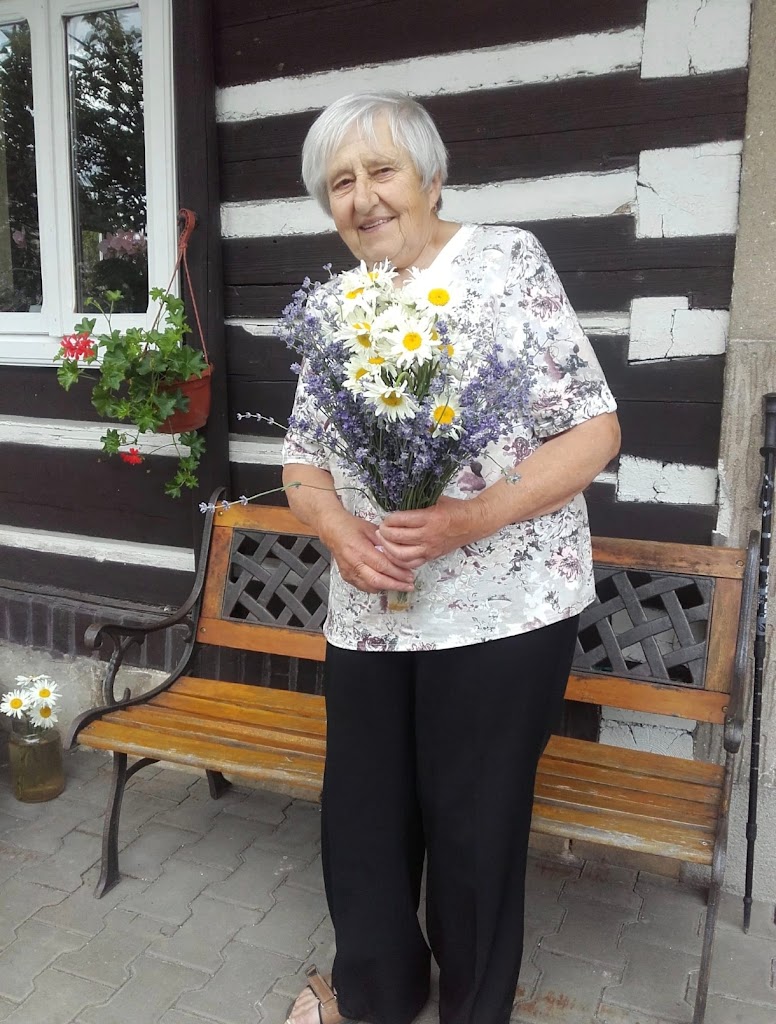
The first person to come see me at the festival was my „grandmother“ — a former colleague from the Railway Administration who always reminded me of my late grandmother. Not by blood. But by something in her gaze, her presence, in the human tenderness that cannot be manufactured.
And she was the first one to unblock my table. She bought Besame mucho / Poslední noc v New Yorku, and with that, something small but huge for me happened: the table stopped being just a decoration, waiting, and uncertainty. The first book went into the hands of someone who didn't come to me as an anonymous customer, but as someone who knows me, who sees me, who came to support me.
It is all the more touching that the festival ended for me with the news of my aunt's death.
It was as if at the beginning a woman appeared who reminded me of my grandmother, and at the end, the departure of another woman from the family became etched into the festival.
I don't want to make a grand symbol out of it at all costs. But in my inner world, that is how it felt. Like a harbinger. Like the gentle opening and painful closing of a circle.
I am grateful to her. For the friendship. For the visit. For the fact that she made it. For the fact that it was she who uncorked that table.
And then there is Veronika Horáčková. Lili.
A person who wasn't just physically with me at the festival, but was with me even before it. In contact, in tension, in preparations, in nervousness, in anticipation. She experienced it with me and sometimes perhaps even lived through things that I'd rather not have passed on to her.
I am grateful to her for being there with me.
And at the same time I hope the festival didn't just give her burdens, nerves, and fatigue, but also a bit of hope, light, and joy. That she didn't take away from it just an image of my exhaustion, but something alive as well. Something that reminds a person it makes sense to go out among people, even when life is hard.
All the more I appreciate that she broke away for four days, even though she herself carries the weight of caring for her grandmother. That is not a given. That is not "just dropping by a festival." That is a sacrifice of time, energy, and inner capacity that one often simply does not have to spare.
On Sunday she had to leave earlier because the care schedule fell apart and someone needed to look after her grandmother.
And when later on Sunday, the last day of the festival, my aunt passed away, I found myself thinking a strange thing:
It is good that she left.
Not because I wouldn't have wanted her with me. But because at that moment it was right for her to be where someone needed her. And I remained at the festival alone with my sorrow, which was perhaps precisely how it was meant to be at that moment.
I also think of Ondřej Smidák, my supporter across the years. A man who in the past had me paint a painting for him, had his cards read, bought my previous books—and now came for another. That is not a one-time gesture. That is a long trail of trust. And such a trail cannot be factored into festival sales alone.
I think of Iveta Židovská, who hosts me at her home practically every Sunday, shares my writerly and life hardships with me, and belongs among the people in front of whom I do not have to pretend that everything is easy. Her presence at the festival was not just a visit. It was a continuation of a long conversation that we carry on elsewhere, in a different space, outside the lights of Pavilion D.
I think Laďka Jírová, who appeared after thirty years. Good lord. Something really shifted in time there. It was as if my own slogan had materialized in a single instant: Returns hurt more than losses. I had that slogan on a collector's poster, and suddenly it wasn't just sitting on paper. It was standing before me like a person from the past who had returned to the present. And with that return came sadness, emotion, and a strange ache that one cannot immediately name.
I think Jana Slaninová, who arrived and, through her praise of me as an author, perhaps supported me more than she herself realizes. She may have sparked more than a few sales just by the way she was able to speak about me. And I say this half with a smile, half in earnest: if anyone needs to hire someone for their team who knows how to praise another person pleasantly, accurately, and contagiously, it is precisely her. Because good praise is not flattery. Good praise knows how to make a person stand a little straighter for a while.
I mean roleplayers — people in costumes, people who aren't afraid to be seen. I had collector's posters for them precisely because I recognized something familiar in them. Not literary marketing, but the courage to carry an image. The courage to step into a space differently. At a time when plenty of people are afraid to even stop at a table, it is immensely liberating to meet someone who isn't afraid to be visible.
I mean dad and his wife Alenka, to whom massive thanks are owed for helping me haul things to the festival, set them up, and endure my nerves before the start. Thanks to them, I was able to simply be at the festival afterward. Stand behind the table. Talk. Sign. Breathe. If that help hadn't come, the whole festival would have started for me with much greater chaos.
I mean mom, who came with her friend and spent time with me. Sometimes a family visit is more than support. It is a reminder that behind the author, the mask, the books, and the black-and-gold table, there is still an ordinary person whom someone came to ask how they are doing. And also for her huge financial support! Literally monumental.
I mean the people who traveled from a tremendous distance just to visit my stand — and for whom Svět knihy was actually secondary. That is something one can hardly bear without being deeply moved. Because in a moment like that, a person understands that the festival wasn't the destination for someone. The meeting was.
I mean the authors from Šepot noci, who came to take a look. Such visits are also part of the important little connections between worlds. A person stands at their table and suddenly another authorial world, another book, another path appears beside them. The Moon Kingdom of Bára and Ester.
I also think of meeting Mr. Vlastimil Venclík, a Czech playwright who carried away from my table what he could carry. It was one of those stops where the festival suddenly stops looking like a fair and begins to feel like a memory. I also thank you for the conveyed greetings from his family and for being able to meet his friend, the Czech documentary filmmaker Olga Strusková. In that meeting, there was not only the joy of a visit. There was also a special familial and literary trace: his late son Filip, whom I write about in the book New Jeff Buckley was born, and his daughter Anna, also a character from my book. Suddenly, standing at my table wasn't just a person borrowing books. Someone was standing there whose family story had long since touched my writing. And I realized once again that some books are not just imaginary worlds. They are places where the memory of the living, the absence of the dead, and the tenderness of those who remain meet.
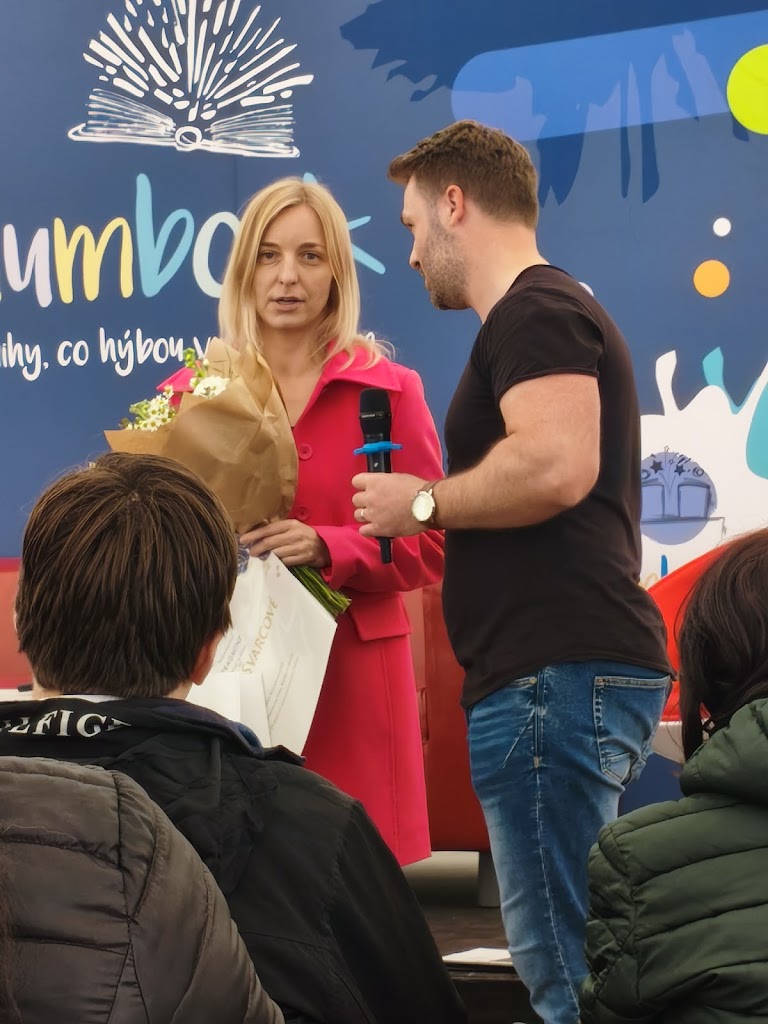
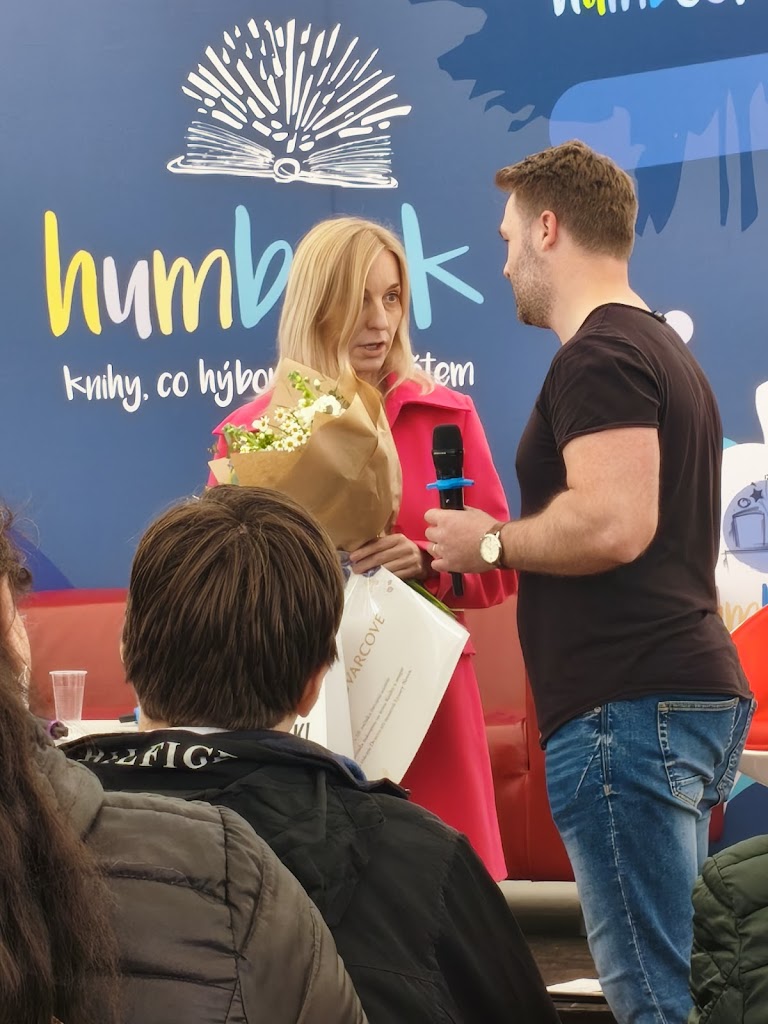
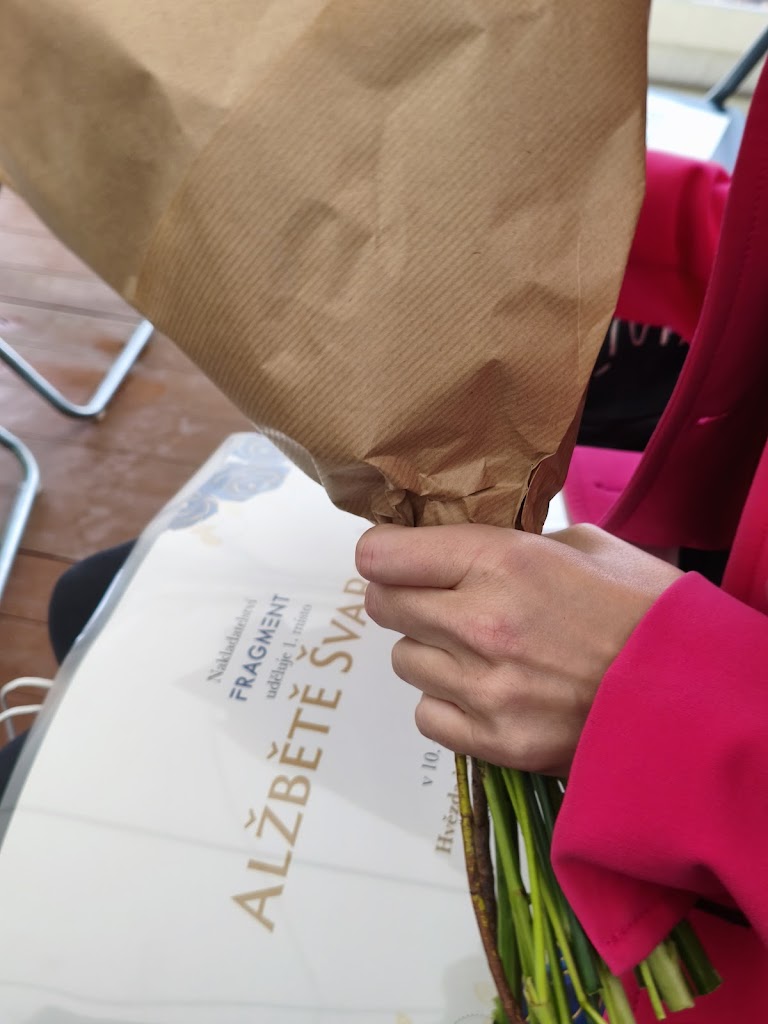
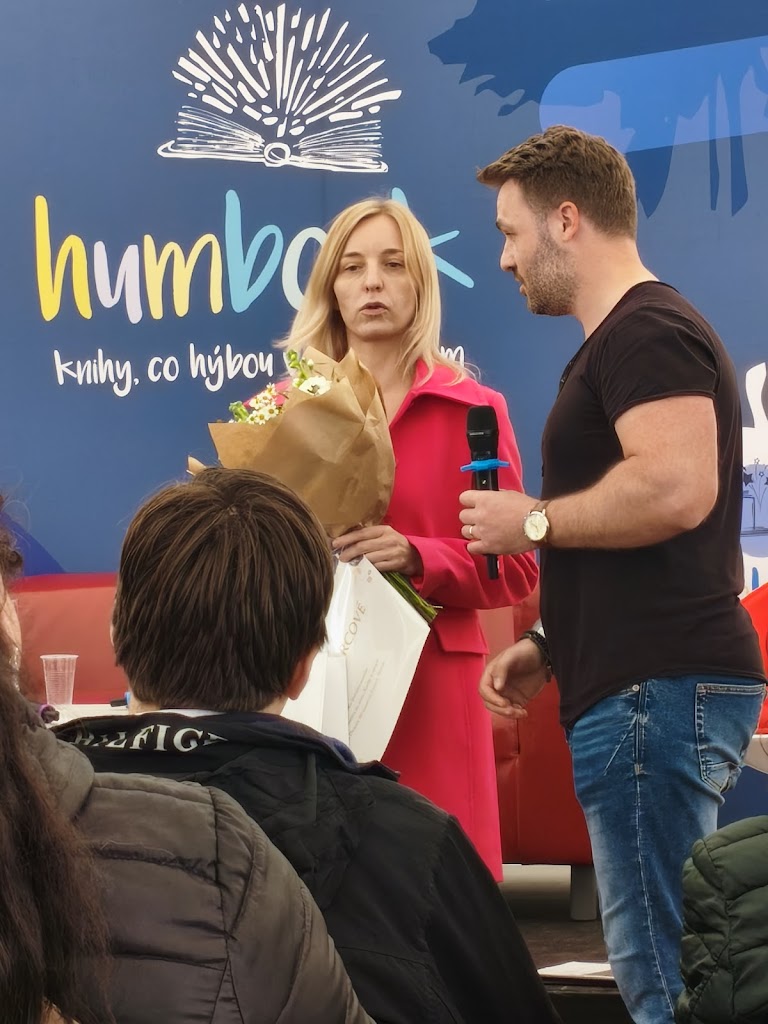
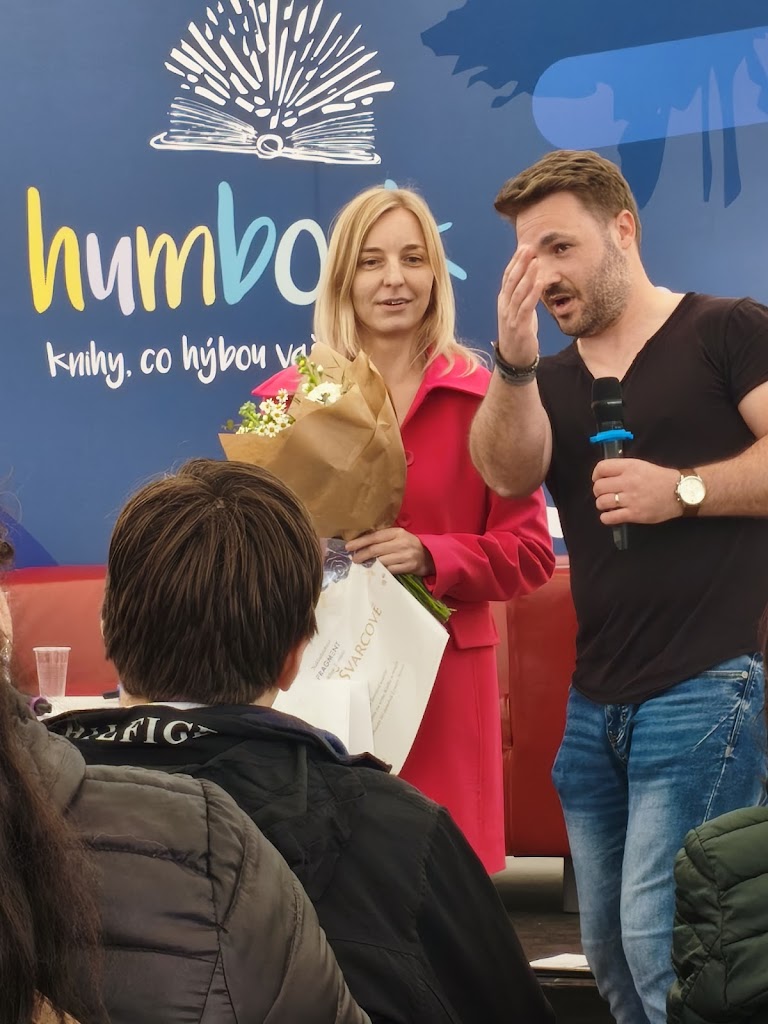
I think Alžběta Švarcová. My writer friend, whom I have long felt writes and thinks with a sharpness that cannot be faked. She came to my booth, bought a book, but more important than the purchase itself was something else: the moment when I could share with her her own tension, joy, and emotion surrounding a literary contest.
While I was counting my small losses at World Book, Alžběta was experiencing something that felt almost like a breakthrough into another level of the literary world. Success in the Fragment publishing house competition. New doors. Joy that didn't directly concern me, and yet I felt it so intensely as if it concerned me for a moment too.
I'm not saying an author has a right to success. I don't think so. I don't claim it for myself either.
But when something incredible happens to someone I care about, I can rejoice as if I had won.
And perhaps that was one of the most beautiful moments of the festival: standing by my small black-and-gold table, tired, uncertain, vulnerable, and yet having the chance to witness doors opening for someone close.
Not all doors have to open for me for joy to arise within me. Dear Bety, congratulations!
And I mean everyone from the collective exhibition who helped me survive the practical things, too. Who watched my table when I needed to step away. Who were sensitive when I received the news about my aunt's passing. Who watched my table for an even longer time when I went to cry in the park.
I also think of Veronika Hurdová, a co-exhibitor, a writer, who in that space came across as someone much more experienced, calmer, and more established in the book world than I am. For me, a newcomer to Svět knihy, it felt strange and sweet to suddenly stand next to someone who already has discussions, exhibitions, readers, books, and a journey behind her. I took home her book with a dedication, and for me, this is also one of those small exchanges why a fair is not just a sales floor. One author sells their books, another takes home someone else's book, and in between, a short, human bridge is formed. Perhaps this is exactly how a small author learns not to be afraid of the bigger world: not by measuring themselves against it, but by standing next to it for a moment.
I think Nikol Kulová, who after buying my book, refused to sell me hers — and gave it to me instead. These are precisely the moments when commerce turns into a gift. And a gift carries a special power at a book fair because it arrives in the middle of an environment where everything is measured by price, discount, print run, and sales.
This can't be put into a spreadsheet.
This isn't a website conversion.
This isn't a new subscriber in MailChimp.
This isn't a sales result.
Yet without it, the festival couldn't be carried off.
A little blessing from Frankfurt
The story also includes the Thursday party for authors, publishers, and people around books.
I went there into a space where I didn't know anyone. I didn't know who was who. I didn't know their positions, names, influence, relationships, history. I was there on my own, as a newcomer, as someone from the very edge.
And it turned out once again that the costume was not just a decoration.
It was a conversation starter.
People approached me not because they knew my books, but because I was impossible to miss in the space. The costume became the first sentence I didn't have to speak. It allowed someone to come closer to me, laugh, ask a question, start talking.
One of those who approached me like this was Niki Théron from the Frankfurter Buchmesse.
She hadn't met me at the booth first. She met me already on Thursday evening at a party. In a space where I felt like someone who had entered a room whose rules they were only just learning to read.
And once again it was the costume that opened the first door.
Not my name. Not my fame. Not my position. The costume. The image. Something impossible to miss that allowed the conversation to happen at all.
Except the real surprise didn't come until the next day.
Niki actually stopped by my booth.
And that took my breath away.
Because from life, I am rather used to various promises that do not come true. To "I'll definitely get in touch," "I'll definitely stop by," "I'll definitely take a look at it" — and then silence. Not necessarily out of ill will. It's just how the world often works. People promise, life carries them away, things dissolve.
But she came.
The evening conversation became a real step. The promise became a visit. The chance encounter became a small continuation.
And for a small author sitting in a large hall at a small black-and-gold table, that was no small thing.
It was a small blessing.
Not in the sense that the gates of Frankfurt would open because of it. Not in the sense that I should start building castles in the air. But in that completely simple human sense: someone from the professional international book world said she would come — and she came.
Sometimes a person doesn't need a miracle.
Sometimes it's enough that a single promise doesn't fall apart on the way.
And she wasn't alone.
Next to her was also her colleague Vlaďka Kupská, who was also interested, asked questions, looked around — and what is important to me — also stopped by my stall the next day.
These may seem like minor details from the outside. Someone might say: people met at a party, came to look the next day, what's the big deal?
Yet for a small-scale author, who is rather used to promises dissolving into thin air, it is no small detail.
Two women from the international book scene did not just walk past my world as if it were a curiosity. They stopped by it for a moment. They looked. They asked. They let me show it to them, and in doing so, they gave me the feeling that my black-and-gold table in Pavilion D was not just the edge of the festival, but also a possible meeting place.
Not a promise of the future.
But a trace.
And sometimes a trace is worth more to a minor author than a cliché.
Fears that came from A to Z
It must be said that almost everything I feared before the festival actually happened in the end. From A to Z.
And yet it didn't rattle me the way it could have.
Perhaps precisely because I had exaggerated those situations in my mind beforehand. I imagined them, preparing my reactions for them. And when they finally came, they didn't create drama. They simply happened, passed through me, and it was over.
For questions, comments, jabs, and silent, cowardly stabs, I had a response prepared. I stuck to it. And I’d say that most of those situations turned out to the benefit of both parties—without anyone feeling humiliated, hurt, or a big wave of emotion being stirred up.
This also applied to moments when someone came along and criticized my desk.
Of course, everyone has the right to their own opinion. What they like, what they don't like, what they would do differently.
But sometimes the question remains:
Did anyone ask you?
I don't go to the festival director's home either and tell him to his face everything I think. I write it down here in my writer's diary.
Yes, someone might argue that even this could get out. That someone might read it. And it's true that there can be a certain pettiness to indirect communication.
But I am a small exhibitor.
No one systematically asks me how I experienced it.
Except for one exception: Ms. Andrea Tachecí from the festival, who was one of the pleasant surprises of the World of Book for me. The kind face of the festival. Someone I felt was in the right place. And above all, with her I felt welcome at the festival even as the tiniest exhibitor.
And that is important for me to say.
Because this text is not meant to be just a record of disappointment and fatigue. Amidst the hustle, harsh lights, small table, resentment, and adaptation, there were specific human faces that managed to restore dignity to the entire experience.
I am not leaving with the feeling that I phoned it in
By all this, I am not disclaiming my own responsibility.
I know I am an unknown author. I know I was there for the first time as an exhibitor. I know I cannot assign anyone the duty to come to me, to know me, to buy my book, or to understand my world within a few seconds at the table.
I do not evaluate my approach to the festival presentation as optimal. Surely many things could be done smarter, more economically, more experiencedly. Perhaps less intensely.
But surely no one can blame me for passivity.
Perhaps I wasn't the smartest, most sophisticated, or most original exhibitor. Perhaps I didn't know how to gauge everything correctly. But my approach was honest in that I truly tried to make myself known.
I cast a thousand and one lines. Book prophecies, from which I perhaps expected more than was reasonable. Flyers. QR codes. Posts. Videos. Emails. Personal invitations.
Maybe some of those lines won't bite right away. Maybe they are lines cast across time and space. Maybe someone will return to the message they took with them in a week, a month, a year.
At the start of the exhibition grounds, printed material was selling for 180, 250, 300 crowns and more. At the end of Pavilion D, I was giving it away for free, hoping it would one day become a trace.
This is due to the fact that I am unknown and don't have an established brand.
It's not a complaint.
Just an observation.
I'm not leaving with the feeling that I phoned it in. I'm leaving with the feeling that I gave it more than I should have.
And maybe I can pat myself on the back at least a little bit and say to myself: if the festival director at the end thanked everyone for the record attendance that Svět knihy achieved, perhaps I contributed a tiny bit to it as well.
There were many exhibitors. I believe everyone did what they could. Each of us is in a different phase of creation, budget, courage, background, and fatigue.
Someone has a team.
Some have a car.
Some have a publishing house.
Some have connections.
Some have money.
Some have time.
Some have strength.
I gave everything because I wanted to. And because at that moment I had no other way.
Perhaps in the end I can even thank all those who haven't hired me to this day.
Because by doing so, whether they meant to or not, they brought me right here.
To the Book World.
Does it make sense for a small author?
I don't have the answer to whether Book World makes sense for a small author yet.
Maybe it does.
Maybe it does for an author who has a financial cushion underneath them.
Maybe it does for someone who can afford to treat a festival as a long-term investment in their brand.
Maybe it does for someone who won't be broken if their costs aren't returned immediately.
I don't have that cushion.
And that is why I cannot evaluate my experience solely in the language of prestige, atmosphere, and wonderful encounters. I also have to evaluate it in the language of rent, electricity, food, exhaustion, and what happens on Monday morning when the festival ends and the bill remains.
Maybe it's all too early for a conclusion.
Maybe some books will still find their way to readers. Maybe someone will reach out. Maybe one bookish prophecy will turn into a journey. Maybe one flyer will turn into an order. Maybe a festival doesn't work in the moment, but in the aftermath.
But today, the first day after the festival, I know only this:
for a small author without a financial reserve, the question "does this make sense?" is not philosophical.
It is existential.
Not as a truth about everyone
This article is not a complaint. It is not cursing. It is not malediction. It is not hatred. It is not venom. And frankly, it is not even criticism in the classic sense of the word.
It is a record of an inner truth.
Some might like it. It might suit someone's agenda to prove something to someone. Someone might not like it at all. Someone might fight against it.
But as always on my journey, I am recording a personal feeling, a personal truth, which I do not embellish.
I am not writing this as a reaction to the pain I experienced. I am writing it for myself as an author trying to understand whether this type of event makes sense for him or not.
I need to evaluate the impacts on myself as the smallest of the small authors.
I don't think my role was exceptional. I don't think I have any special right to judge. There are others who can assess the festival more professionally, fairly, and from a higher perspective.
I simply reserve the right to share my honest feeling.
I sat at a table in pavilion D and looked across it at the stream of people, the books, the famous names, the unknown authors, my own expectations, and my own fatigue.
And I wrote down what I saw.
Not as the truth about everyone.
As the truth of a single perspective.
Footnote:
If I have forgotten anyone in this text, it is not out of ingratitude. I still need to go over the names of some exhibitors again, anchor them in my memory, and correctly assign them to faces, gestures, and situations. Likewise, I apologize to any visitors, friends, and people who came to see me, if my omission caused them pain or the feeling that they were not important to me. They were. It's just that after four days of festival, fatigue, emotion, and sadness, a person cannot immediately name everything all at once.















